
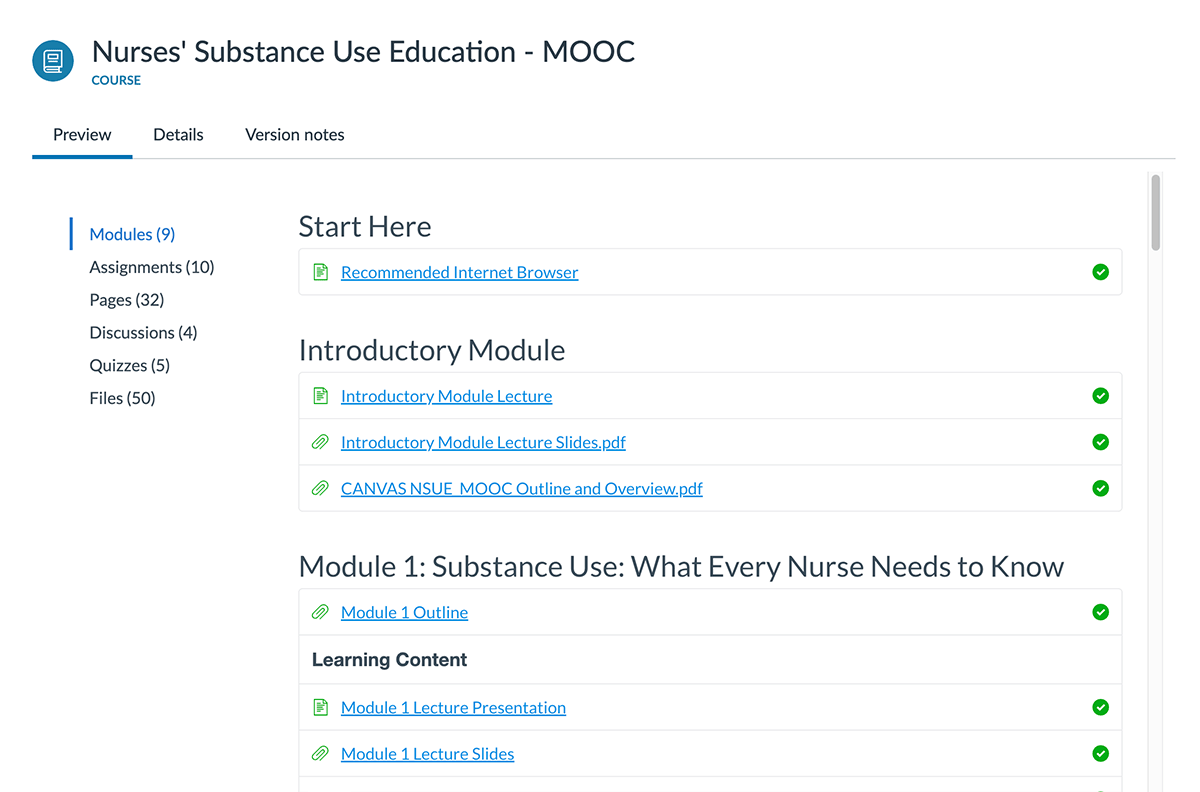
There are also 2 modules designed for advanced practice nursing students, although the APROUD MOOC has more practice-specific information for APRNs.
From Instructure, you can download as many or as few modules as you would like. They import with ease into Canvas and include video lectures, recommended readings, quizzes, discussion post questions, and assignments that can be tied into the grade book. Pick and choose what works for your courses.
Course Objectives
- Introductory Module for Faculty
- Module 1: Substance Use: What Every Nurse Needs to Know
- Module 2: Decreasing Stigma: Trauma-Informed Care in Nursing
- Module 3: Substance Use in Nurses: A Chronic Disease and Threat to Patient Safety
- Module 4: Substance Use: From Bedside to Community
- Module 5: Advanced Practice Module I: Assessment, Diagnosis, and Management
- Module 6: Advanced Practice Module II: Responsible Prescribing and Medication-Assisted Treatment
- Module A: Interdisciplinary Professional Education and Substance Use: Roles, Policies, and Scope of Practice
Available through Canvas at no cost!
Modules & Learning Objectives
- Demonstrate appropriate patient-centered language
- Describe individual protective and risk factors for substance use disorder (SUD)
- Implement physical and psychosocial assessment strategies including Clinical Institute Withdrawal Assessment for Alcohol, revised (CIWA-Ar) and Clinical Opiate Withdrawal Scale (COWS)
- Utilize the Screening, Brief Intervention and Referral to Treatment (SBIRT) model
- Identify physiologic effects of substances (opioids, cannabinoids, stimulants and alcohol)
- Reflect on the statement, “Substance users have a choice to start and continue to use.”
- Identify risk factors (epigenetics) of substance use, including family history, early exposure to drug use, exposure to high-risk environments, and psychiatric disorders
- Analyze the role of dopamine in the neurobiological mechanisms of addiction and
- Describe an overview of the reactive reward system and the reflective reward system
- Articulate the six principles of trauma-informed care and their relationship to the reflective reward system
- List the prevalence rate of substance use (SU) in nurses compared to the general population
- Identify signs and symptoms of a nurse dependent on alcohol and other substances
- Describe the risk factors, including psychological trauma, for alcohol and substance use for both student nurses and practicing nurses
- Explain the role of state boards of nursing and purpose of alternative-to-discipline
- Discuss the position statements of American Nurses Association (ANA)-affiliated organizations pertaining to SU in nurses and student nurses
- Create a proactive plan, including steps to avoid substance use disorder in self, and ways to protect and preserve professional licensure and maintain a safe patient environment
- Describe the concept of a Recovery-Oriented System of Care (ROSC) and the hub and spoke model of ROSC and ecological model of substance use
- List the components of a community ROSC and the roles that exist
- Explain the importance of recovery support services
- Identify local resources and take steps to become involved if you choose to do so
- Become aware of local policies and contact policy makers if you choose to do so
- Describe the prevalence rate of substance use in the general population
- Discuss the current literature related to neurobiological changes that occur in the brain as a result of alcohol and substance use
- List risk factors for developing alcohol and substance use disorders
- Identify symptomatic differences in intoxication and withdrawal from substances
- Implement Screening, Brief Intervention, and Referral to Treatment (SBIRT) and evidence-based interviewing skills for patients at increased risk
- Demonstrate appropriate patient-centered language in communicating with patients with substance use disorders
- Describe the psychodynamic principles of alcohol, opioids, stimulants and benzodiazepines
- Discuss overdose prevention principles in SUD
- Discuss FDA approved treatment options for SUD
- List the benefits of using medication assisted treatment (MAT) for SUD
- Discuss when and how to taper patients off of common addictive medications, such as benzodiazepines and psychostimulants
- Identify treatment options for special populations
- Identify best practice in collaboration
- Describe the scope of practice of a variety of team members
- Identify state and federal policy and their elected policy makers
- Describe the policies that affect their practice