Purdue Nutrition Science alumna turns personal experience into a passion for Indiana school nutrition programs
Written By: Rebecca Hoffa, rhoffa@purdue.edu
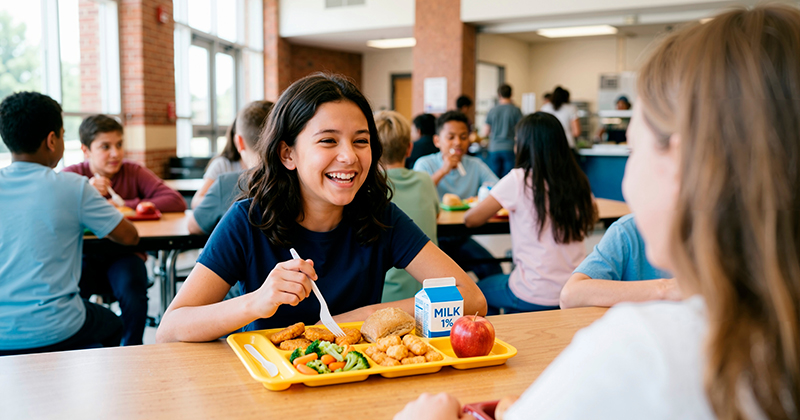
When Purdue University Department of Nutrition Science alumna Mary Ellen Gilliam was a young girl, she was part of the free and reduced lunch program in her hometown of Gary, Indiana. Now assistant director of child nutrition for the Metropolitan School District of Wayne Township and board president of the Indiana School Nutrition Association, Gilliam is making a difference for kids just like her.
“I always like to say child nutrition for me is where my passion meets my purpose,” Gilliam said. “I’m a product of the child nutrition programs that I now advocate for. I was that free-and-reduced-lunch kid coming through the line, having lunch or breakfast. I had friends who depended upon these meals as well, and sometimes the meals that they received at school would be their only meals. (Nourishing those children) is what I think I love most about my job.”
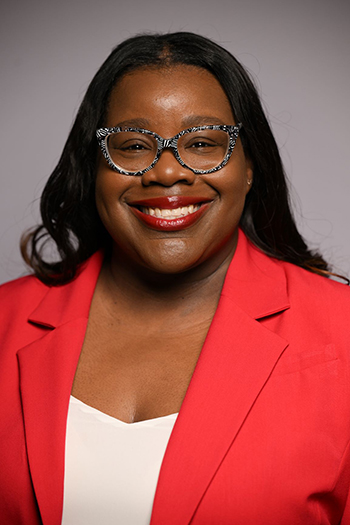
While Gilliam oversees the day-to-day procurement, menus and resource allocation for students in her school district, her leadership position in the Indiana School Nutrition Association also allows her to have an influence in the policies surrounding school lunches, where she can advocate for children throughout the state.
“It kind of helps bridge the gap,” Gilliam said. “Oftentimes, in order to make change, you have to have a seat at the table. Sometimes when you have this eagle eye view of what’s going on, a lot of people don’t understand the domino effect that they have. When bills are being introduced and funding and things of that nature, oftentimes, there’s this question: What’s my return on investment? Sometimes people need to put a face to the return on investment, and I’m fortunate enough to be that voice for Indiana school nutrition professionals but also our current and future students.”
While passion fuels Gilliam’s work, she credits her education from Purdue with helping shape the skills that have made her into a leader.
“The education I received from Purdue taught me the importance of team building, networking and that you don’t necessarily have to accept the initial answer,” Gilliam said. “There’s always more than one way to do things. Things will evolve. I think the education I received from Purdue showed me that this may be prevalent and factual today, but down the line as things evolve and the science evolves and technology evolves, it may change, so it’s important to always think outside of the box and think of the bigger picture.
While Gilliam originally came to Purdue to become an OB-GYN, she quickly realized the biology track wasn’t for her. When she discovered nutrition science, she appreciated its approach to health and changed her major. However, as she neared graduation, then-assistant professor Stacy Mobley encouraged Gilliam to pursue dietetics, so Gilliam decided to continue her education in the College of Health and Human Sciences and earn an additional bachelor’s degree in dietetics.
“Dr. Mobley pulled me aside, and he was like, ‘Mary Ellen, you’re doing really well with nutrition science. You should become a registered dietitian,’” Gilliam said. “I thought about it, and I knew someone who had previously gone through the program and was in their dietetic internship at the time. So, I went and I talked to Dinah Dalder, and that’s how I got into dietetics.”
As someone who is well-versed in the field, Gilliam said many people often have misconceptions about what goes on behind the scenes with school lunches.
“Obviously we like to serve and want to serve what our students are accustomed to, but I don’t think that most people realize we have very strict guidelines that we abide by,” Gilliam said. “I like to use this as an example: The Pop-Tart that your child receives in school is not the same Pop-Tart that you can get at Walmart or Kroger. It has less sugar and is made with whole grain. We have this blueprint of guidelines that comes down from the USDA. We’re very heavily regulated, and even when it comes to meals, we have to serve a minimum of certain components for a student to receive what we call a ‘reimbursable meal.’ That is contingent upon a student always receiving the minimum serving of fruit or vegetables in all meals that we offer.”
For Gilliam, whose success story began with the school lunches she was served as a kid, being able to provide nourishment for generations of students is the driving force behind her work — work that is critical to those students’ learning and attention each day.
“I think what’s particularly meaningful in this work is that we are nourishing our upcoming leaders, our doctors, our lawyers, our contractors,” Gilliam said. “I tell people all the time, especially when I’m talking with educators, your responsibility is to fuel their mind. Our responsibility is to fuel their bodies. One is not greater than the other. The science indicates that a hungry child can’t focus on learning, so we’re truly in this together.”