Purdue Nutrition Science poised to lead efforts to expand nutrition education in medical schools nationwide
Written By: Rebecca Hoffa, rhoffa@purdue.edu

Purdue University’s national reputation as a leader in nutrition science is playing a key role in a push from the U.S. Department of Health and Human Services to better prepare physicians to use nutrition as a tool for disease prevention and patient care. The initiative, titled Advancing Nutrition Education Across the Medical Continuum, encourages medical schools to require 40 hours of nutrition education as part of their curriculum.
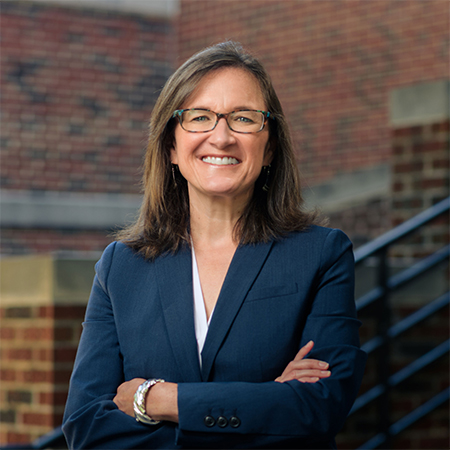
Laura Murray-Kolb, professor and the Sharon Rulon Broadhead Head of the Department of Nutrition Science, was invited to Washington, D.C., for the launch of the initiative in March 2026. Despite Purdue not having a medical school, she noted the U.S. Department of Health and Human Services expressed the need for Purdue’s strengths in nutrition and recognized the value the institution could provide in helping medical schools achieve their new education requirements.
“They’re interested in creating a lifelong continuing education for physicians around nutrition education,” Murray-Kolb said. “I think that we at Purdue have a big role to play. We need to figure out what that looks like and how we can best partner with the medical schools because obviously every school has their own rules and policies around their curriculum. We don’t want to be stepping on anyone’s toes, but we are the experts in nutrition, and so we feel strongly that we should be leaders in this effort. It was very exciting that the Department of Health and Human Services reached out.”
The requirements aim to improve physicians’ preparedness for discussing nutrition with their patients to reduce diet-related chronic diseases across the country. While some medical schools are already incorporating nutrition curriculum, others are starting nearly from scratch.
“The rollout is going to look different for every medical school,” Murray-Kolb said. “There are some medical schools that currently have very little nutrition education in their curriculum. There are others that have quite a bit, so some are closer to this goal. I think each medical school should be able to come up with the curriculum, but my hope is they will do so by reaching out to the strong nutrition programs around the country to partner on this.”
Murray-Kolb said many nutrition experts in the field have been advocating for more nutrition education in medical schools for years. When she was an undergraduate student, Murray-Kolb completed a traditional pre-medicine track that offered very little human-focused training and no nutrition education. Given her interest in nutrition, she decided her next step should be to pursue a master’s degree in nutrition and that’s when the concepts really began to click.
“I think we’ve known for a long time — but we are now at the point where it’s actually being acknowledged — that nutrition is a major component to almost every chronic disease,” Murray-Kolb said. “Chronic diseases are on the rise, not only in our country but around the world. When you look at cause of death on death certificates, oftentimes you will see something like pneumonia or heart attack — things that you wouldn’t necessarily attribute to nutrition. But if you back it up, a lot of these have a nutrition component. Cardiovascular disease, absolutely. Obesity has been growing in this country and elsewhere. Diabetes is a chronic disease that is strongly nutrition-related.
“We have finally gotten to the point where we’re saying, ‘Something has to change.’”
Murray-Kolb is also a member of the American Society for Nutrition’s Academic Nutrition Departments and Programs (ANDP) Community, which unites nutrition department leaders across U.S. universities. She sees the group as a key player in helping medical schools reach their curriculum goals.
“We’ve talked about the idea of doing recorded lectures on particular nutrition topics,” Murray-Kolb said. “We’ve talked about having faculty who would go and teach an entire course. We’ve talked about having faculty who would go and teach a lecture here and there. There are many different ways the ANDP Community could help. The integration of nutrition education into medical education really should be that: an integration. It shouldn’t be taking one course on vitamins and minerals and checking the box. The role of nutrition should be incorporated into lectures within physiology, anatomy and pathophysiology courses as nutrition is integral to all of these.”
The nutrition science major at Purdue, which is housed in the College of Health and Human Sciences, has been a key driver in preparing undergraduates for medical school for years, offering them a solid foundation in nutrition even before they set foot in medical school.
“It’s not unusual for our graduates to say, ‘The nutrition science degree has given me a leg up on others who are applying to medical school who have done more of that traditional pre-med route,’” Murray-Kolb said. “One of the things that sets the nutrition science pre-medical major apart from most of the others that I’ve seen is we have clinicians who are on our faculty who train the students, and we train them from the human perspective.”
For Murray-Kolb, in leading a department that produces a large number of dietitians, the new medical school requirements will also bolster knowledge of the nutrition field and increase physicians’ awareness of when patients might need to be referred to a dietitian for more specialized care.
“The more the physician learns about nutrition during their training, the more likely they are to refer (their patients) to a dietitian because they understand the expertise in a better way,” Murray-Kolb said. “I think part of our role will also be to educate them as to what a dietitian does, how a dietitian is trained, their knowledge base and how to best work with dietitians.”
Ultimately, Murray-Kolb expressed excitement for the promise the initiative brings in strengthening nutrition education and improving overall health outcomes.
“We’re all committed to this and to helping this work,” Murray-Kolb said. “We want to be a resource for medical schools because we know their curriculum is already packed.”
Discover more from News | College of Health and Human Sciences
Subscribe to get the latest posts sent to your email.