Purdue cognitive psychology graduate student decodes behaviors behind math anxiety
Written By: Rebecca Hoffa, rhoffa@purdue.edu

The calculus exam has been on the syllabus all semester, but when the time comes to take the test, all that comes to mind is a surge of panic.
This sensation of math anxiety is all too familiar for Purdue University Department of Psychological Sciences PhD student Mariel Barnett, who studies cognitive psychology under the guidance of mentor Brooke Macnamara, associate professor of psychological sciences.
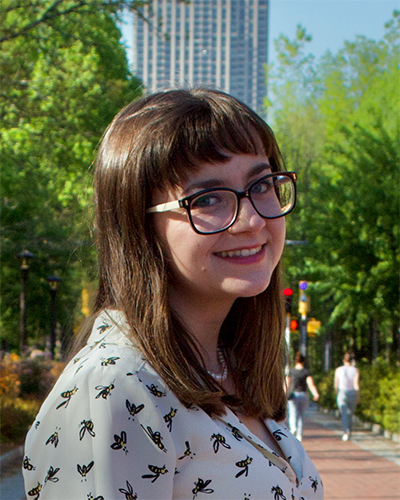
Mariel Barnett(Photo provided)
Having experienced the sensation as an undergraduate student at Georgia Institute of Technology, Barnett is interested in the cognitive processes behind math anxiety and how individuals might overcome it.
“Math anxiety is, for example, when you sit down for a really high-stakes math exam. It’s that experience that I would have and other students have of your mind almost going blank and panicking,” Barnett said. “You’ve studied and practiced, and you thought you had prepared well for the math exam, but then you look at the first problem, and you’re sort of overwhelmed with this fear of where even to begin. Those negative experiences over time can kind of accumulate, and they’re very aversive.”
Barnett explained that while math anxiety seems like a simple school-related problem — something individuals will graduate and free themselves from — it can actually have long-term effects in the lives of those who struggle with it.
“It may look like avoiding STEM classes in college and choosing careers that are not emphasizing STEM or are outside of STEM,” Barnett said. “These are kind of long-lasting behaviors. They can continue into adulthood, affecting things like financial literacy, how people sort of understand and go about interpreting figures and numbers that they see in day-to-day statistics, things like that. It has these snowball effects over time. That’s what I’m interested in is understanding how that looks from person to person and what can we do to maybe break that vicious cycle.”
While anxiety can appear in a variety of situations, from test anxiety to social anxiety and beyond, Barnett noted in an increasingly STEM-focused world, alleviating the impacts of math anxiety is essential for success in both the workforce and everyday life.
“I think it’s something important and worth studying in a world that sort of increasingly values careers in science, math, engineering and medicine — careers that are very math-dependent,” Barnett said. “There’s certainly a need for interventions that can overcome that anxiety so we’re not necessarily closing off that pipeline toward STEM to certain individuals who would otherwise, given interventions, time, and treatment, be really successful in those areas.”
Hidden math anxiety drivers
A significant body of research focuses on math anxiety and avoidance behaviors, but in her work, Barnett’s goal is to take that work one step further, explaining the “why” behind these tendencies.
“I kind of wanted to explore with my collaborators: So, we’ve established this math anxiety and avoidance link, but what mechanism is driving avoidance here?” Barnett said. “What could we attribute it to?”
Barnett has found three mechanisms that drive math avoidance: risk aversion, personal weighting of cost versus effort and reactive fear toward math. Her study placed individuals in situations where they were asked to do math problems, where higher difficulty meant they received a higher reward. However, in individuals with math anxiety, the reward didn’t appear to be a motivator in the same way it did for others, implying that fear may be a primary factor that could be a focus for intervention.
“We found a mix of evidence for all three, but it seems like when math-anxious people are doing an exposure manipulation, where we were forcing participants to do hard math problems and to realize the hard problems are not so bad, we’re seeing some evidence of intensified reactive fear when facing hard math and persisting resistance to solving hard problems following the manipulation. This seems to kind of be pointing at this overarching theme where people’s immediate, automatic reactive fear toward math could be driving their behavior,” Barnett said. “That might be why they may be resistant to short-term exposure, so if we can target people’s fears using longer-term exposure manipulations, and explore other effective treatments, that might be a kind of promising direction in the future.”
AI, anxiety and avoidance
Cognitive offloading, or using tools — such as a calculator — to decrease a task’s mental requirements, is another area that’s been heavily researched, Barnett explained. This may possibly be a way to offset some of math anxiety’s symptoms, and she’s interested in understanding the drivers and long-term effects, eventually hoping to pursue a longitudinal study of math anxiety after college.
Additionally, with the emergence of AI and the rapidly evolving nature of the technology, Barnett noted she has an interest in looking at the role of cognitive offloading using AI and how that can help individuals feel more or less confident in their math abilities. However, because of the complexities and rapid pace surrounding this work, she’s considering this for her future research beyond Purdue’s College of Health and Human Sciences.
“I’m interested in applying the cognitive offloading research to a setting where students are allowed to use AI versus not, and how that ability to use AI is either something that is beneficial and makes them more confident in what they’re able to produce in different academic tasks, or is more a tool that’s seen as something that they must rely on,” Barnett said. “So, positive versus maladaptive uses of AI.”
However, in the shorter term as she approaches her dissertation, Barnett is currently exploring procrastination and how that presents in certain areas, such as math, compared to others.
“I’m in the process of developing hypotheses and using a task that was originally applied to procrastination and general academic assignments, and applying that to math-specific assignments and seeing if people who are more math anxious are more inclined to disengage from and maybe procrastinate doing assignments that are math-specific,” Barnett said.
Ultimately, Barnett hopes to make a positive impact on the field to help individuals who may be struggling with math anxiety.
“I’ve also done research looking at who benefits from educational interventions — who tends to kind of look about the same over the course of time and who for certain interventions can exhibit detriments,” Barnett said. “So being mindful about when we develop educational interventions, ideally, it can benefit those who need it the most but also help everyone.”
Discover more from News | College of Health and Human Sciences
Subscribe to get the latest posts sent to your email.