Purdue Nutrition Science-Food Science collaboration looks to wean kids from soda, reduce health issues in adulthood
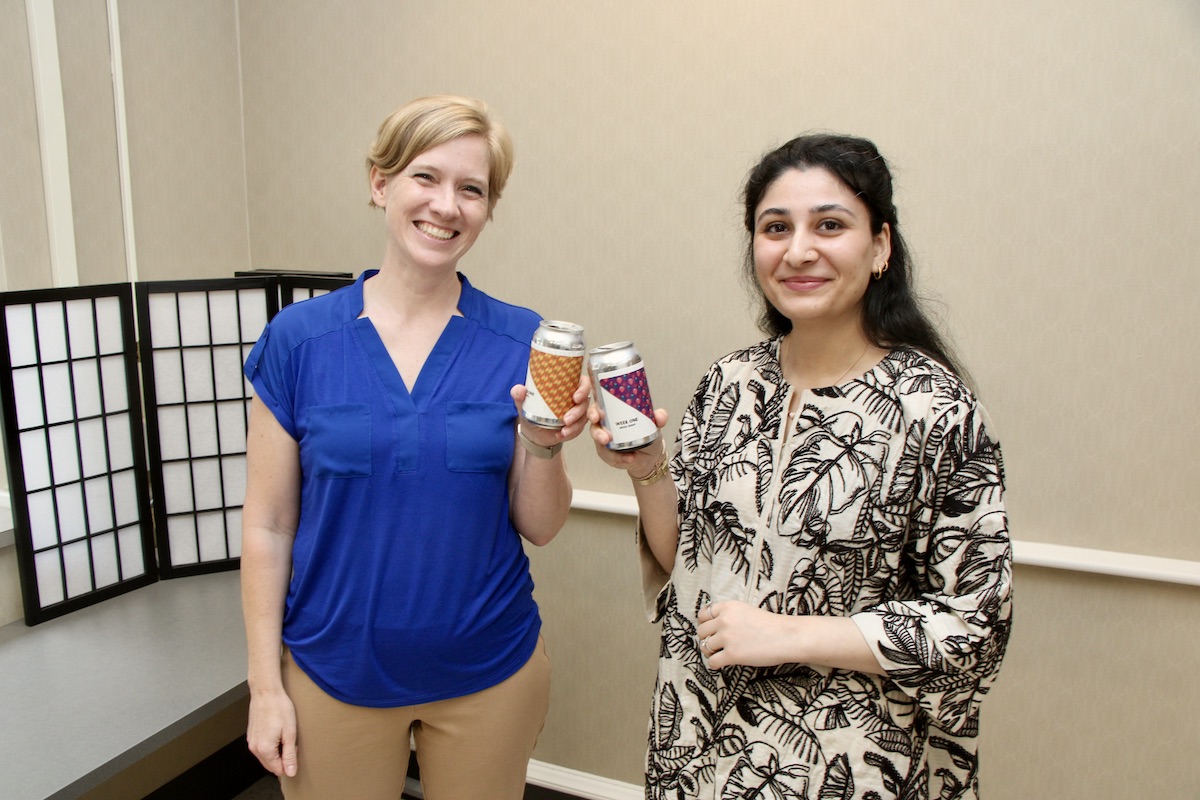
A new study co-led by Cori Running, left and associate professor in the Purdue University Department of Nutrition Science, along with her PhD candidate Wajiha Zulfiqar will examine the effects — and hopeful successes — of getting Indiana Black and Latino adolescents ages 12-18 away from soda by dialing down sugar and getting them to switch to sparkling water beverages like LaCroix or Bubly.(Tim Brouk)
Written by: Tim Brouk, tbrouk@purdue.edu
When you were a kid, cracking open a cold can of Sprite after a long, hot summer afternoon at the pool was a refreshing experience.
While all we thought about then were cannonballs from the diving board, drinking a 12-ounce can of the lemon-lime soda meant ingesting 38 grams of sugar — or like eating 10 teaspoons of sugar, according to Healthline. Studies by the National Institutes of Health find too much sugar in adolescents could lead to weight-gain and hyperactivity, which could then lead to hypertension, Type 2 diabetes and neurocognitive deficits when they reach adulthood.
A new study co-led by Cori Running, associate professor in the Purdue University Department of Nutrition Science, and Nana Gletsu Miller, associate professor of applied health sciences at Indiana University, along with their PhD candidates Wajiha Zulfiqar and Verónica Sambra will examine the effects — and hopeful successes — of getting Indiana Black and Latino adolescents ages 12-18 away from soda.
“Trading Sugar for Sparkles in Adolescents, A Sensory Approach for Reducing Added Sugar from Sweetened Beverages” will include more than 60 Indiana children from Greater Lafayette, Indianapolis and Bloomington, who will then be divided into three groups — a group that drinks bottled water instead of sodas; a group that drinks unsweetened sparkling water; and another group that will drink custom, gradually reduced-sugar sodas week by week for four weeks. These custom sodas were made by Purdue students in Purdue’s Nelson Hall of Food Science facilities exclusively for the study.
These adolescents will be given the choice of mango or mixed berry flavors of reduced-sugar sodas. With a can of Sprite being about 10% sugar by weight, week one will have sodas at about 5% sugar; week two will have 2.5% sugar sodas; week three will have drinks at 1.25% sugar; and week four will have 0% sugar, just like sparkling water drinks. Running is interested in the young participants’ reactions — or lack thereof — to the reduced-sugar sodas.
“Sodas with just less sugar in them exist but are expensive,” she said. “They’re like $2 or $3 a can, and that doesn’t work for people, especially people from underprivileged backgrounds who have lower incomes, which tend to be the communities that drink more sugar-sweetened beverages and carry the highest risk of chronic disease.”
All participants will drink two bottles of water or two cans of carbonated beverage a day. They will not drink any full sugar sodas throughout.
The study also partners with Indiana University, which will work with the Bloomington and Indianapolis adolescents. The $200,000 project is funded by the Riley Children’s Foundation’s Heartland Children’s Nutrition Collaborative.
Sweet study
Running knows some people don’t care for unsweetened carbonated beverages, such as Bubly or LaCroix, which is why the group with low-sugar sodas are of interest to the research team.
“If we take this approach of gradually shifting down, is it a little bit less weird when you drink the one that has no sweetness added to it?” Running questioned. “Because some people find that not palatable. Anecdotally, you hear from people like, ‘At first it was weird, and then I got used to it.’ This gradual reduction of sugar may make it a little bit easier for those people who can’t overcome that first hurdle of ‘Nope. That’s just too weird.’”
The reduction of sugar in Running’s current study will also inform her research on why young people gravitate to sweet-tasting beverages and foods.
“I want to get at this question of ‘Does it need to be sweet?’” Running said. “There are a lot of flavors out there other than just sweet. There’s a lot more to flavor. Sweet’s just a single taste. There’s so much more to experience beyond just sweet. American diets are kind of famous for being excessively sweet. You look at the amount of sugar in our yogurt and our desserts. Do all these foods have to be that sweet? They don’t.”
Made in West Lafayette
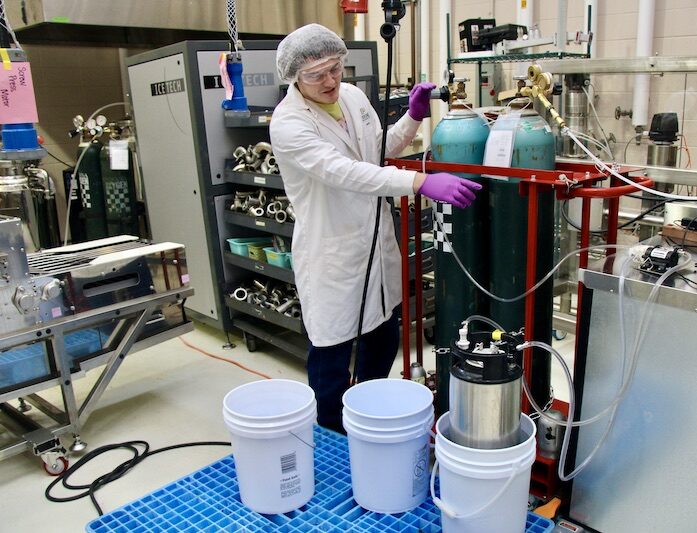
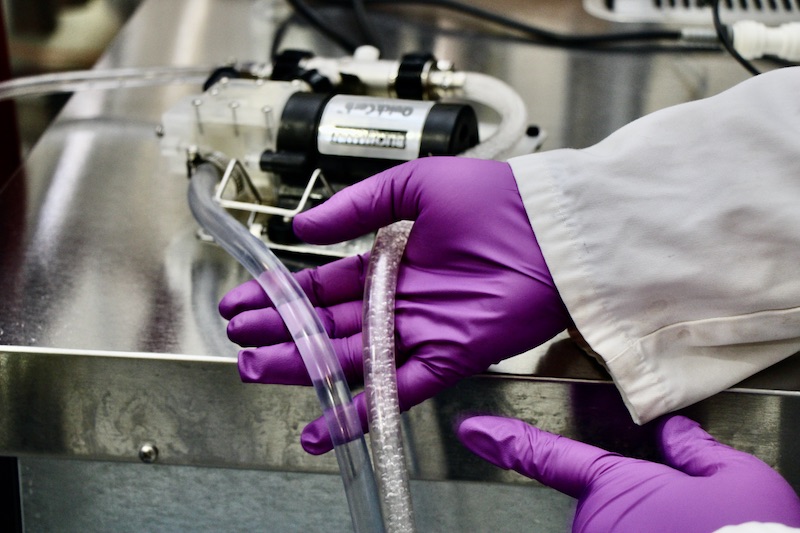
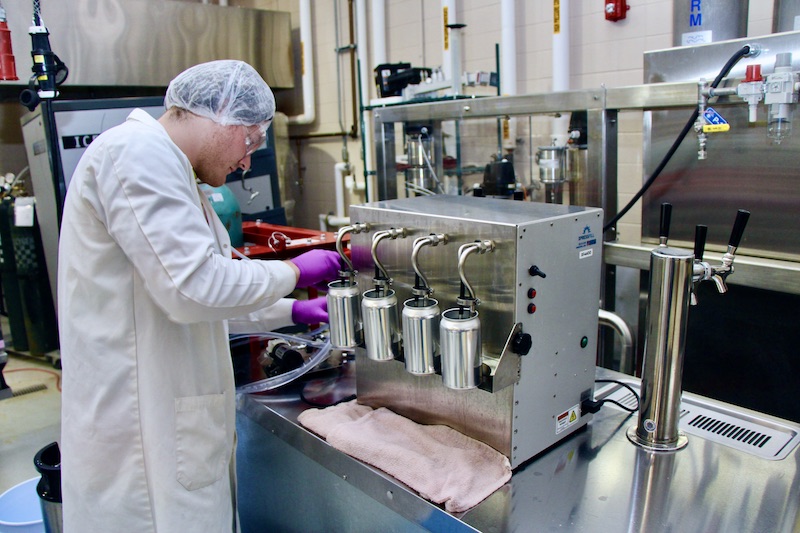
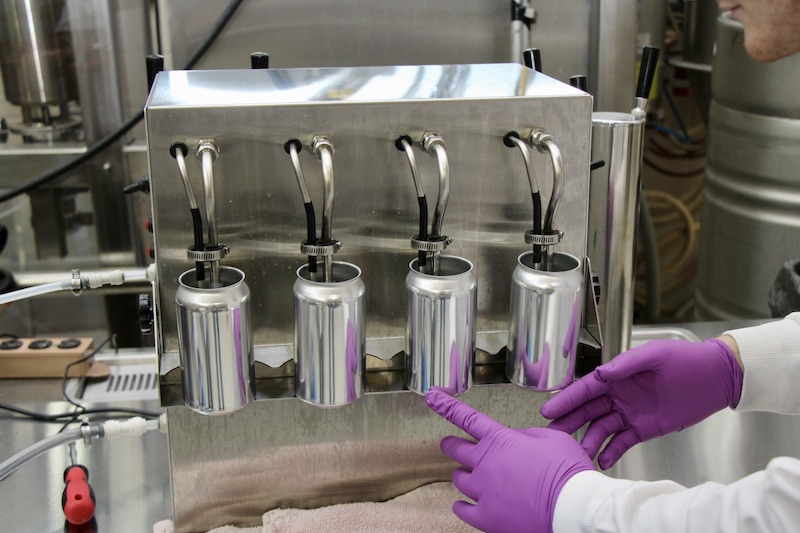
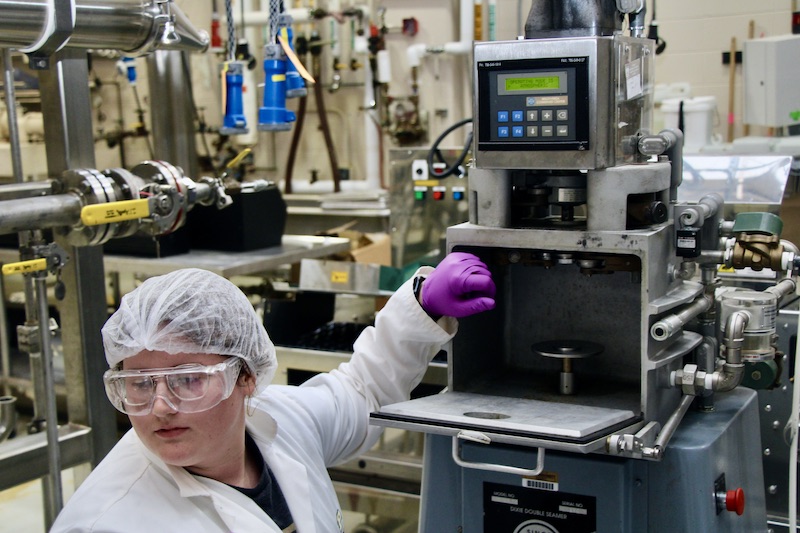
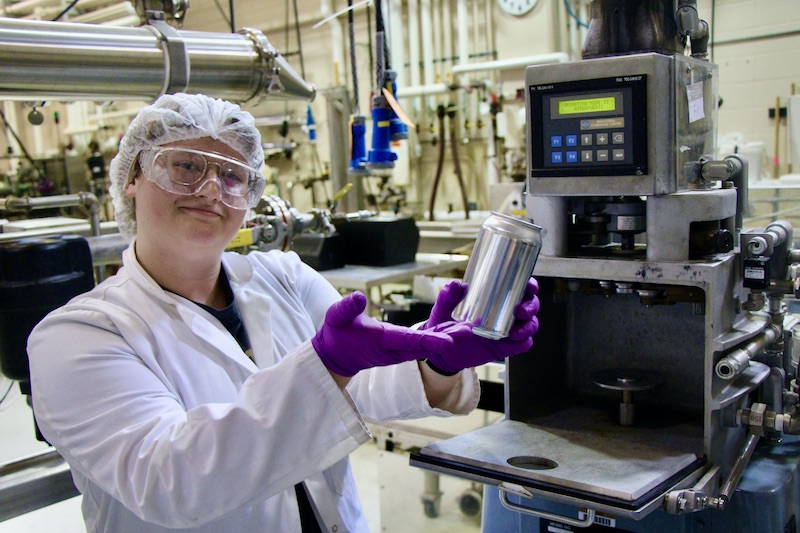
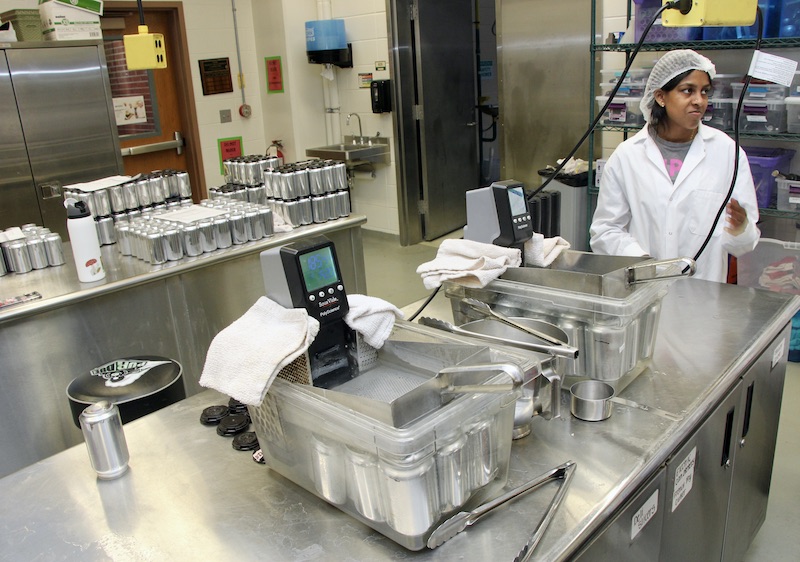
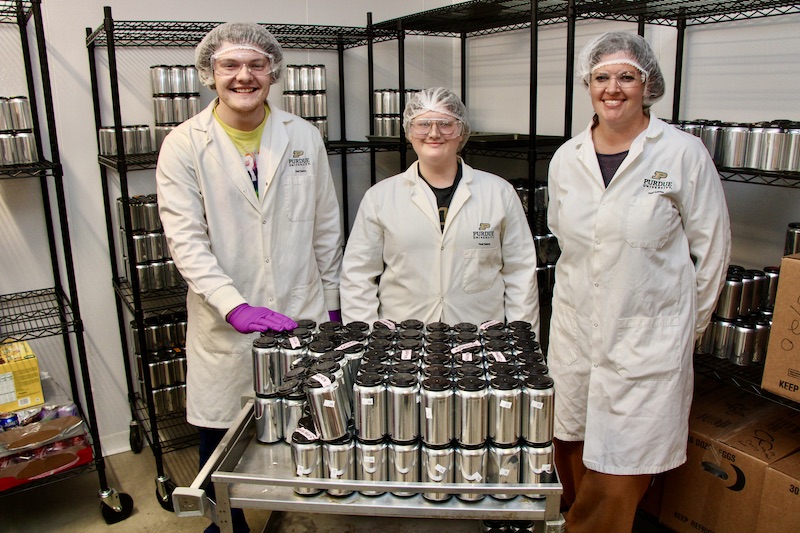
Allison Kingery, Purdue Food Entrepreneurship and Manufacturing Institute research coordinator in the Department of Food Science, and her team of undergraduate researchers were charged with creating and canning about 4,000 sodas for the study. Inside each soda are only four ingredients — water, sugar, citric acid and either the mango or mixed berry (blackberry, raspberry and blueberry) flavoring. From there, Kingery and her students had to fill 5-gallon kegs of the mix before carbonation.
“Pretty much from scratch, we learned how to use the soda-making equipment and then, through the process of trial and error, figure out how to make carbonated beverages and get the whole process through to the end to making consumable cans,” said Chris Mechalke, a senior studying biological engineering.
The carbonation process found students matching the correct pressures to get the proper bubbles in each soda.
“We use this machine called the QuickCarb,” Mechalke explained. “It can carbonate a whole keg in like 30 minutes. We had a holdup for a while because we were carbonating it at too high of a pressure. … So, we lowered the pressure, and then we finally got some good, carbonated soda.”
Once properly carbonated, the soda is streamed into a filler where four silver aluminum cans are filled at a time. These cans are then given a pull-tab lid and put into a seamer machine where each can and top are sealed together and ready for a water bath. Each soda is heat treated to 192 degrees to eliminate any potential bacteria that may have invaded during the process.
Following up
After that last cold can of Purdue mango soda is enjoyed, Running and her team will reconnect with the children for quantitative and qualitative data. The participants’ weight, fasting glucose levels and serum triglycerides will be measured. They will be interviewed to get their thoughts on what it was like to forgo soda for water, sparkling water or the reduced-sugar sodas.
“We put sugar in a lot of things that might not really need it,” Running said. “If we could learn to like things that are the less sweet, these sodas are the easiest target. There are a lot of people who drink enough soda that switching from soda to sparkling water, I think, could make a difference in their health.
“‘Can we replace sugar with water?’ Yes. That’d be great.”
Discover more from News | College of Health and Human Sciences
Subscribe to get the latest posts sent to your email.