Literacy and lions: Purdue HDFS researcher goes behind the screen to study educational media and children’s learning
Written By: Rebecca Hoffa, rhoffa@purdue.edu
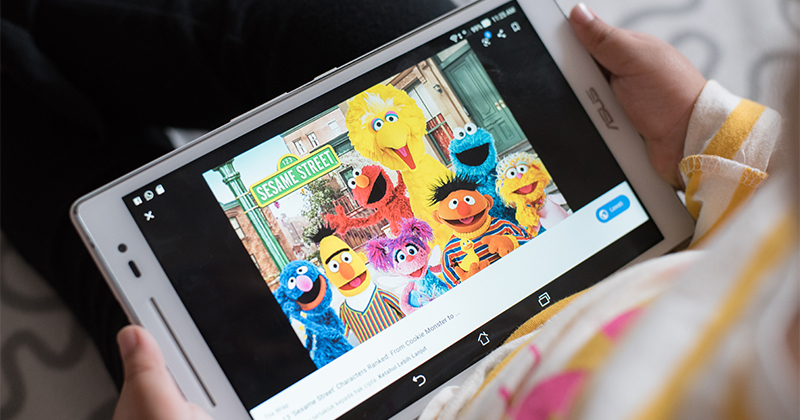
When Deborah Nichols, associate professor in the Purdue University Department of Human Development and Family Science, was on “The Bozo Show” as a kid and won the Bucket Bonanza Grand Prize Game, she was hooked on media production. What she didn’t realize at just 5 years old was that she would go on to conduct research that would inform popular children’s shows such as “Sesame Street” and “Between the Lions.”
“I just thought it was fascinating, all of the cameras and how it was done live,” Nichols recalled. “You would have cuts to commercials, and during the commercials, they would do things to keep your energy up. My interest in media kind of started there.”
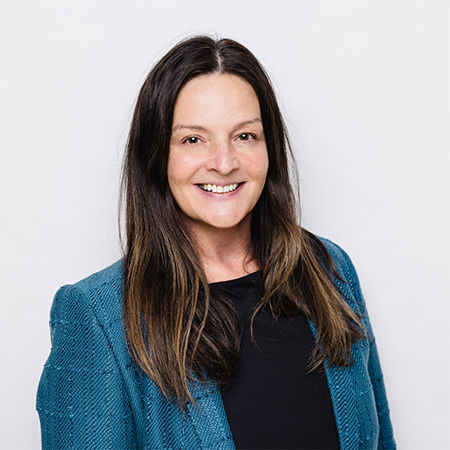
Deborah Nichols
Nichols’ research in the College of Health and Human Sciences centers around what she and a colleague outside of Purdue developed as the PAC model, which stands for persons, artifacts and contexts. The model indicates that an “artifact,” which in the case of children’s media could be a show, book or toy, is more effective when the “contexts,” such as the child’s environment or surroundings, and the “persons” who are using it are considered in the development of the “artifact.”
“I did the majority of the research for the kids’ program ‘Between the Lions,’” Nichols said. “It was created by people who were original creators of ‘Sesame Street’ but for slightly older kids, especially boys, who were having trouble learning to read, so it was the next step. I did a whole series of studies for them, and as we worked through it, we got bigger and bigger effects because we could tailor the show more appropriately to the kids we were trying to serve.”
While the majority of her work has focused on children ages birth-8, Nichols is currently working to translate her model and findings with children to an older population, working on developing an app that offers recommendations for informal caregivers taking care of individuals with chronic disease, including dementia and Alzheimer’s disease.
“We’re in development right now, and we’re close to the end of having the phase one product out,” Nichols said.
Nichols’ work that led to creating her model began under her PhD advisors, Aletha Huston and John Wright, who had done a lot of research with “Sesame Street” in their lab at the University of Kansas. She worked with them on a longitudinal study that examined the television young children watched at age five and how that related to a range of outcomes in their teens. Most of their educational TV viewing at that time was “Sesame Street” and “Mister Rogers’ Neighborhood.”
“While it’s correlational — so you can’t say it caused it, we did find that watching ‘Sesame Street’ was associated with higher grades, better academic self-concept and more book reading for fun, while Mister Rogers was associated with higher creativity scores, more creative activities and more classes at school in that vein,” Nichols said. “These patterns supported what we called the early learning hypothesis: that early exposure to high-quality, educational content can prepare children for school by building foundational skills, shaping motivation and boosting confidence. That early success may set them on a positive trajectory that persists over time, especially when reinforced by meaningful classroom experiences and supportive expectations.”
Under her advisors’ mentorship, Nichols focused her dissertation on studying how captions can influence children’s literacy, finding that turning on captions in children’s television leads to higher word recognition, even when narration wasn’t present. The connections she developed during graduate school kickstarted Nichols’ work studying and informing children’s television, leading her to the production company of “Between the Lions.”
“I did their first study, and it was really successful — kids learned a lot,” Nichols said. “I just kept working with them. That work led PBS to hire me to be their evaluator on their Ready to Learn grant. It was the first grant cycle where 25% of the budget had to go to research. It was the first time they’d ever done that, which was really cool.”
Nichols noted creating television shows is expensive, so often a lot of work goes into testing to ensure the content is effective prior to airing it, which was something she often helped facilitate in her work with PBS, where she later served on the PBS Kids Next Generation Media Advisory Board.
“There are some key things about educational media that you need to have,” Nichols said. “One is that you have an intentional curriculum. You also have a board of advisors or an educational consultant to help you understand how kids learn. You want to make it developmentally appropriate, which is a challenge because kids change so much so quickly. If you look at a lot of the PBS programs, they’re narrowly targeted. Also, it doesn’t matter how well you’ve designed it; if it’s not engaging, kids aren’t going to watch it. That’s a big part of it too. ‘Sesame Street’ embedded lots of adult jokes. That was intentional to bring parents to sit and watch with their kids. ‘Sesame Street’ was the original model, and it was working.”
While print books are often prioritized in discussing literacy, one influential study Nichols conducted found that educational media can be a tool for under-resourced families to use in improving their children’s literacy, often affording them larger learning gains.
“Broadly speaking, kids who come from under-resourced homes have fewer opportunities and fewer resources in the home, and when you can provide them with high-quality educational media via television or a tablet or even their parent’s phone, you see larger effects for them than you do for more advantaged kids,” Nichols said. “Generally, they have further to go, but they catch up, and in some cases, my research shows they move ahead, which is pretty amazing.”
While screens and technology have rapidly grown and shifted over the course of Nichols’ research, she noted the most important thing for parents to do is to be intentional with media routines, rather than enforcing strict restrictions.
“I never suggest screen time restrictions,” Nichols said. “I always talk about content and being intentional and never leaving a TV on in the background because that’s like secondhand smoke — it’s that bad for kids. It causes executive function disruptions, and parents don’t talk as much. It’s problematic. But if you sit down to watch something intentionally, it can be very powerful. Just turn it off when you’re done.”
Discover more from News | College of Health and Human Sciences
Subscribe to get the latest posts sent to your email.