Purdue Health Sciences researchers discover a new potential mechanism towards Alzheimer’s resilience
Written By: Rebecca Hoffa, rhoffa@purdue.edu
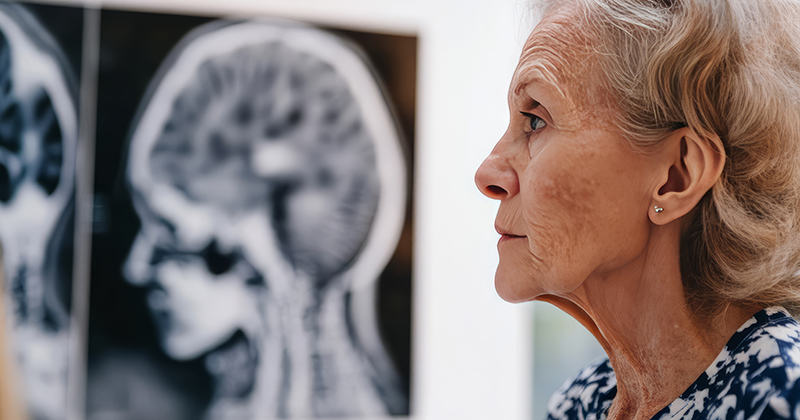
For Purdue University School of Health Sciences researchers Priyanka Baloni and Purba Mandal, developing resilience to Alzheimer’s disease is a bit like fixing a broken-down car. If you focus only on removing the amyloid plaques and tau tangles, which are hallmarks of Alzheimer’s disease in the brain, you’re merely fixing the dents in the car; it may look better, but the engine still won’t run. To better address that “engine problem,” the researchers are looking at the mitochondria’s role in building resilience to Alzheimer’s disease.

“The entire field of Alzheimer’s disease research was based upon that you have these proteins in your brain, and that’s why you have the disease,” Mandal said. “But even after removing the proteins, the disease did not get cured. The main takeaway was maybe the answer is not always removing the bad proteins but looking into the inherent biological mechanisms that a human body itself possesses to make a person more resilient to not having a disease. With this study, what we wanted to see is, other than looking into the proteinopathies in the brain, can we look into mechanisms that make people more susceptible or resistant to the disease? The paper is focused on how mitochondria — a small organelle inside the cell — helps mitigate these effects, how its imbalance can cause a person to go toward disease conditions and how the restoration of energy can make someone more resilient to the disease.”
The recent paper published in Communications Biology focused on data from postmortem human brains, which were analyzed in partnership with the Alzheimer’s Disease Metabolomics Consortium led by Rima Kaddurah-Daouk, a professor in Duke University’s Department of Medicine and a co-author on the paper. As part of this work, Mandal and Baloni focused on a group of individuals who have asymptomatic Alzheimer’s disease. These individuals maintained normal cognition all the way until their death, but their brains showed the pathology of Alzheimer’s disease. This is a key component in understanding the protective factors that prevented the disease from progressing into difficulties with memory and cognition.
“We would say about roughly 30% of the people have asymptomatic Alzheimer’s disease, also known as preclinical Alzheimer’s disease,” Mandal said. “If you’re having mild dementia, you will only go to a clinic when you’re having some issues, right? And if you’re having issues, you have these protein accumulations. So, if you want to date the individual back to a normal state, it is more difficult. But what if you could get those individuals into an asymptomatic stage where they are not having dementia? They have the pathology, but they are working just fine. You are not trying to get an individual back to the normal state but maybe bring them to a state where they can function normally. This also gears away from a lot of side effects that all the monoclonal antibodies that are trying to get rid of the proteins can cause, such as making your brain experience inflammation.”
Funded by the National Institute on Aging, the research ultimately put more of a focus on the mitochondria, which has previously been a lower focus in National Institutes of Health clinical trials. The researchers hope to better understand the categories of disease so that, rather than simply comparing a control group — typical, cognitively healthy individuals — with individuals exhibiting the disease, clinical trials can better focus on the underlying biological mechanisms in the brain. Their goal is also to enhance the body’s bioenergetics to protect against symptomatic Alzheimer’s disease.

“The current medications, which are FDA approved, have huge side effects at the moment,” Baloni said. “We also know that one drug doesn’t fit all the modalities that we are currently looking for in Alzheimer’s disease. So, it’s not like the drugs are not working. They are not targeted toward the individuals properly. This kind of study would help us look into the groups of people in which these changes are more prevalent and then look for a more precision-medicine approach where we can devise a new therapy that is more targeted toward the specific group of individuals and then lead them toward a more stable state. It’s more about applying precision medicine so we can look for a better outcome for these individuals rather than having a side effect which can impact their health in the long run.”
Because of the insights of this study, Baloni and Mandal also see promise in NADH (reduced nicotinamide adenine dinucleotide) supplements, which may provide a boost on the cellular level. Baloni noted building resilience against Alzheimer’s disease likely combines many elements; supplements as well as key lifestyle factors such as exercise and a healthy diet can be beneficial to living a longer, healthier life.
“We always appreciate the generosity of families who contribute the brain postmortem for the studies,” Baloni said. “That is always very useful for science and advancing the research. As a take-home message from our study: We are providing them the hope that those who are at risk for the disease can try to slow down the disease progression by taking appropriate steps. The first step is to maintain your energy balance in the body by supplementing the mitochondria with enough power so it can function normally. This is the hope because we know there are individuals who are at risk for having the disease, but if they take all the measures in a correct manner, they may be able to prevent the progression of the disease.”
Baloni and Mandal explained that the next steps of their research will focus on developing new clinical trial methods to measure all changes throughout the brain in real time, ultimately moving the research beyond postmortem data and toward a better understanding of how the changes influence the health of individuals. The researchers hope to take additional steps to understand the mitochondrial disturbances and ultimately find ways to potentially correct them.
“It’s just the beginning of our tip-of-the-iceberg investigation, but it has led to a lot of other outcomes that we are trying to currently investigate — like does the mitochondria impact other proteinopathies in the brain?” Baloni said. “So, we are investigating other changes that happen in the brain, how the cell types in the brain are impacted because of these bioenergetic changes and what other physiological outcomes we can measure so that we can stratify the patients according to these changes.”
Discover more from News | College of Health and Human Sciences
Subscribe to get the latest posts sent to your email.