Purdue alum found pathway to medicine through Psychological Sciences program
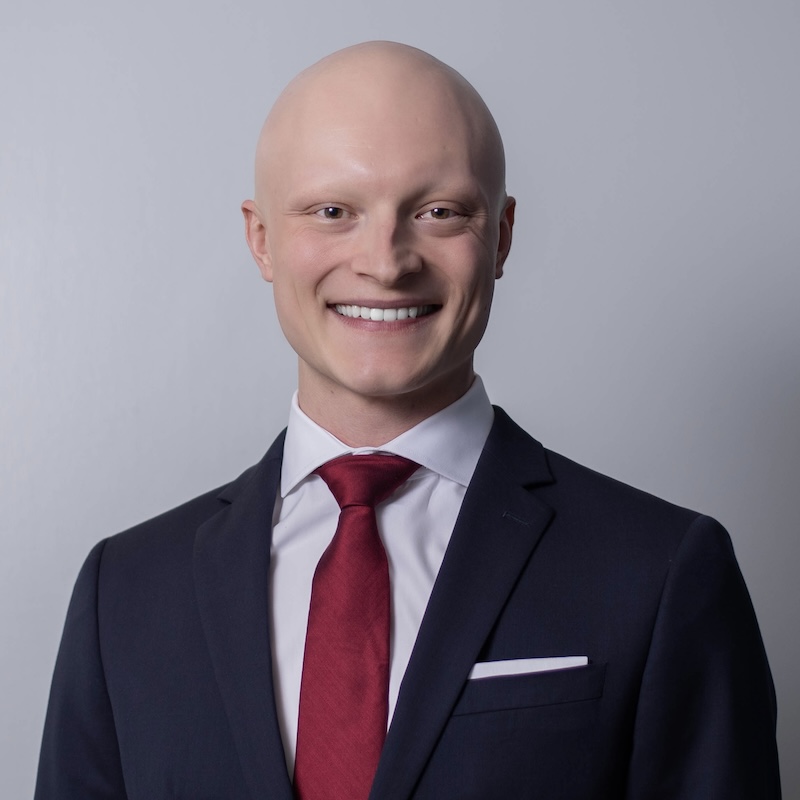
Dr. Jonathan Oskvarek
Written by: Tim Brouk, tbrouk@purdue.edu
As part of the Purdue University College of Health and Human Science’s (HHS) 15th anniversary year, we are catching up with alumni who received the HHS Outstanding Senior award when they were undergraduates.
Dr. Jonathan Oskvarek (BS ’13) traded a potential pilot’s uniform for medical scrubs early in his Purdue University career. While the first-year decision to switch majors from aviation management to what was then behavioral neuroscience psychology in the Purdue Department of Psychological Sciences left him grounded, he wouldn’t change a thing.
“Medicine was appealing to me because it was in the sciences, involved frequent interactions with people and is not a typical desk job,” Oskvarek remembered. “Being a pilot would have been really neat and fulfilling, but I felt being a doctor was a better fit for me.”
More than a decade later, the emergency physician is based in Akron, Ohio, while living in Cleveland. Outside of clinical work, Oskvarek helps teach new resident emergency physicians at Summa Health System. His position as research director at Summa has been aided by the undergraduate research he pursued while in Purdue’s College of Health and Human Sciences.
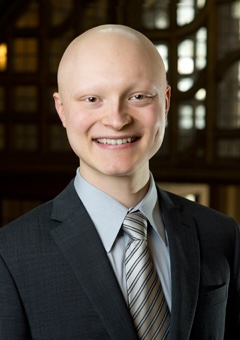
Oskvarek as a Purdue student in 2012.
Why do you still conduct research, and what are you working on currently?
When I was an undergrad at Purdue, I did research on the cognitive factors involved in intimate partner violence. Now, my research focuses on health economics and clinician performance improvement. It’s certainly far from what I did while at Purdue, but the foundational knowledge of research and experience with research has been crucial to my success as a physician researcher.
I like doing research now because I like to create knowledge and advance the field. I hope that my work in health economics can slowly push our very broken health care system a bit more in the right direction. And I hope my research in clinician performance improvement can help doctors do their jobs better and in a more enjoyable way.
How did your Purdue education help you in medical school?
Purdue was a great place to learn before going to medical school (at the University of Chicago). I chose to major in behavioral neuroscience psychology, which turned out to be surprisingly helpful in understanding my patients. The education was solid, but also, there were a lot of opportunities to get involved outside of class that were personally enriching and set me apart from the field of applicants to med school.
Were there pivotal moments that helped give you momentum toward medical school?
Trying to get into medical school is stressful and full of uncertainty. Fortunately, I had great help from my academic advisor, classmates who were ahead of me in the process and other mentors at Purdue. My advisor in particular helped me plan out my class and pre-med entrance exam schedules so I had sufficient time and energy for both. Ultimately doing well enough on the MCAT was such a relief. Going on a medical mission trip to Honduras with Purdue’s pre-med group freshman year also solidified my interest in becoming a doctor and added to my motivation. Of course, finally getting offers for medical school acceptance senior year was a wonderful cake-topper and made the rest of my time at Purdue feel relaxed. After that, I had more time to take classes just for fun and socialize.
Why did you choose emergency medicine?
I like emergency medicine because of the variety of the job. We see patients with anything from a stubbed toe to cardiac arrest. The fast-paced nature of the work makes the shift go by quick. It’s also rewarding to help people when they need it most. I like it the best compared to other medical specialties because of the immediacy of the work. I can see patients right away and complete a medical workup of their problem within an hour or two, usually. Emergency medicine is about having a framework for helping anyone with any medical problem they walk in the door with. Working nights, weekends and holidays is rough but having that skillset is rewarding.
What advice would you give to a young undergraduate at Purdue who is interested in pursuing medicine?
Being a doctor is tough. Don’t do it for the money or lifestyle. … Working hard and taking advantage of all that Purdue can offer will put you ahead of your competition, but more than anything else, focus on being a well-rounded, grounded person. Make connections at Purdue that will last a lifetime. My only regret from undergrad is that sometimes I put work ahead of the rest of my life. Don’t jeopardize connecting with people around you. Your time at Purdue is a unique, once-in-a-lifetime experience — take full advantage of it.
Discover more from News | College of Health and Human Sciences
Subscribe to get the latest posts sent to your email.