Purdue Public Health researcher’s expertise tackles Presidential Fitness Test, K-12 student movement
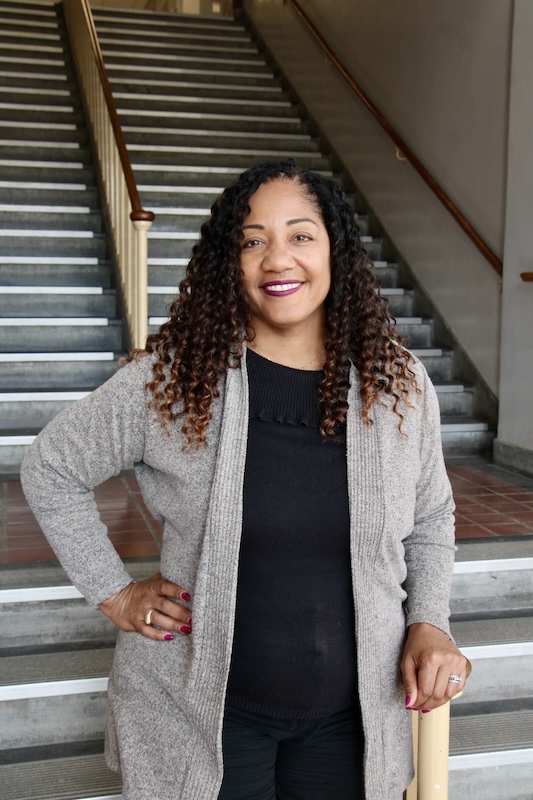
Kayce Solari Williams
Written by: Tim Brouk, tbrouk@purdue.edu
The summer announcement of the return of the Presidential Fitness Test was met with mostly positive reactions from the health sector because getting children moving in school has many benefits. However, the test, which was developed almost 70 years ago before its 2013 hiatus, must reflect all students’ physical abilities, according to Kayce Solari Willams, a clinical associate professor in the Purdue University Department of Public Health.
As a former president of the American School Health Association (ASHA), Solari Williams was interviewed by National Public Radio and other national media outlets regarding the test. Her three one-year terms as president before her 2024 move to Purdue as well as her decades of research on fitness in schools has made her an expert on the test and its potential effects on today’s K-12 students. Part of Solari Williams’ responsibilities as ASHA president was working with the federal government on health issues in schools. She presented over Zoom to U.S. legislators and their staff members to inform policy about a dozen times.
A lot has changed since President Dwight D. Eisenhower first developed the fitness test for getting kids more fit for military service. If she were given the keys to the test today, Solari Williams would start with the name.
“Why is it a test? Students already have test anxiety just from academics, so why add to that? Calling it a fitness test, you’re adding additional stress on them by testing them,” Solari Williams explained. “I think students would have immediate anxiety, immediate. Immediate heart rate up.”
Along with the media hits, Solari Williams’ expertise and experience earned her the 2025 Distinguished Service Award from ASHA. The researcher has been affiliated with the association since she was a graduate student at Texas A&M University.
“To receive something like that for doing the work that I would do regardless, I am grateful for it. I appreciate the recognition, but I am just doing what I feel like I’m supposed to be doing. And if it is seen as distinguished, I’ll take it,” she said. “But it is truly the work I have come to realize that I am meant to do and will continue to do so.”
While developed by Eisenhower, President Lyndon B. Johnson implemented the Presidential Fitness Test in schools in 1966. The test consisted of such physical feats as a 50-yard dash, pull-ups, sit-ups, a shuttle run, standing broad jump and softball throw for distance. Solari Williams acknowledged the Presidential Fitness Test could be problematic in its traditional format due its competitive nature. Students competed who could run the fastest and who could throw the furthest, for examples. The researcher said the test could still be effective if tailored to their own abilities.
“You probably don’t need a test to determine they’re probably not as fit as you would want them to be, and that’s what a test would be basically looking for,” Solari Williams said. “If this is a measure of just the health of our kids in schools, K-12, I would approach it like ‘How are we doing?’ so that we can address deficits or still facilitate the continued movement aspect.”
No matter if its presidential or not, Solari Williams is a major proponent in getting K-12 students moving when they’re at school. Yes, there are physical education classes and team sports but just moving around during a math class has its benefits. In her experience, Solari Williams has found simple movements and even laughter has its benefits on children’s bodies and minds.
“Perhaps the student has to stand up to answer. Instead of having them just raising their hand, raise both hands. That’s movement,” she said. “There are things you can incorporate that are simple things that the body will thank you for. Even inducing laughter has its physical benefits. The brain doesn’t know the difference between real or fake laughter so when it does that it releases some good stuff (feel-good chemicals like endorphins, serotonin and dopamine). And then the students can focus back on the work.”
While most would agree that a sedentary lifestyle promotes negative health outcomes like obesity, cardiovascular and metabolic problems, and mental health issues, Solari Williams said her research has found school children who are more sedentary have a more difficult time staying on task and learning as well.
“The wiring is still getting together in their brains. Keeping still that long and then wanting them to attend to nominal tasks or basic menial tasks is often more difficult for the younger groups,” Solari Williams said. “We have data that shows students who are engaged in activity or who are getting good rest, who are doing all these things, they’re more attentive in class. They’re taking care of their bodies better, so they’re less likely to get sick. So, they’re present in school. All these different types of benefits of movement could exist in your everyday. It doesn’t have to be complicated or a whole big ordeal.”
Discover more from News | College of Health and Human Sciences
Subscribe to get the latest posts sent to your email.