First-generation Boilermaker takes fast track to success in Purdue College of Health and Human Sciences
Written By: Rebecca Hoffa, rhoffa@purdue.edu
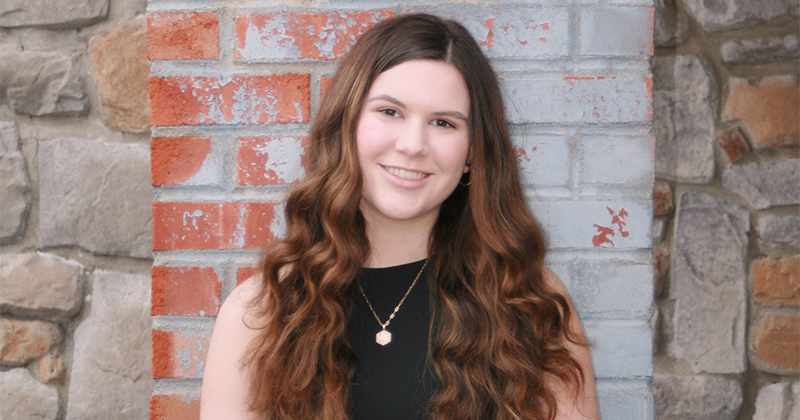
Makenzie Kelley(Photo provided)
At just 17 years old, Makenzie Kelley already had an associate degree, zero student debt and her sights set on Purdue after completing a dual enrollment program in high school through Ivy Tech Community College. As a first-generation college student in the Purdue University Department of Psychological Sciences, Kelley noted having a head start really boosted her confidence about the college experience.
“I later worked with the U.S. Department of Education to advocate for more dual enrollment programs,” said Kelley, who hopes to get back to her work with the Department of Education in the future. “I think it’s really important, especially for first-gen students, to have early access to not just college credit for a way more affordable price — I paid nothing to get my associate degree — but to have early access to college counselors. That understanding of how college classes are set up provided so much value.”
Currently entering her second year in the College of Health and Human Sciences studying psychological sciences, Kelley is on track to graduate early and continue her work toward earning a PhD.
“I want to not only conduct research in psychology, but to work in the application of that research,” Kelley said. “After all, what use is the science if there’s not the application? My interest in translational psychological sciences led me to Purdue and has really flourished since I got here.”
Kelley has already gotten a head start in her research journey through Leigha MacNeill’s Social-Emotional Health in Nurturing Environments Lab in the Department of Human Development and Family Science (HDFS). While there is a natural overlap between the two programs, for Kelley, having that interdisciplinary experience has been a game-changer.
“There is a lot of value to branching out and realizing there’s so much more than you initially thought,” Kelley said. “I never thought I would be researching developmental psychology, and now it’s what I want to get my PhD in. You have to be open to those opportunities, especially in your first few years of undergrad. Being a psychological sciences student (who is conducting research) in HDFS has been really valuable because I have access to that many more professors, events and the chance to bridge my interests in human development with psychopathology.”
Kelley participated in the Summer Research Opportunities Program last summer, which she said helped her professional growth. Getting accepted to the program was a particularly proud accomplishment for Kelley as one of the youngest members of her cohort.
“We had so many workshops, panels and guest speakers talking about graduate school,” Kelley said. “It really is the hidden curriculum. How are you supposed to know about those avenues and all of the things you’re supposed to be doing if nobody tells you about it, which is especially prevalent for first-gen students. My parents don’t know anything about a PhD, which is completely fine, but that means you have to find that information somehow.”
As a first-generation student, Kelley noted all the ways Purdue has supported her toward success, from her academic advisor, Brooke Gibson, to the clubs and organizations that have helped her find belonging, including HHS Student Council.
“There is often that feeling for first-generation students of realizing that the people around you have legacy status, they understand the college culture, or they already have connections, which immediately leaves you with the feeling of ‘I just got here, and I’m already behind,’” Kelley said. “I think that’s something unique that I had to navigate, but I do think it has made me appreciate college even more, because every day I’ve found something new in this process of discovery.
“It’s a huge motivator to say, ‘I’m going to take this opportunity that I have, something my parents didn’t have, and I’m going to do something impactful with it.”
While Kelley noted being a first-generation student offers inherent challenges of figuring things out as you go along, it’s also opened a wealth of knowledge that she’s been able to share with her parents and further the impact of her education.
“The way you view your situation is going to determine how successful you are,” Kelley said. “If you say, ‘Look at this hand that I have been dealt — I am behind, and I don’t know what to do.’ Well, that may be true; however, the decision that you make from there is going to determine your college career. You have the opportunity to create a legacy for yourself. You have the opportunity to take the sacrifice from your parents and do something really impactful with it. That means finding the right people, asking the right questions, getting involved, saying yes to everything, and not being afraid to send an email asking for help. I think something we consistently undervalue is that most people really do want to help.”
Discover more from News | College of Health and Human Sciences
Subscribe to get the latest posts sent to your email.