Purdue College of Health and Human Sciences, Polytechnic Institute researchers take their work to the air to study fatigue in student pilots
Written By: Rebecca Hoffa, rhoffa@purdue.edu
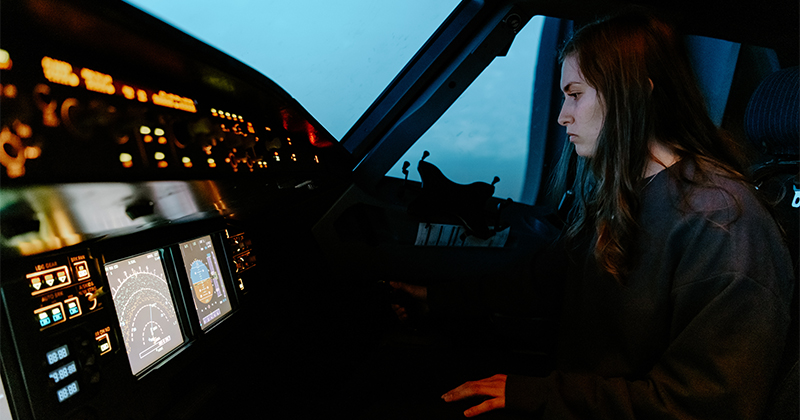
From passenger safety to unusual schedules to various exposures, pilots experience a variety of stressors with each flight they take. Student pilots add on an extra layer in managing the stressors of being a pilot while also being a college student.
To help understand fatigue in collegiate aviation, an interdisciplinary team of Purdue University researchers, including Mark Wilson, clinical assistant professor in the School of Health Sciences; Debra Henneberry, assistant professor in the School of Aviation and Transportation Technology; Julius Keller, associate professor in the School of Aviation and Transportation Technology; and Sudip Vhaduri, assistant professor in the School of Applied and Creative Computing, are looking at a variety of factors related to the health and well-being of student pilots as well as interventions to improve their professional and personal lives.
“When we looked at the remaining gaps in understanding fatigue in collegiate aviation and training, we saw real opportunities to improve,” Keller said. “Occupational and environmental health sciences naturally align around creating a safe workplace, but we can go beyond that. From a holistic perspective, it’s about building good relationships, improving GPAs, feeling better and performing better in life overall. As we work together, we’re exploring how to apply our research to share new insights with our students.”
Taking flight
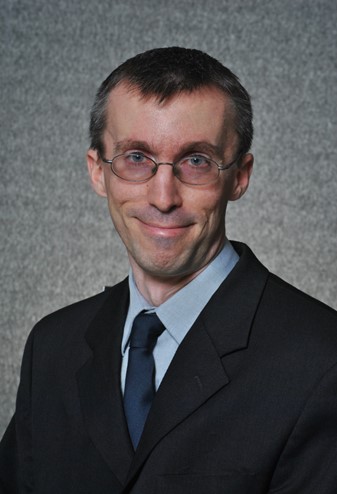
Mark Wilson
The group received a 2024-25 Research Breakthrough Award from the John Martinson Honors College, which has helped fund the project. Coming from two different colleges on campus — the College of Health and Human Sciences (HHS) and the Polytechnic Institute — the research team was connected through Alexander Francis, professor of speech, language, and hearing sciences and HHS associate dean for undergraduate education, who had previously worked with Wilson on noise measurement instrumentation. Francis heard Henneberry speak at an event and knew she and Wilson would make great collaborators. The rest of the team fell into place from there.
“I had worked with Alex on a side project, and then we started talking about this,” Wilson said. “These accidental chance meetings led to this larger collaboration.”
The team of researchers is taking a holistic approach in understanding how student pilots experience stress and fatigue. This includes using a wearable Empatica smartwatch to measure heart rate, electrodermal skin conduction and skin temperature; a heat stress monitor to measure the temperature inside the plane; a vibration meter to measure the plane’s vibrations through the seats; a noise dosimeter to monitor noise levels in the cab of the plane; and an air quality meter to measure the particulate matter air pollution in the air. The team is also implementing a survey in which student pilots self-report their experiences.
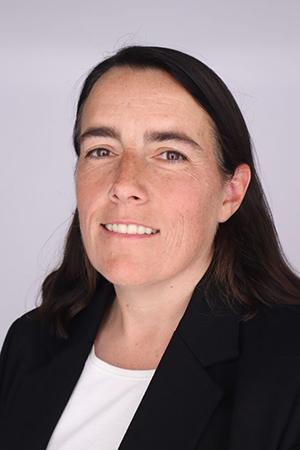
Debra Henneberry
“We’re not only looking at fatigue from a workload perspective,” Wilson said. “We’re also interested in different environmental exposures that can lead to fatigue. We’re looking at all of these different aspects. Real-time instruments that collect samples continuously measure the environment inside the plane, so we end up with a very large amount of data. That’s where Sudip comes in. We need a data expert who can take the large data files and figure out how they relate to physiological data. We also need to determine the best way to sync the data from different instruments in order to interpret changes over the course of a flight.”
The researchers see bringing together collaborators from a variety of disciplines as a strength of their work, allowing them to explore the broader applications for improving health and well-being, not only in aviation but also other transportation industries and other jobs that require shift work or unusual hours.
“The three departments we represent create the most fabulous Venn diagram I’ve ever seen,” Henneberry said. “We have rockstars in their disciplines, and we’ve been able to come together to apply this work broadly.”
Navigating the flight path

Sudip Vhaduri
In asking students to complete a survey, Vhaduri noted the interesting distinction between what students report and what the instruments measure. Using this approach will give them a more well-rounded idea of what is happening for student pilots’ stress and fatigue levels.
“Flying a plane is perceived as one of the most stressful jobs, but while surveying student trainees, we found an interesting finding,” Vhaduri said. “The pilots don’t feel they have problems with sleep or stress management compared to non-pilot students. The reason could be that they’re already well-maintaining their lifestyle to cope with occupational stressors. We feel sensor data-driven objective measures could tell us the story behind the pilot trainee’s lowered perceived stress. They might not feel it because they are already trained with that. Our multimodal AI modeling will give us better insights into what the stressors are and how they can improve their management of daily life and training. Insights from this research will enable the design and delivery of stress interventions for aviation and other critical and stressful operational sectors.”
While Wilson has conducted personal sampling on workers in various industry settings, this environment has different considerations, including the instruments’ weight and their effect on the plane’s balance as well as how the instruments may interfere with the pilots. Because of this, they’ve had to adapt their protocols to ensure maximum safety for the students while getting the data they’re interested in exploring.
“To execute a project like this, we have to plan everything from A to Z because safety is paramount in our industry,” Keller said. “Learning how to collect data while maintaining that level of safety has been an important process for us.”
Reaching new altitudes
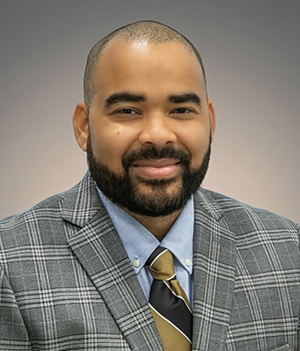
Julius Keller
The engagement of Purdue’s aviation students has been vital to the work’s success.
“The flight students are very in-touch with their own wellness and mental health, and they’re well-aware they have a fantastic career ahead of them,” Henneberry said. “As the law stands now, they can fly in the airlines until they’re 65 years old, but that is completely dependent on their health and medical clearance from the Federal Aviation Administration. The students want better insight into themselves and all of these responsibilities they’re juggling. They want to know how this rigorous schedule is impacting them and how that can be best mitigated going forward.”
In addition to the aviation students, undergraduate students throughout Purdue are helping conduct the research, from data collection and literature review to helping create prototypes that ensure the safe usage of the instruments. For Ria Sharma, a junior majoring in biomedical health sciences, this work has been influential not only in helping her develop her research skills but also in better understanding her roommate, who is an aviation student.

Ria Sharma
“I would see my roommate stressed out,” Sharma said. “It’s really strict the way they have to function to be a pilot. This research allows us to see how we can eradicate the fatigue that might be going on so our pilots can overcome those barriers in the future. At this point, it’s not just about the science; it’s about the collaboration. Not only am I working with people within my college, but I’m also expanding beyond it.”
As Boilermakers prepare for their careers in aviation, the study also provides them with some objective data about their own levels of fatigue that they can carry with them into the field.
“Until now, this kind of technology didn’t exist,” Henneberry said. “So, all pilots self-certified to say we were in good shape to fly, and one of the questions we asked ourselves was about our level of fatigue. The FAA has always encouraged us to have that introspection. But when something is subjective and you only know yourself, you can’t always make the best decisions, so this objective data helps them make more informed decisions going forward.”
Discover more from News | College of Health and Human Sciences
Subscribe to get the latest posts sent to your email.