Nursing researcher explores elder care collaboration and study abroad pipelines in Taiwan
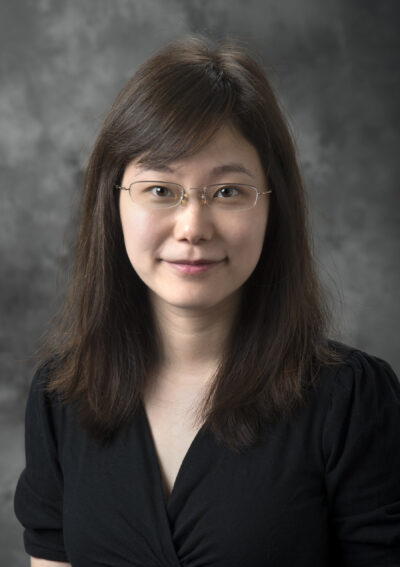
Marian Liu
Written by: Tim Brouk, tbrouk@purdue.edu
Marian Liu’s expertise in elder care has gone international.
Liu, associate professor in the Purdue University School of Nursing, was a recent guest of honor at an Adult Protective Services training event in Taiwan. She was also invited to a roundtable discussion with community and hospital care managers. Liu shared her years of research and policy experience in the United States, which made an impact with the audience of health care workers, researchers and lawmakers.
“The systems are different,” said Liu, who was born and raised in Taiwan. “So, it’s interesting to hear about how they handle all of the adult protection cases as opposed to how we do it in the United States. The government official and hosting agencies were super excited to learn the national comparison of what’s going on in the U.S. and Taiwan.”
Liu’s recent time in Taiwan also planted the seeds of a Purdue College of Health and Human Sciences study abroad opportunity. The proposed summer program would allow students interested in health care to earn credits by taking summer classes at National Cheng Kung University (NCKU) in southern Taiwan as well as exploring Taipei in northern Taiwan, the capital with a population of about 2.5 million people.
Liu also caught up with former colleagues from Taipei Medical University and Chung Shan Medical University. But instead of tea, Liu helped with research projects, earning co-authorships on older adult health care studies.
While the Taiwan/NCKU collaboration is still being finalized, Liu has returned to West Lafayette bolstered by new knowledge and opportunities to share with her Purdue nursing students.
What are some of the major differences in elder care between the United States and Taiwan?
In the U.S., our Adult Protective Services system is not centralized. It is required in each state and also all the territories. But there’s very, very little federal funding going into these government agencies. So, some of these agencies are funded at the state level; some of them are funded by the county governments. Varying funding sources lead to various practices, depending on which state (and sometimes which county) someone resides.
In Taiwan, you can imagine it is a small sea island, so it is a lot more standardized and uniform in relation to how their workers respond to certain situations and how they refer cases to different places.
In terms of the referral system, it would be more consistent when you have that centralized kind of structure. However, in Taiwan, their workers — oh my goodness, I don’t know how they do it. They cover adult protection. They cover domestic violence. They cover child protection. I didn’t realize they cover everything until I got there. I was there, as part of their training, to assist with homing in their adult protection knowledge. We (in the United States) separate adult protection from other populations, so workers get to be more specialized in a sense. Nevertheless, this compartmentalization, compounded by ageism, also leads to the low funding levels in adult protection.
What about worker burnout in this field?
In Taiwan, you have to navigate the various health care and social service systems. So, I would imagine they have to go into all of those different worlds and understand how each works, like more broadly than Adult Protective Services here. However, I would not link that to recruitment, retention or burnout issues, because I don’t know what their caseload (or workload) is as opposed to our staff in (U.S.) Adult Protective Services where we started talking about how this is not an easy job and people get burned out easily. I actually have a collaboration with the National Adult Protective Services Association looking at this exact issue, asking, ‘Why do people stay? Or why do they want to leave?’ We also asked them about their workload, supervisor attitudes, organizational culture and individual characteristics to understand how to improve the work environment to retain workers to continue helping this vulnerable population.
What are some major issues in elder care in Taiwan?
A lot of it is a caregiving burden. We have it in the U.S. too, but it seems a lot more prominent in Taiwan in terms of the cultural expectation that adult children are supposed to be taking care of aging parents. Children (even as adults) are not to defy parents’ desires, in combination with older generation’s desire to age in place with only family support (e.g., resistance to move into long-term care facilities and declining paid caregiving entering their homes), makes caregiving stressful. Since adult children might live close to their aging parents like me, sometimes it becomes impossible to satisfy aging parents’ care needs following their desire.
What was some of the research you collaborated on while in Taiwan?
The topic was loneliness and sleep quality in relationship to sarcopenia (a condition that causes muscle mass loss in older adults). We’re also looking at specifically women during menopause — whether there’s a higher risk and what that means in terms of intervention and prevention. I’ve never studied sarcopenia before, but it’s relevant to elder care in my personal life. My dad was recently diagnosed with sarcopenia, so naturally I got interested in the topic when I-Hui Chen brought it up and ended up involved in the publications. I don’t see it as a new line of research that I get into, but it is a valuable opportunity to talk to an expert when your personal life intersects with what you could potentially contribute to the scholarly work.
What inspired the Taiwan/NCKU study abroad proposal?
Even though I grew up in Taiwan, I’d never been (to NCKU). Chi-Yin Kao at NCKU was one of the Fulbright scholars who visited us last year. She hospitably invited me to visit NCKU when she learned about my trip to Taiwan. It’s a beautiful campus to say the least, and they are building the first geriatric hospital in Taiwan. I thought, ‘Is it possible maybe I can bring students here?’ Faculty and students from NCKU have come to Purdue for classes, research and collaboration, but Purdue students have never gone there.
It’s in process. … So far, what we’re thinking about is holistic care. I don’t think we need to necessarily limit ourselves to just nursing students, since NCKU also educates health care professionals in various fields. So, I think we will propose a program that is a little bit broader. The students will be anyone interested in health care, because we have future nurses, audiologists, psychologists, dietitians, occupational therapists, biomedical scientists, etc. in the college. We plan to build a proposal that will touch upon mental health, physical health and even spiritual health in some ways.
Discover more from News | College of Health and Human Sciences
Subscribe to get the latest posts sent to your email.