From athletes to AI, Purdue psychological sciences researcher studies factors behind peak — and poor — performance
Written By: Rebecca Hoffa, rhoffa@purdue.edu
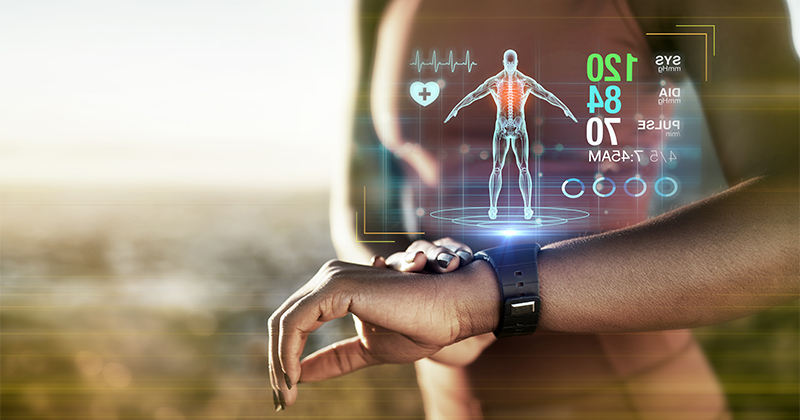
Michael Phelps, Serena Williams and Simone Biles have all been named the GOAT of their sport, but what makes them different from other swimmers, tennis players and gymnasts who never made it to the Olympic level? Brooke Macnamara, associate professor in the Purdue University Department of Psychological Sciences, is studying skill acquisition and expertise to help understand why these athletes stand out.
“I’m interested in both intra-individual change, so how we get better at performing a task, and also in inter-individual differences, or why people vary in their ultimate levels of performance and in their trajectories toward performance,” Macnamara said. “These include experiential factors, such as types of practice and training; between-person differences and cognitive abilities; motivational factors; features of the environment; and opportunities. This is across domains. I’ve looked at it a lot in sports. I sometimes look at it in terms of job performance.”
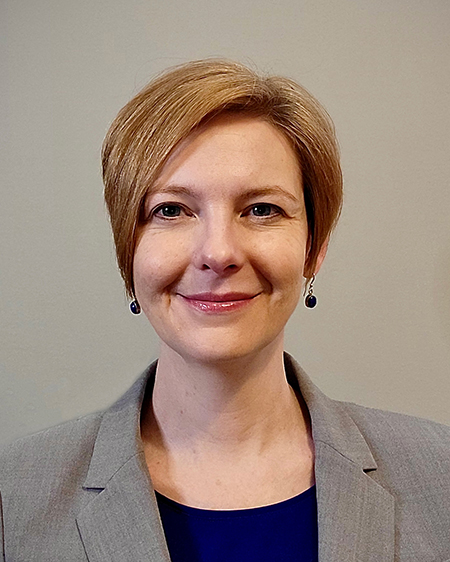
Brooke Macnamara(Photo provided)
The evolution of technology, particularly with the rise of artificial intelligence and automation, has transformed Macnamara’s work, opening up a new area of research: skill decay and AI usage. As part of a nearly $2 million National Science Foundation grant, Macnamara and a team of researchers from Case Western Reserve University, Emory University and Ohio State University are investigating how the use of AI in laparoscopic surgery and radiology can lead to skill loss and the cognitive effects of relying on AI when the tools change or go away. While AI usage is already common practice in radiology, it is a promising “future of work” area for laparoscopic surgery.
“If we do find what we’re hypothesizing in terms of people performing worse once they’ve acquired a skill and AI is taken away, then it’s not even as simple as ‘OK, don’t use AI,’ but how can we then make AI in a way that doesn’t lead to that?” Macnamara said. “Maybe make it more active, where AI can help them build a mental model for what it’s doing and what they should be doing. There are all sorts of different designs that we could have for AI. There could also be different training and maintenance paradigms. If we’re training the next generation of surgeons, maybe the training paradigm is not heavily using AI-assistant tools, for example, and getting some training with and without it.”
Prior to her work with AI in Purdue’s College of Health and Human Sciences, Macnamara has long applied her work to investigating varying performance levels in people, whether that’s in sports, academia or other areas.
“A very popular theory for quite a while was the deliberate practice theory, or the 10,000-hour rule — so with 10,000 hours of practice, anyone can become an expert,” Macnamara said. “It turns out that people who start early, focus in on a single discipline and engage in a lot of discipline-specific practice tend to outperform people with less practice early on. They have these fast improvements, but interestingly, if you look across a career, then a lot of these people who were early top performers do continue to do well, but usually people who were doing well but not as well often surpass them. If you look at world-class performers, they tend to have started later compared to national-class performers. These are clear distinctions across top areas — the No. 1 tennis player in the world versus the No. 200 player. The No. 200 player may be professional and playing for a living, but they haven’t made it to the Olympics.
“We’ve started finding this in other disciplines as well, so if you look at Nobel laureates compared to national-class awardees in the sciences, they tended to have engaged in disciplines other than the field in which they got the award, more so than the national-class counterparts. They also didn’t look as impressive early on. So, if you look at Nobel laureates compared to nominees, the citation counts are higher among nominees early on, but then it flips. We see these trajectories that differ when we’re looking at the highest echelons. Deliberate practice doesn’t explain that. It does a great job explaining young performance and sub-elite performance but not world-class performance.”
For Macnamara, having that understanding of skill acquisition in the realm of world-class athletes may have direct implications for artificial intelligence as well, as she works with computer scientists and engineers to merge her bodies of work.
“I’m also trying to bring some of the work that I’m excited about into the AI space, so looking at how people learn,” Macnamara said. “Could it be the case with an autonomous system that if it tries to acquire skills in multiple related but different areas, can that translate to better performance on something else? I’ve looked at that with humans in these world-class performances, but what does that look like on a smaller level, and does that help with learning transfer, both for people and autonomous systems?”
Previously an American Sign Language interpreter, Macnamara became inspired to pursue her PhD and dive into this research area after she noticed that interpreting wasn’t an easily acquired skill for much of the bilingual population.
“There’s a really high failure rate,” Macnamara said. “This is across all language pairs. Even if you grow up bilingual, those who attempt to go into an interpreting program, generally across the board, about 90% of people are not able to either graduate the program or get national certification. Presumably, it’s because being able to speak and understand multiple languages is different than taking someone else’s thoughts, changing the structure and then producing it in another language while you’re listening to a different part of the message. A lot of people can’t do that. I just got interested in why. Why can some people do this and others not? It didn’t seem just to be if you’re smarter, you can do it. It didn’t just seem to be if you have more language experience, you can do it.”
Macnamara is currently working on a Department of Defense grant to examine skill acquisition in different contexts, such as when the environment is dynamic or uncertain. She is also co-developing a project to examine how human skill acquisition can be translated for autonomous systems that struggle more than humans with many adaptive decision-making or physical problem-solving tasks.
“A big question in robotics is how we can get autonomous systems to perform better,” Macnamara said. “There are many things they can do really well and better than people, but then they’re really bad at a lot of other tasks that humans excel at and find easy. Some of those are physical problem-solving, especially if there is anything unexpected in the environment. They’re also not good at making decisions in environments like building something on a dock that’s moving. If you’re packing a U-Haul truck, you can kind of plan where things should go, what’s delicate and how things might shift, and you just adapt if things are oddly shaped or weighted, even without thinking. Autonomous systems are really bad at these things. A big question is: What can we learn about human cognition, skills and performance that we could then translate into AI or a computational model to feed an autonomous system that would be confident in these things.”
Discover more from News | College of Health and Human Sciences
Subscribe to get the latest posts sent to your email.