Category Archives: Chapter 6 Homework

Homework H6.B – Fa 25

Problem statement
Solution video

DISCUSSION THREAD

Discussion and hints:
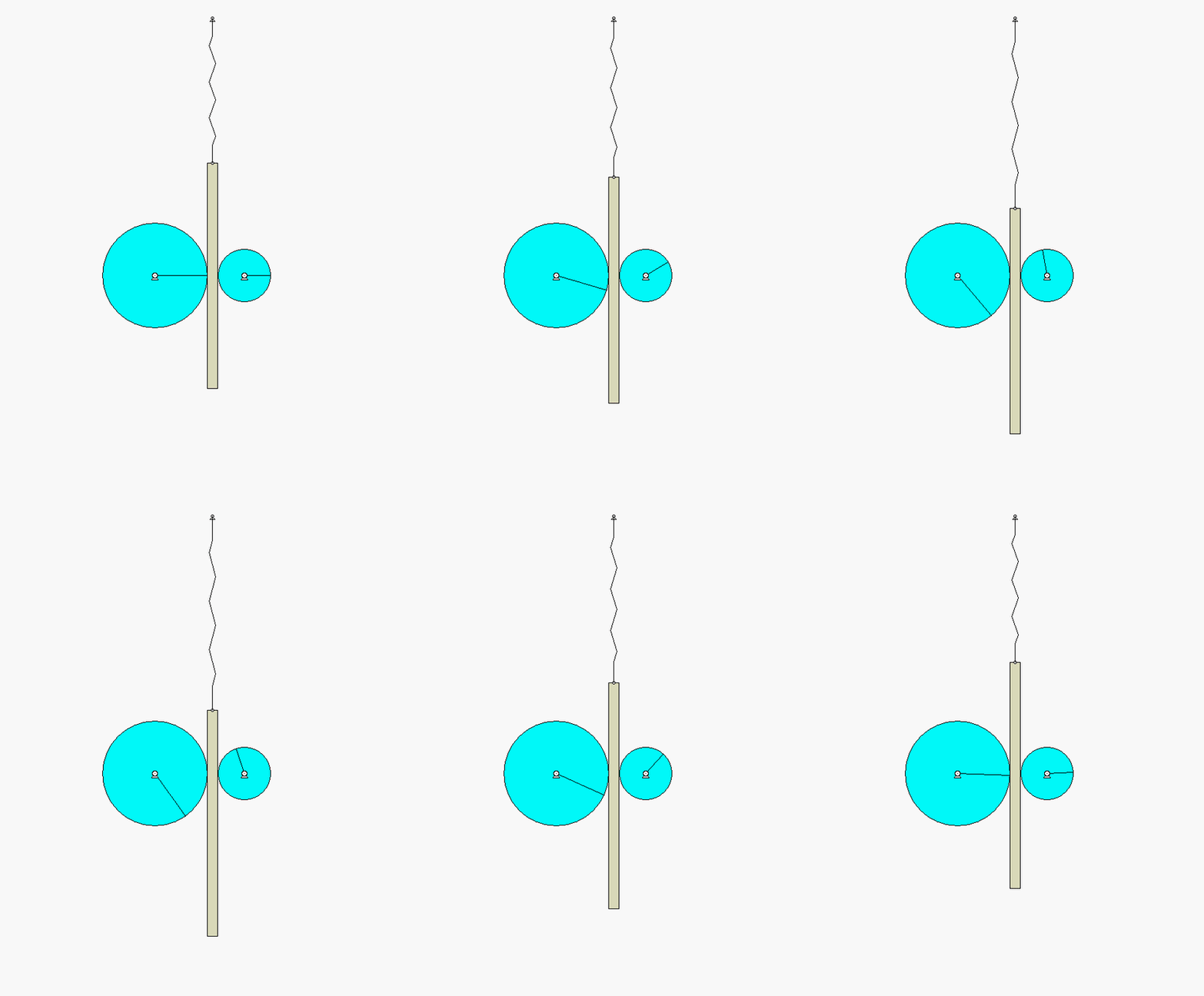
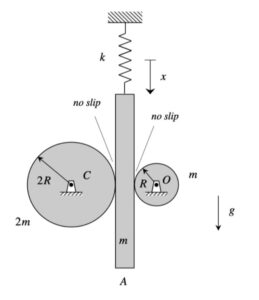
The derivation of the dynamical equation of motion (EOM) for a system is a straight-forward application of what we have learned from Chapter 5 in using the Newton-Euler equations. The goal in deriving the EOM is to end up with a single differential equation in terms of a single dependent variable that describes the motion of the system. Here in this problem, we want our EOM to be in terms of x(t).

Recall the following four-step plan outline in the lecture book and discussed in lecture:

Step 1: FBDs
Draw individual free body diagrams for the two disks and block A.

Step 2: Kinetics (Newton/Euler)
Write down the Newton/Euler equations for the two disks and block based on your FBDs above.

Step 3: Kinematics
Use the no-slip condition between each disk and the block to relate the angular accelerations of the disks to the acceleration of the block. As confirmed by the animation above, the angular rotations of the disks are NOT the same, in either magnitude or direction.

Step 4: EOM
Combine your Newton/Euler equations along with your kinematics to arrive at a single differential equation in terms of the dependent variable x.


Any questions?
Homework H6.D – Fa 25

Problem statement
Solution video

DISCUSSION THREAD

Discussion and hints:

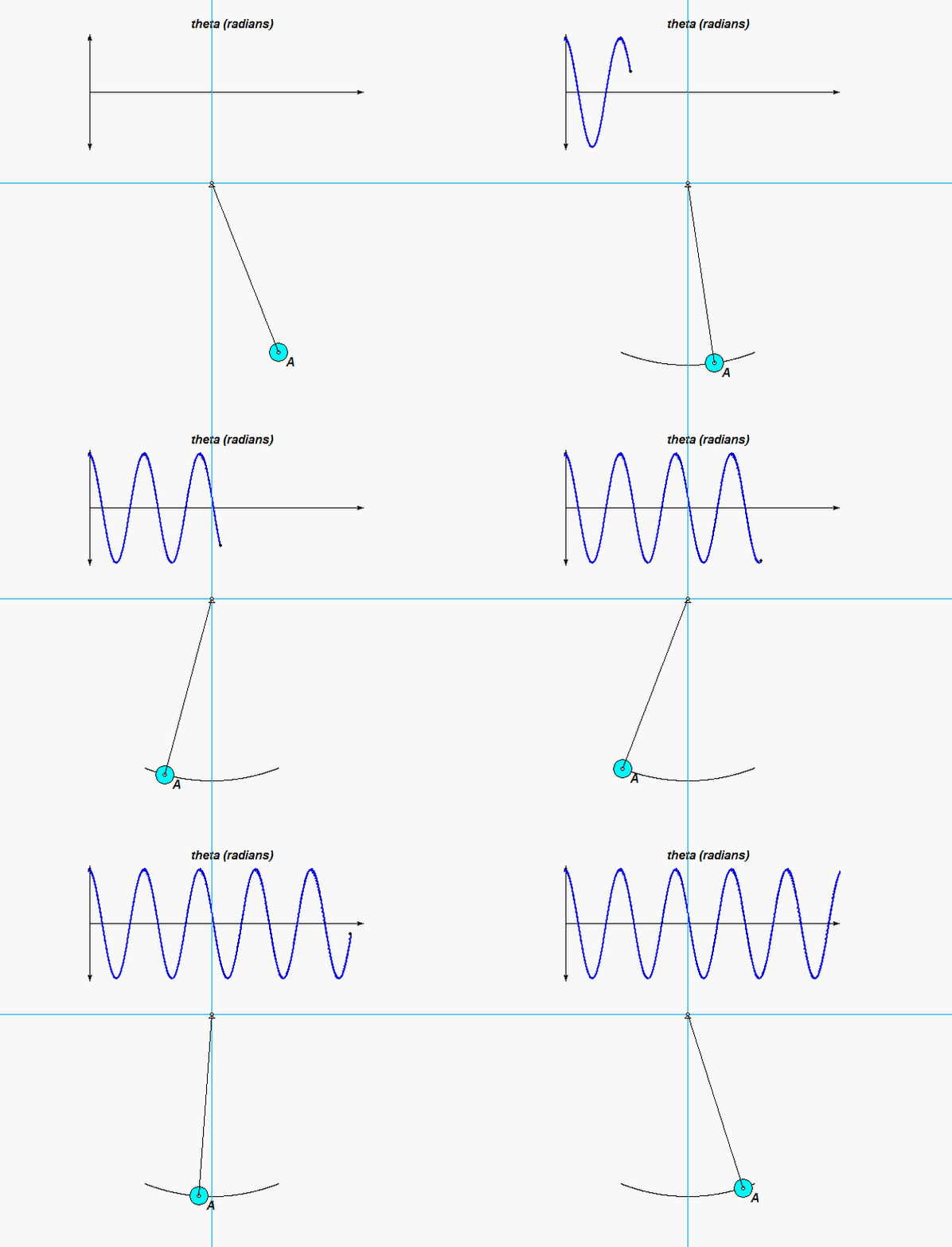
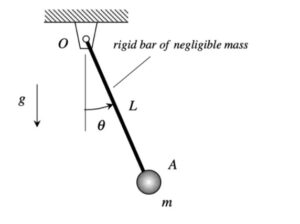
The derivation of the dynamical equation of motion (EOM) for a system is a straight-forward application of what we have learned from Chapter 5 in using the Newton-Euler equations. The goal in deriving the EOM is to end up with a single differential equation in terms of a single dependent variable that describes the motion of the system. Here in this problem, we want our EOM to be in terms of θ(t).

Recall the following four-step plan outline in the lecture book and discussed in lecture:

Step 1: FBDs
Draw a FBD of the particle. It is recommended that you define and use a set of polar coordinates for this problem.

Step 2: Kinetics (Newton)
Write down the Newton equation for the particle in the θ-direction.

Step 3: Kinematics
Do you need any additional kinematics for this problem?

Step 4: EOM
Step 2 should produce a single differential equation in terms of the dependent variable θ. Note that this EOM contains a nonlinear term of sinθ. Recall that we can represent the sine function by its power series representation: sinθ = θθ3/3! + θ5/5! – …    For small angles θ, we see that this series could be approximated by its leading term, giving: sinθ = θ. The approximation for small angles of oscillation produces a LINEAR differential equation. Use this approximation here.


Any questions?

Homework H6.F – Fa 25

Problem statement
Solution video

DISCUSSION THREAD

Ask your questions here. Or, answer questions of others here. Either way, you can learn.


DISCUSSION and HINTS

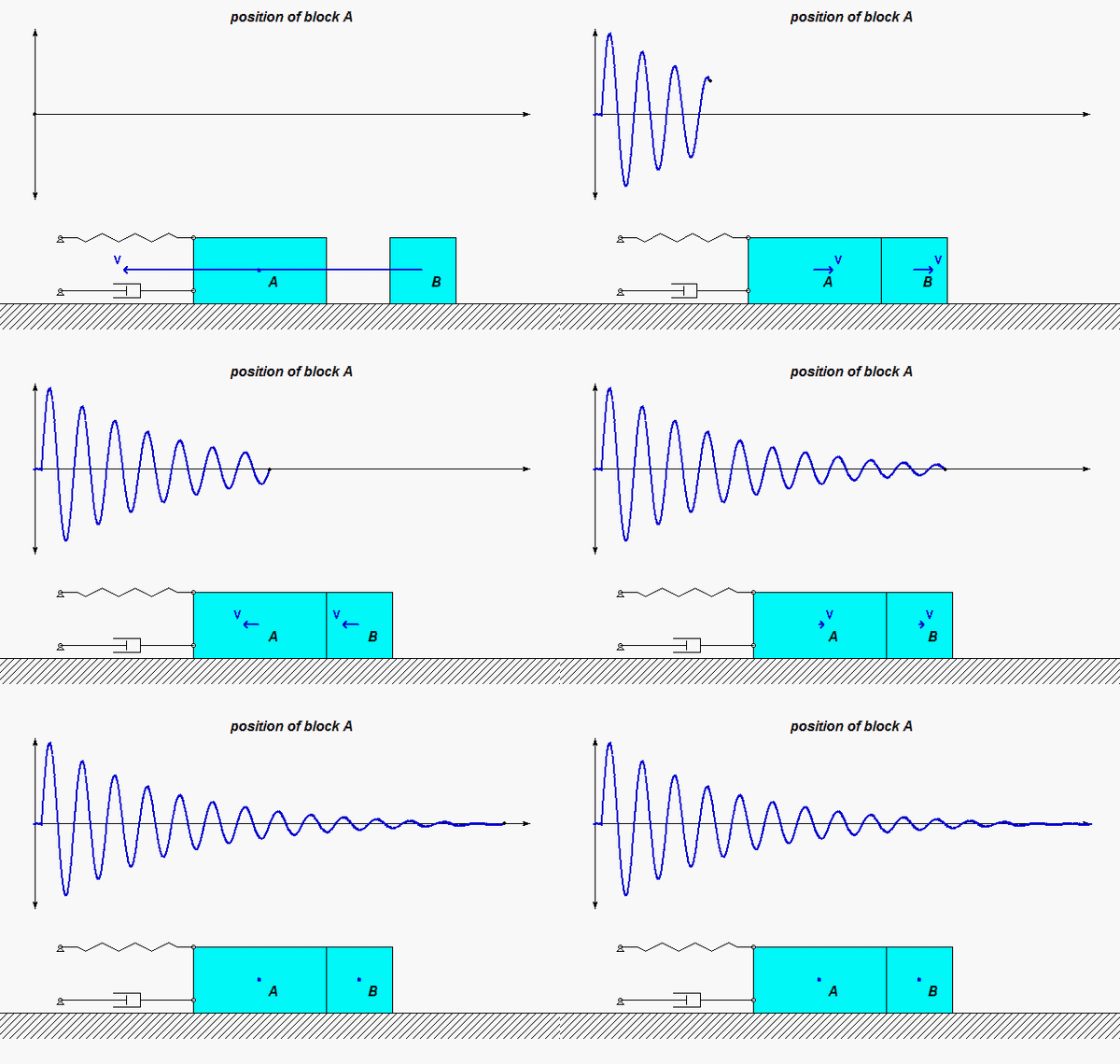
After block B strikes and sticks to block A, the two blocks move together as a single rigid body. In deriving your equation of motion here, focus on a system with a single block (of mass 3m) connected to ground with a spring and dashpot.

Recall the following four-step plan outline in the lecture book and discussed in lecture:

Step 1: FBDs
Draw a free body diagram (FBD) of A+B.

Step 2: Kinetics (Newton/Euler)
Use Newton’s 2nd law to write down the dynamical equation for the system in terms of the coordinate x.

Step 3: Kinematics
None needed here.

Step 4: EOM
Your EOM was found at Step 2.

Once you have determined the EOM for the system, identify the natural frequency, damping ratio and the damped natural frequency from the EOM. Also, from the EOM we know that the response of the system in terms of x is given by: x(t) = e-ζωnt [C*cos(ωdt)+ S*sin(ωdt)]. How do you find the response coefficients C and S? What will you use for the initial conditions of the problem? (Consider linear momentum of A+B during impact.)

Homework H6.N – Fa 25

Problem statement
Solution video

DISCUSSION THREAD

Ask your questions here. Or, answer questions of others here. Either way, you can learn.


DISCUSSION and HINTS

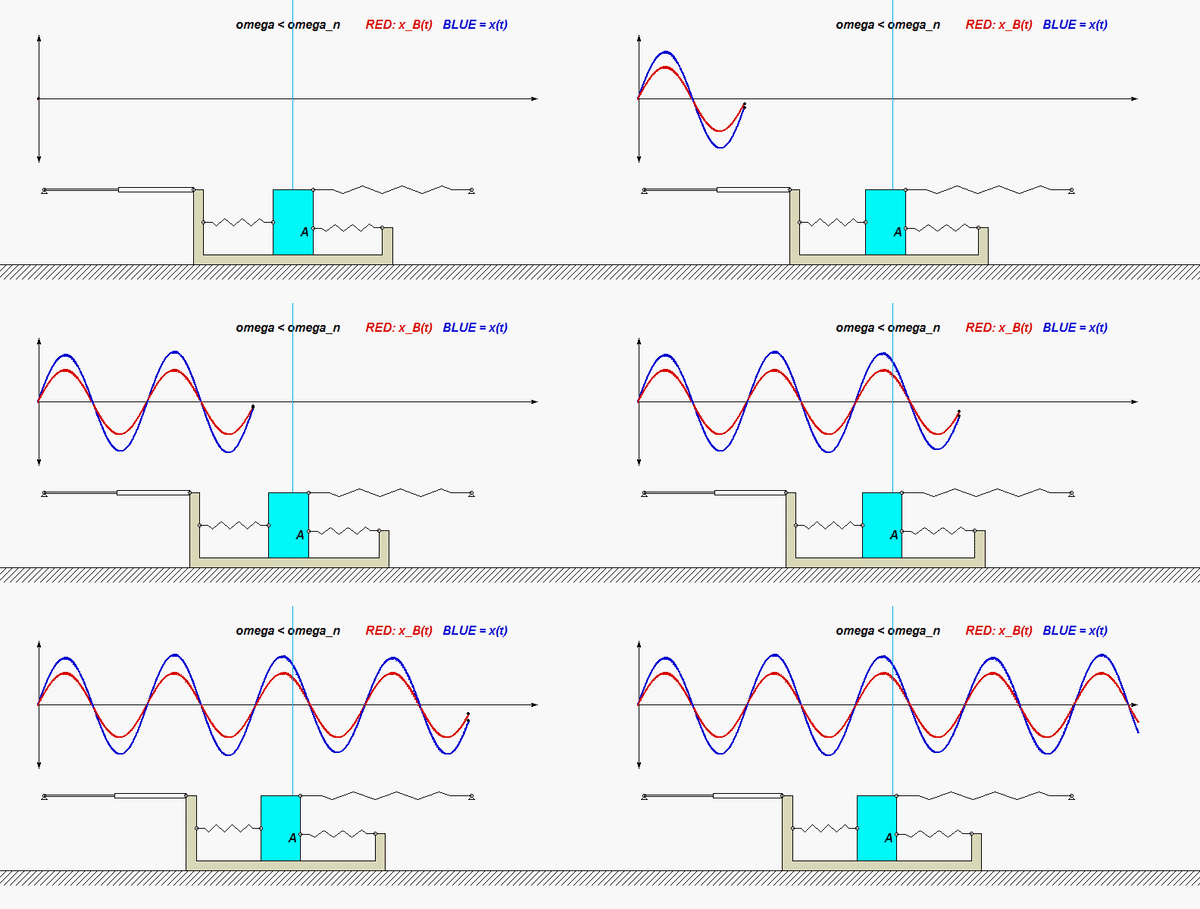
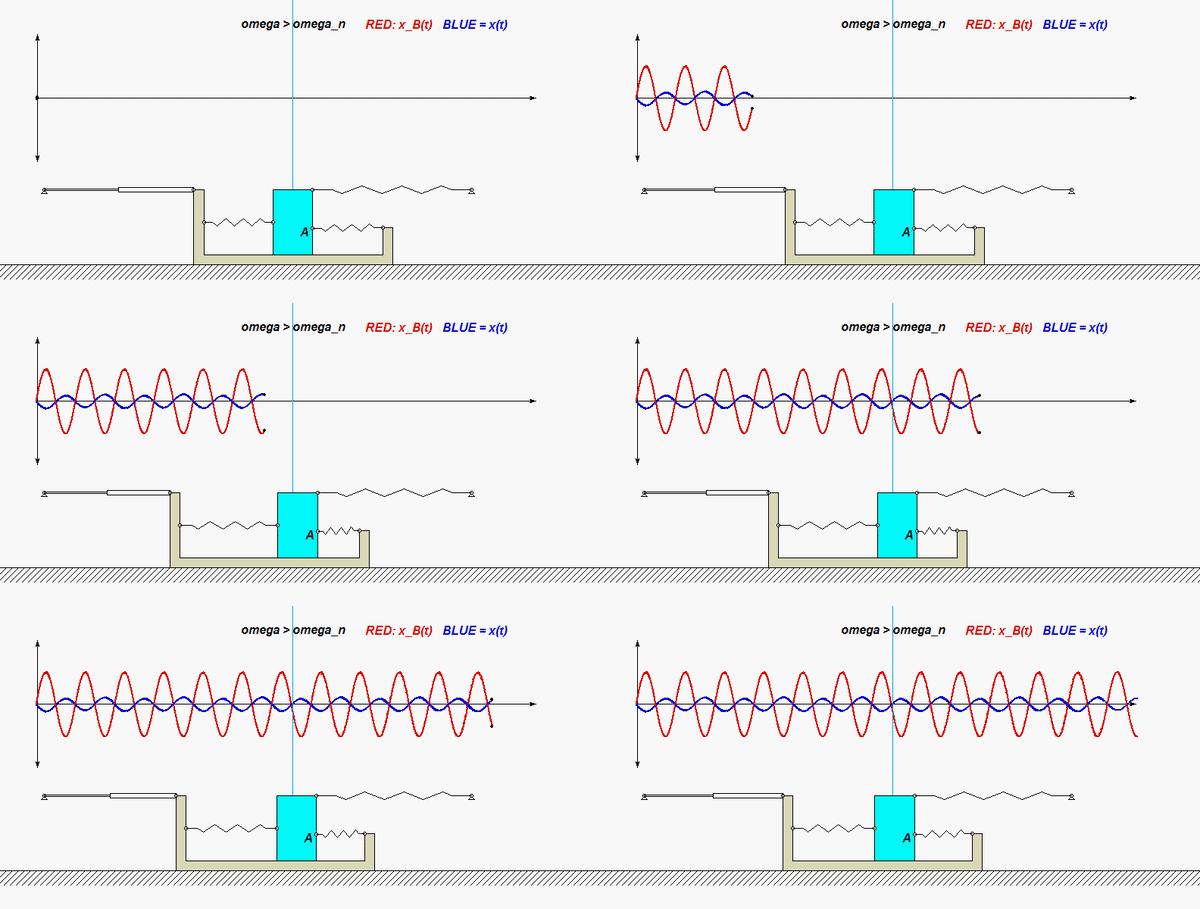
In this problem, the excitation does not come from a prescribed force, but, instead, it arises from a prescribed displacement on one body in the system. The support B here is given a prescribed motion of xB(t) = b cosωt, where ω is the frequency of excitation. Our goal is to solve for the particular solution of the response. Shown below are animations of this forced response corresponding to two different frequencies: the top animation has ω < ωn, and the bottom animation has ω > ωn, where ωis the natural frequency of the system. Can you see the difference between these two simulation in terms of the the phase of the response? Study both the time histories and the animation of motion.


Recall the following four-step plan outline in the lecture book and discussed in lecture:

Step 1: FBDs
Draw a free body diagram (FBD) of block A. Take care in getting the directions correct on the spring forces acting on A. Note that you do NOT need an FBD of B since you already know its motion.

Step 2: Kinetics (Newton/Euler)
Use Newton’s 2nd law to arrive at the EOM.

Step 3: Kinematics
None needed here.

Step 4: EOM
The EOM was found back in Step 2.

Once you have determined the EOM for the system, identify the natural frequency from the EOM. From the EOM we know that the particular solution of the EOM is given by: xP(t) = A*sin(ωt)+ B*sin(ωt). How do you find the forced response coefficients A and B?

Does your result here agree with the expected relationship between excitation frequency and response with regard to the “phase” of the solution, and with the animations above?