

The Children’s Museum of Indianapolis: Saving the Iconic Water Clock
Partner
Who is our collaborator?
The Children’s Museum of Indianapolis is the largest children’s museum in the world. Spanning nearly 500,000 square feet on a 30-acre campus, the five-story institution features over 130,000 artifacts, world-renowned interactive exhibits, and draws over 1.2 million visitors annually.
Opportunity
What needs to be addressed?
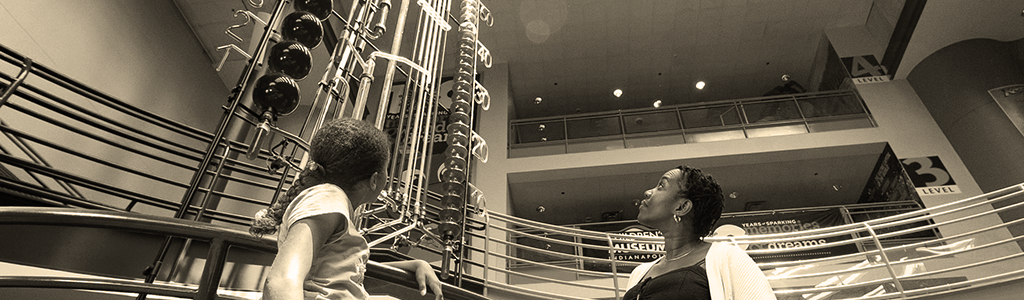
One of the most iconic museum features greeting visitors in the Sunburst Atrium is the 26.5-ft-tall Water Clock – the largest water clock of its kind in North America. The clock was designed by French physicist-turned-artist Bernard Gitton and made up of 29 small disc-like, hand-blown globes that mark two-minute intervals, 12 larger globes that keep track of the hours, 100 metal pieces, at least 70 gallons of a water, methyl alcohol, and blue dye mixture. Nearly 40 years after the Water Clock’s installation in 1988, The Children’s Museum of Indianapolis discovered the iconic Water Clock was no longer keeping accurate time – and Gitton left no instructions for its maintenance or repair.
Connection
How did Purdue get involved?
Knowing that the Water Clock’s time accuracy problems were rooted in matters of engineering and chemistry, the Office of Engagement approached Purdue’s TAP InDev program to help the museum seek solutions. TAP InDev connects organizations with Purdue University resources such as faculty, graduate students, and subject matter experts, to help identify and address technical needs with consultive and assessment solutions in manufacturing, cybersecurity, healthcare, business operations, and more.
Want to engage with Purdue’s resources?