

Building Safer Roads, Stronger Communities, and a More Resilient Workforce Across Indiana: The Impact of Indiana LTAP
When a county road is resurfaced, a bridge is repaired, or a local agency trains a new commercial driver, most residents see only the immediate result of safer travel, smoother commutes, and reliable infrastructure. Behind many of those community improvements is a statewide network of support helping local agencies make informed decisions, secure resources, and build the workforce needed to keep Indiana moving forward.
At Purdue University, the Indiana Local Technical Assistance Program (LTAP) serves as that connection point.
Housed within the Lyles School of Civil and Construction Engineering in Purdue’s College of Engineering, Indiana LTAP delivers training, technical assistance, technology transfer, and workforce development programs that strengthen transportation systems in communities across the state. By connecting Purdue’s expertise with local governments and transportation professionals, the program exemplifies the university’s land-grant mission of serving Indiana through education, research, and engagement.
Turning Data into Action for Indiana’s Transportation Future
One of Indiana LTAP’s most significant recent initiatives demonstrates how engagement can influence both local decision-making and statewide policy.
Recognizing the need for a more complete understanding of infrastructure conditions, Indiana LTAP partnered with local agencies across Indiana to develop the Local Road & Bridge Report, one of the most comprehensive inventories of local transportation infrastructure in the nation.
The effort collected and analyzed asset management data representing 99% of Indiana’s local road network and 100% of its local bridge inventory. The resulting database included more than 85,000 centerline miles of local roads and over 13,000 bridges maintained by local governments.
But the project’s impact extended far beyond data collection.
Indiana LTAP translated infrastructure information into practical planning tools, helping policymakers understand the long-term consequences of investment decisions. The report was utilized by the Indiana General Assembly and the Funding Indiana’s Roads for a Stronger, Safer Tomorrow (FIRSST) Taskforce to evaluate transportation funding needs and explore sustainable funding strategies.
The analysis projected that maintaining current roadway conditions statewide would require approximately $1.84 billion annually, providing decision-makers with critical information about the resources needed to preserve local infrastructure.
“Local agencies are responsible for maintaining nearly 89% of Indiana’s roadway network and 70% of the state’s bridges,” said John Haddock, Indiana LTAP director. “Providing reliable data and actionable insights helps communities make informed decisions while supporting statewide conversations about infrastructure investment.”
Helping Communities Improve Safety Through Data-Driven Solutions
While statewide planning is important, Indiana LTAP’s impact is often also measured at the local level.
A notable example is the program’s partnership with Kosciusko County, where LTAP provided technical support to implement roadway safety improvements focused on signage and pavement markings.
Using data analysis, the county identified high-risk roadway segments and prioritized cost-effective safety countermeasures. Indiana LTAP worked alongside local leaders to help guide implementation and maximize the effectiveness of available resources.
And, the results were measurable.
Following the improvements, Kosciusko County experienced a 19% reduction in average crashes per year, accompanied by a continued downward trend in crash frequency over time.
The project illustrates how targeted investments, combined with technical expertise and local collaboration, can produce tangible safety benefits for communities while building capacity for future transportation improvements.
Addressing Workforce Challenges Through Innovation
Beyond infrastructure, Indiana LTAP is helping communities tackle the workforce development challenge.
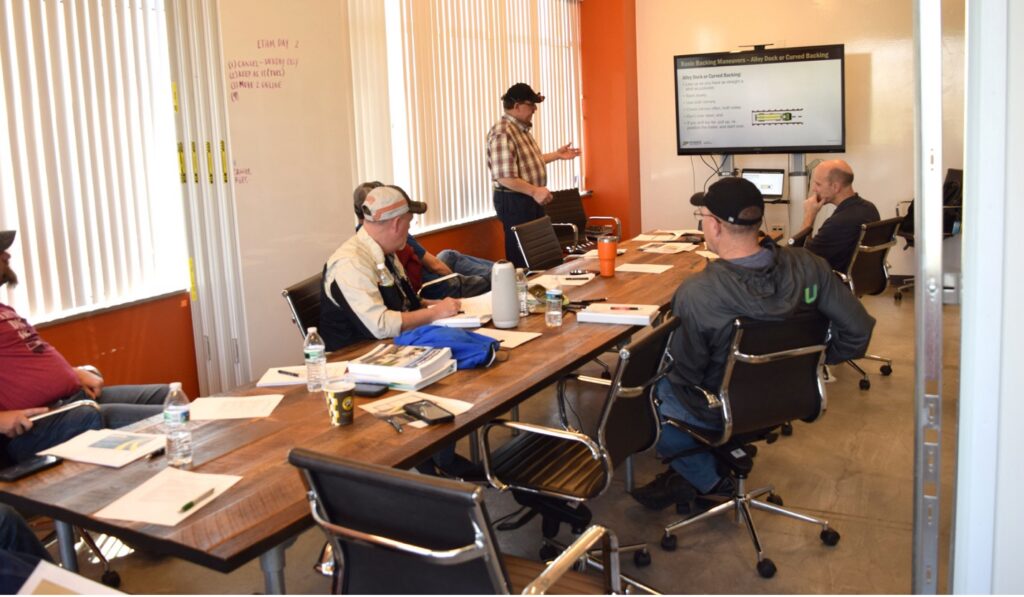
Across Indiana, local agencies face growing demand for qualified commercial drivers and increasing costs associated with driver training. To address those needs, Indiana LTAP created the ROADS (Roadway Operations And Driver Safety) Instructor Program, a train-the-trainer initiative that enables local organizations to build their own internal commercial driver training programs.
The program prepares instructors to meet the Federal Motor Carrier Safety Administration (FMCSA) requirements for CDT (Commercial Driver’s License) Entry-Level Driver Training (ELDT) while also developing effective teaching skills.
Since the program began, 110 instructors have completed the ROADS training, creating new opportunities for counties, municipalities, schools, and transit agencies to train drivers locally rather than relying on outside providers.
From High School Classroom to Career Pathway
One of the program’s most inspiring success stories comes from North Posey High School, where construction trades teacher Brad Wallace transformed what is possible for students interested in transportation careers.
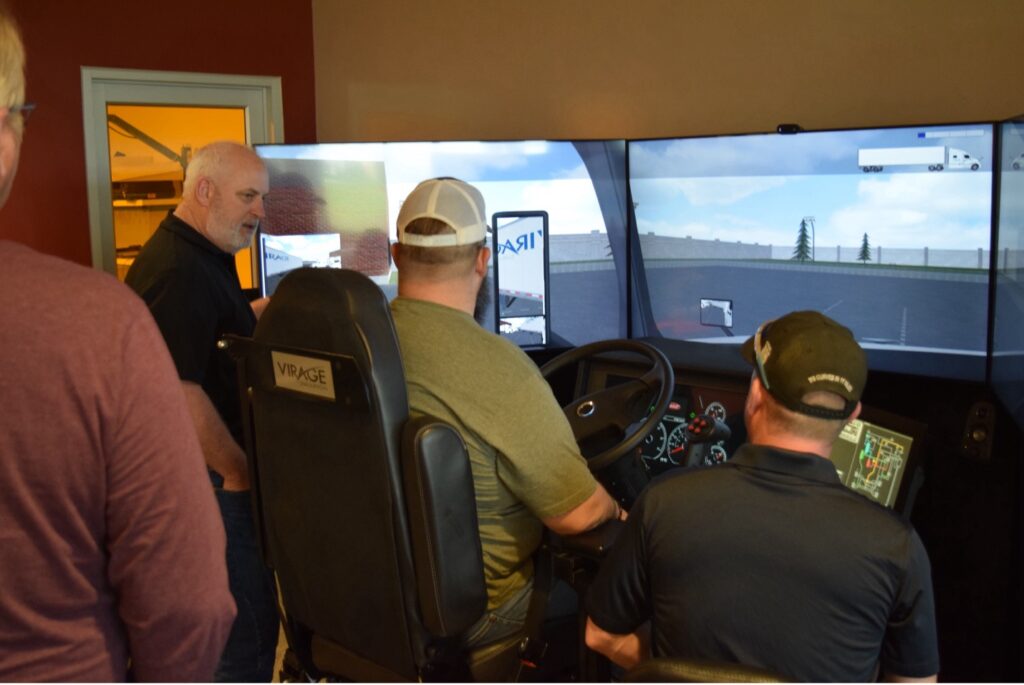
After participating in the ROADS Instructor Program, Wallace developed a CDL training program that helps students gain valuable workforce skills before graduation. Working with Indiana LTAP and utilizing driving simulators provided through LTAP and INDOT, students can safely practice complex driving maneuvers in a controlled environment.
Earlier this year, Indiana LTAP partnered with Wallace and four students to conduct manual transmission training using a simulator. After just four hours of simulator-based instruction, all four students successfully demonstrated the ability to operate a commercial motor vehicle with a manual transmission.
This approach reduced risk, eliminated wear and tear on equipment, and provided students with hands-on experience that would otherwise be difficult to obtain.
Savings and Success in Scott County
The impact of the ROADS program is also evident in Scott County, where Johnnie White, Scott County Highway Department Equipment Operator, used the training to establish a CDL instruction program serving both his community and neighboring municipalities. To date, the program has produced 32 licensed CDL drivers. With traditional CDL schools typically costing between $4,500 and $6,000 per student, the initiative has already saved local governments more than $100,000 in training expenses while helping address workforce shortages.
The potential statewide impact is even greater. If each of Indiana LTAP’s 110 certified instructors trains just three CDL candidates, local agencies could collectively save more than $1 million in training costs.

Creating Lasting Community Impact
Indiana LTAP’s partnerships continue to expand. Organizations such as CityBus have incorporated simulator-based training into professional development programs for both new and experienced drivers, improving safety and reducing operational risk. Similar training opportunities have been delivered to county highway departments, city street departments, utility organizations, and educational institutions throughout Indiana.
Whether supporting infrastructure planning, improving roadway safety, or developing the next generation of transportation professionals, Indiana LTAP demonstrates how Purdue’s engagement mission can create lasting value for communities. Through collaboration, innovation, and a commitment to public service, Indiana LTAP is helping Indiana communities build safer roads, stronger transportation systems, and a workforce prepared for the future one partnership at a time.