

Engineering History: Purdue Helps Museum Celebrate America 250 with Interactive Declaration Exhibit
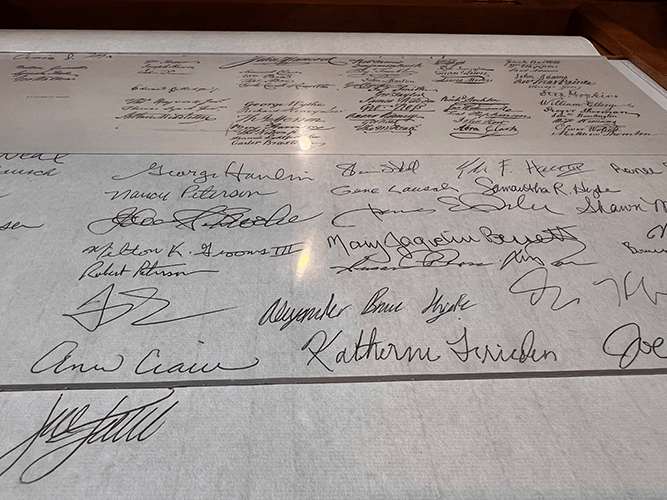
As visitors step into the Benjamin Harrison Presidential Site’s newest exhibit, they’re invited to do something few museums ask of their guests: sign the Declaration of Independence.
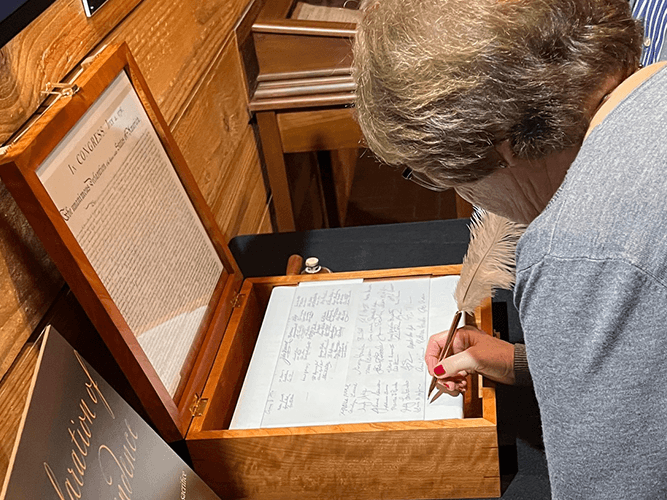
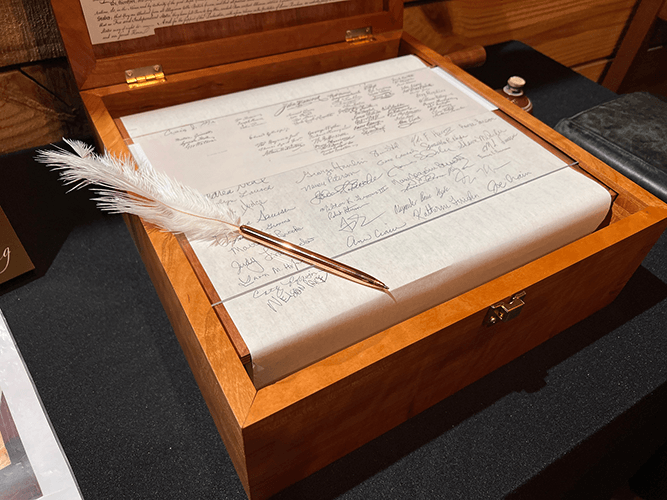
Not the original, of course, but an innovative, interactive “infinite scroll” Declaration of Independence, where thousands of visitors can add their names alongside the nation’s founding document as a symbolic recommitment to its ideals.
The exhibit is captivating visitors today because of an idea. It became reality because of a partnership.
When the Benjamin Harrison Presidential Site began planning for the nation’s celebration of the 250th anniversary of the signing of the Declaration of Independence, museum leaders wanted an experience that would connect history with today’s visitors. Because President Benjamin Harrison’s great-grandfather, Benjamin Harrison V, was one of the Declaration’s signers, the museum saw an opportunity to tell a unique family story in an engaging way.
“It made sense to bring this element to the forefront and ask visitors to ‘recommit’ to the founding principles by adding their names to the document,” said Charles Hyde, President and CEO of the Benjamin Harrison Presidential Site.
The concept was simple. Building it was not.
The museum envisioned an interactive scrolling mechanism that would allow thousands of visitors to sign a replica of the Declaration over the course of the exhibit. Turning that vision into a durable, historically inspired experience required engineering expertise beyond the museum’s resources.
That’s where Purdue University came in.
Turning an Idea into Reality
Through Purdue’s TAP InDev Program, the Benjamin Harrison Presidential Site connected with faculty and graduate students to transform a creative concept into a working exhibit. The InDev program provides subsidies for eligible Indiana organizations to access Purdue’s technical expertise.
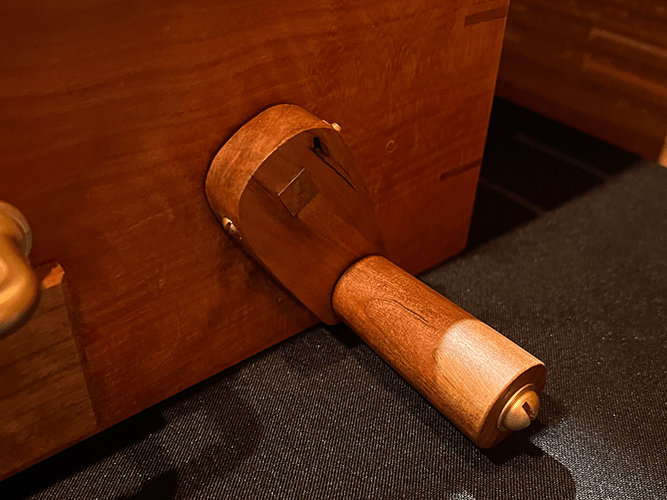
Working alongside museum staff, Professor Mark French and graduate students Madhu Ponnusamy and Therese Malinowski designed the custom mechanism that powers the “infinite scroll”. The team developed detailed engineering drawings for fabrication while carefully considering every aspect of the visitor experience, including the movement of the scroll, the writing instruments, and the materials that reflected the exhibit’s historical inspiration.
For French, the project represented a compelling engineering challenge.
I think it’s important for universities like Purdue to contribute to the development of their states. It was a treat to have a project with such obvious utility.
Mark FrenchProfessor, Purdue University
Engineering Community Impact
Today, the finished exhibit, housed in a handcrafted Indiana cherry wood display inspired by the writing desks of the time, invites visitors to become part of history themselves.
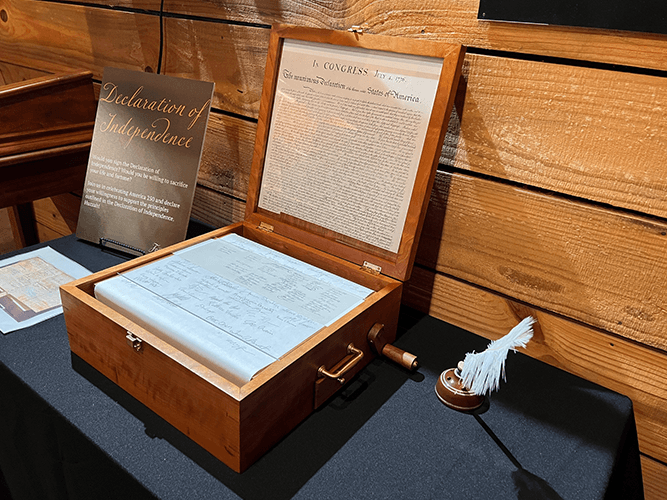
The exhibit is featured in There at the Founding, which explores the contributions of three generations of the Harrison family to the founding and growth of the nation.
Plan Your Visit
There at the Founding
Benjamin Harrison Presidential Site, Indianapolis
Open daily through November 1, 2026 · Welcome Center
Free to the public
Beyond the exhibit itself, the project illustrates something equally important: how Purdue’s land-grant mission comes to life through collaboration. “We are grateful for Purdue’s commitment to community, and their efforts to empower innovation development,” Hyde said. “They exceeded our expectations and helped us honor the history of the 23rd president in this semiquincentennial year.”
Benjamin Harrison and Purdue
The partnership adds a new chapter to a relationship that stretches back more than a century.
Benjamin Harrison V, great-grandfather of President Benjamin Harrison, signs the Declaration of Independence.
Benjamin Harrison serves as the 23rd President of the United States.
President Harrison signs the Second Morrill Act, expanding support for land-grant institutions.
Harrison serves on Purdue University’s Board of Trustees until his death.
Harrison Hall, a residence hall on Purdue’s West Lafayette campus, bears his name.
Projects like the interactive Declaration display reflect Purdue’s land-grant mission in practice: connecting community institutions with faculty and student talent to solve practical challenges. Learn more about the Office of Engagement’s Protocol and Framework.