In the News

Research on Healthy Aging with Botanicals

Winter 2013

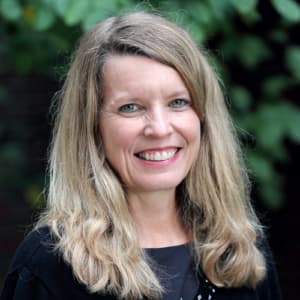
Christine E.M. Keller, PhD candidate
Christine E.M. Keller, PhD candidate Interdisciplinary Program in Nutrition with Gerontology Minor

Every year, new information emerges about the important role of plant-foods in reducing age-associated diseases like Alzheimer’s, osteoporosis, and cancer. However, many commercially available botanical dietary supplements are not well-investigated, with some even having illegal labeling claims of the ability to treat or prevent disease.

At the same time, researchers repeatedly demonstrate strong evidence of certain eating patterns or even certain foods containing these botanicals which are associated with lowered disease risk. To promote better processing and research techniques, and improve understanding of the role of botanicals in healthy aging, Purdue University and the University of Alabama collaboratively developed the Botanicals Research Center for Age Related Disease.

Investigating botanicals' roles in nutrition and health is a complex process. Basic questions, such as extraction methods, storage stability, and the body’s ability to use these plant products, must be examined before disease treatments with food can be pursued. To address this, a highly interdisciplinary team of 17 co-investigators was assembled to investigate foods like grape seeds, isoflavones, and green tea. Connie Weaver, Distinguished Professor and Department Head of Nutrition Science at Purdue, summarized the strategy simply. “Complex problems require interdisciplinary teams to address them,” an approach familiar to most of us at the Center on Aging and the Life Course.

Plants have a tremendous amount of variation in biological potential due to factors such as species differences, geographic location, local environment, and storage requirements. As a foundation of the botanicals investigation, Jim Simon of Rutgers University addressed sourcing and quality of the plants. Simon genetically profiled the plants and their extracts, which are now archived for permanent reference. This careful planning provides researchers with quality botanicals to investigate or reproduce in the laboratory.

Several studies have used this work as a foundation to create botanicals enriched with harmless radioactive tags, such as carbon-14 and calcium-41. The enriched research botanicals can then be eaten and further studied based on how the molecules interact with different tissues. These tissues are then collected for further analysis. One noteworthy collection technique includes a special ultrafiltration probe designed in part by Dr. Elsa Janle, an Associate Research Professor in Purdue’s Nutrition Science. This technology allows "snapshots" of chemical interactions in an animal’s body for a better understanding of how the body changes in response to these foods.

Purdue has unique capabilities that make detection of very small quantities of the radio-labeled chemicals possible. Using Accelerator Mass Spectrometry (AMS), researchers can examine how polyphenols and other potentially health-benefiting chemicals might interact with other foods when eating a meal, how effective the chemical is, what the appropriate dosage would be, and identify potential safety issues.

"The application of high technology to health questions was very exciting to me," said Weaver. "We developed the rapid screening method for effective interventions for reducing bone loss in postmenopausal women using Calcium-41 and AMS." This technology allowed researchers to examine the usefulness of commercial supplemental isoflavones, plant-derived compounds that may mimic estrogen in the body, as estrogen replacement therapy for prevention of bone loss. Weaver’s lab was able to demonstrate that soy isoflavone therapy at 0-135.5 milligrams per day had no effect on decreasing the amount of bone reabsorbed in healthy post-menopausal women. Using previous techniques, it would have required many years to provide similar data.

As part of the Botanicals Research Center for Age Related Disease, investigators also studied how certain foods may reduce inflammation in the body. “Inflammation is an underlying mechanism of many chronic diseases", explained Weaver. “Many fruits and vegetables contain many anti-inflammatory compounds.” Grapes and grape seeds extracts (GSE) are of interest for their potential anti-inflammatory benefits, which might protect the brain against age-related diseases such as Alzheimer’s. Rats were given GSE-enriched diets for 6-weeks at which time their brains were examined for changes in certain proteins. The researchers’ findings were consistent with GSE providing a protective effect to the brain, demonstrating for the first time that specific disease-associated proteins had changed in response eating a complex botanical ingredient.

In addition to research, training new scientists in botanicals and aging was another important component of the Botanicals Research Center. Courses as well as an annual symposium were held for graduate students at Purdue. Some of these students transitioned to post-doctoral fellowships at other Botanical Research Centers, became faculty members at other universities, or obtained research positions in the food industry.

Though the grant that funded the initial development of the botanicals center has expired, collaborations initially established from that work continue to enhance exciting new research and influence future directions. Subsequent grants have been awarded based on data gained from the Botanicals and Bioavailability research core. In 2006, in conjunction with Mt. Sinai Medical School, an NIH Center for Excellence Research for Grape Derived Polyphenolics and Alzheimer Disease was established. Further work on Alzheimer's Disease has continued under the Center of Excellence for Research on Complementary and Alternative Medicine (CERC).

Research on the role of botanicals in healthy aging continues to be a young, but expanding, field. Based on Purdue’s leading role in this topic through research and training, significant progress is expected to advance consumer health, safety, and potentially longevity through nutrition.

Applying Botanical Insights to Healthy Eating: Although most of us want clear guidelines for eating specific foods, it may take years of research to develop formal recommendations. Nevertheless, most people can reap the benefits of this botanicals research by simply increasing their intake of fruits and vegetables. Weaver recommends choosing lots of “berries and colorful plant foods” when making food selections. Additionally, personalized dietary recommendations can be found using ChooseMyPlate at www.supertracker.usda.gov.


No Age Limit in Blue Yonder:  United Flying Octogenarians (UFOs)

Winter 2013

United Flying Octogenarians (UFOs)

While some might argue that flying or even driving takes more concentration and caution for older adults, the United Flying Octogenarians (UFO hereafter) shows that there is no age limit on actively remaining a pilot in command. Presently, the UFO has 942 members spread across the United States and Canada as well as members all around the globe. The group, founded in 1982, hosts annual conventions around the world. There is one condition to join the membership: pilots must have flown an aircraft after turning 80.

These exceptional octogenarian/nonagenarian pilots have retained valuable flying skills through retraining as well as biannual flying check-ups that compensate for the loss of reflexes that comes with older age.

A 2012 survey of 655 UFOs members reveals that the group remains relatively active and healthy—better than the national average for persons their age.  Most UFOs were within the normal weight range (83%) and reporting being regular exercisers (82%).  Only a few were current smokers.

Their overall good health was also reflected in how they rated their health:  most pilots rated their health as excellent or good (88%).  Being healthy and active appears to be an important motivator for older pilots since most of them believe that their good health primarily enabled them to fly at age 80 or older.  The regular biannual medical check-ups may be another vital part for the pilots to maintain good health and to retain their license.

Beyond physical activity, these pilots also frequently engage in stimulating cognitive activities. Most of the sample appears to be actively reading (85%) in addition to engaging in problem solving activities such as crossword puzzles or chess.  Over half also use the Internet, which is particularly interesting given their age.  These pilots also participate in several voluntary associations, with more than half being involved in more than 3 organizations including UFO.  This might be a spillover effect of being an active pilot since some pilots might make charitable trips that fly patients to hospitals from home, in addition to flying for leisure.

The majority of these pilots have flown between 2,000 to 5,000 hours over their lives—a remarkable achievement.  To address what factors influence their flying hours, we investigated several possible predictors.  Two findings are noteworthy.  First, older pilots (ages 89 and 90) had accumulated more flight hours, suggesting that older pilots' unique capabilities and experiences enable them to maintain their flying (i.e., use it or lose it).  Also, notable advances in aviation technology such as the development of an autopilot system permits them to fly with less concern over the risks associated with pilot error.

The most surprising finding emerged when examining involvement in organizations and accumulated flying time. Although one might think that involvement in other organizations would lead to reduced hours of flying (competition for one’s time), we found the opposite: pilots involved in more organizations (3+) generally had accumulated more hours of flying time than those involved in UFO only.

Gerontologists have long drawn attention to the link between social engagement and optimal aging, noting the benefits of productive activities. According to Charlie Lopez, UFO regional manager, these pilots are a very sociable group: “I would guess that close to 80% of our members belong to AOPA (Aircraft Owners and Pilots Association) which has over 400,000 members.” And there are many other flight related organizations such as Experimental Aircraft Association and even the secretive Quiet Birdmen.

Lifetime Hours Flown and Organizational Involvement among UFOs graph

Lopez also noted that many UFO members have long professional careers as lawyers, physicians, and engineers; and may continue to fly to these professional associations.

The question of age limit in active pilots is still a matter of debate within the aviation industry, medical field, and insurance companies. Yet the data from active UFOs show that older pilots love flying so much that they don’t hang up their “goggles and helmet” no matter how old they are. Flying might also offer them a form of social engagement and additional health benefits. After all, staying healthy is all about doing what you love.

For more information about UFO, see ufopilots.org

Patricia Morton
Patricia Morton, MS
Sociology and Gerontology
Seoyoun Kim
Seoyoun Kim, MS
Sociology and Gerontology


September 21, 2012

Professors Haddad and Rietdyk win Exceptional Engagement Award.


The Center on Aging and the Life Course recently conferred the Exceptional Engagement Award on Drs. Jeffrey Haddad and Shirley Rietdyk, Professors in Purdue’s Department of Health and Kinesiology and CALC Faculty Associates.

The Center on Aging and the Life Course joined forces in 2009 with University Place, a continuing-care retirement community in West Lafayette, to launch an intervention research initiative. The idea was to enable Purdue scholars to do research that would potentially benefit the participants while advancing the science of aging. Professors Haddad and Rietdyk have led the balance project at University Place since 2009, an intervention research project designed to better understand balance and biomechanics in order to prevent falls by older people.

More than 1/3 of adults over 65 years of age fall at least once a year, so Haddad and Rietdyk devised a training program to see if they could improve balance and reduce falls. About 75 persons participated in the study during the past three years. The study involves an assessment of posture and mobility (before the training) and repeats the assessment after the balance training. The team compared two training methods: wobble board and Biodex. Results revealed that both methods aid postural control and mobility.

The intervention proved beneficial to the residents and community members in multiple ways. The training itself was helpful, but Haddad and Rietdyk also involved more than 50 undergraduate students and three graduate students in the project. By doing so, each study participant received one-on-one training in postural control and fall prevention. Thus, there was an intergenerational component to the training that was also beneficial. To quote two residents: “I love getting to work with these young people” and “They helped me with my balance, and it was fun.”

The students also saw research in action while helping the residents: “This class was tough. However, I learned so much from this class that will translate to my future career.” As one student said, “this is by far the best lab that I have taken at Purdue!”

The Center on Aging and the Life Course confers an award each year, and the purpose of the award rotates annually across research, teaching, and service.


September 5, 2012

Receiving the Outstanding Publication award in Denver are Mustillo, Schafer, and Ferraro
(l to r)
.

Congratulations to Markus Schafer, Ken Ferraro, and Sarah Mustillo for winning the 2012 Outstanding Publication Award from the Section on Aging and the Life Course of the American Sociological Association.


Adversity early in life may alter pathways of aging, but what interpretive processes can soften the blow of early insults?

Drawing from cumulative inequality theory, the authors analyze trajectories of life evaluations and then consider whether early adversity offsets favorable expectations for the future.

Results reveal that early adversity contributes to more negative views of the past but rising expectations for the future.

Early adversity also has enduring effects on life evaluations, offsetting the influence of buoyant expectations. The findings draw attention to the limits of human agency under the constraints of early adversity-a process described as biographical structuration.


May 11, 2012


Congratulations to Daniel K. Mroczek, PhD, newly named the Bill and Sally Hanley Professor of Gerontology in the Department of Human Development and Family Studies.

Mroczek has been a professor of human development and family studies since he came to Purdue in 2005. Before that he was on the faculty as an assistant and associate professor in the Department of Psychology at Fordham University.

His academic interests are changes in personality and well-being, particularly during midlife and older adulthood. He has shown that factors such as marriage, divorce, remarriage and death of a spouse play a key role in altering personality.

He is a fellow of the American Psychological Association in the adult development and aging division, and he also served on the social personality and interpersonal processes study section at the National Institutes of Health.

Mroczek received his bachelor's degree from Loyola University in Chicago and his master's degree and doctorate from Boston University.


November 28, 2011

Pictured here with some of his mentees are (from left to right): Jessica Kelley-Moore (PhD, Purdue, C' 2002), Roland J. Thorpe, Jr. (PhD, Purdue, C' 2004), Patricia Morton (Purdue graduate student), Ferraro, Tetyana Pylypiv Shippee (PhD, Purdue, C' 2008), and Janet Wilmoth (Purdue faculty, 1995-2002).

Ken Ferraro receives the Distinguished Mentor Award from the Gerontological Society of America

The Gerontological Society of America — the nation’s largest interdisciplinary organization devoted to the field of aging — at the 2011 annual meeting in Boston.

At Purdue University, Ferraro is Distinguished Professor of Sociology and founding director of the Center on Aging and the Life Course. His recent research focuses on health inequality over the life course; current projects examine minority health, obesity and health, and the long term consequences of childhood misfortune on health. Ferraro is the author of over 90 peer-reviewed journal articles.

According to GSA, the Distinguished Mentor Award is given to individuals "who have not only fostered excellence in the field, but have made a major impact by virtue of their mentoring, and whose inspiration is sought by students and colleagues."


August 22, 2011

CALC Launches Facebook Page

Stay current with the news of the Center on Aging and the Life Course. CALC launched our facebook page this summer, as a way to communicate quickly and effectively with our interested students, faculty, and community. Let us know what you think and send links you would like to have added to: calc@purdue.edu.


August 11, 2011

Swiss Scholar Visits CALC

Dario Spini, a behavioral scientist at the University of Lausanne, recently visited Purdue’s Center on Aging and the Life Course to explore collaborative training opportunities. Dr. Spini studies aging and the life course, with specific interests on the antecedents of frailty and the sense of timing as people age.

Professor Spini directs PRN LIVES, which aims to better understand the emergence and evolution of life course vulnerability and ways to overcome it (http://lives-nccr.ch/). The project places a premium on studying life trajectories, especially those over the entirety of the life course. Biographical trajectories of some 25,000 people will be studied in various fields (health, family, labor and institutions).

Purdue was one of four North American centers that Spini visited to learn more about life course studies.


August 2, 2011

Ferraro Elected Section Chair of Gerontological Society of America

Kenneth Ferraro, Distinguished Professor of Sociology and Director of the Center on Aging and the Life Course, was recently elected Chair of the Behavioral and Social Sciences (BSS) of the Gerontological Society of America. With a membership of nearly 3,000, BSS is the largest section of the GSA, which was founded in 1945.

In discussing the professional organization, Ferraro noted that it "provides an excellent intellectual home for scholars to reach beyond their disciplinary backgrounds to explore what it means to be a gerontologist."

Since receiving his PhD in sociology in 1981, Ferraro has held appointments in sociology departments and twice founded and directed gerontology centers. Professor Ferraro recently completed a 4-year term as Editor of the Journal of Gerontology: Social Sciences and previously served as Chair of the American Sociological Association's Section on Aging and the Life Course (2004-2005). His research interests include life course health, especially health disparities, and the development of cumulative inequality theory. He is the author of over 80 refereed-journal articles. Recent publications include: "Aging and Cumulative Inequality: How Does Inequality Get Under the Skin?" (The Gerontologist), "Assistive Device Use as a Dynamic Acquisition Process in Later Life" (The Gerontologist), and "Children of Misfortune: Early Adversity and Cumulative Inequality in Perceived Life Trajectories" (American Journal of Sociology).