


April 3, 2008
Researcher deepens understanding of soil science, hydrology
WEST LAFAYETTE, Ind. -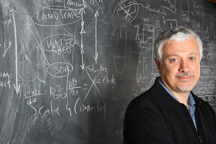 |
According to colleagues, Mohtar, a Purdue University professor of agricultural and biological engineering, created the first comprehensive model to link all the components of grazing systems. He also currently leads an effort to establish an environmental research center in Qatar, has done extensive work with water conservation in Tunisia and led major water and natural resources initiatives in India, Jordan, France and the Palestinian regions of Gaza and the West Bank.
For his multifaceted research and dedication to the conservation of environmental and natural resources and sustainability at a global level, among other contributions, Mohtar will be presented with the 2008 Agricultural Research Award from the Purdue College of Agriculture.
During the award presentation on Monday (April 7), Mohtar will give a talk entitled "Back Stage in the Molder's Den: From Hydrologic Modeling to Policy." The award ceremony will take place in the Pfendler Hall Deans Auditorium and will begin at 2:30 p.m., with a reception to follow at 3:45 p.m.
Mohtar's grazing simulation, called GRASIM (GRAzing SIMulation model), predicts not only water flow, but also the amount and nutritional quality of plant matter, effects of different human activities and levels of leached nutrients. By simplifying the complex, the model helps students and others gain a better understanding of the pasture system and determine management strategies that lead to increased productivity, said colleague and professor of agricultural and biological engineering Don Jones.
"As anyone who has written computer programs and models can attest, it takes almost as much time to make a model accurate as it does to make it usable to those uninvolved with its development," Jones said. "At present, GRASIM is used by researchers, farmers, advisers and county educators across the U.S. and in several foreign countries."
Mohtar also developed a model that uses a unique paradigm to better understand the flow of water, nutrients and contaminants across different spatial scales. The model, Kamel®, has been adopted by one of the largest agronomic modeling projects in Europe and is expected to significantly influence future scientific and agricultural policy, Jones said.
"I am passionate about models because they are the best way to convey complex processes," Mohtar said. "They help to teach students but also assist people - from farmers to policy-makers - in making the best land-use decisions."
In 1996 Mohtar became an assistant professor at Purdue, where he has produced 52 peer-reviewed journal articles and 11 books and book chapters and given 57 invited presentations in 11 countries. He has organized 30 international workshops and more than 80 technical sessions in the United States and abroad, in addition to raising $5.5 million in research funding.
Meanwhile he managed to mentor 15 doctoral and master's students and more than 100 undergraduate students and received his department's teaching award in 2006.
Born and raised in Beirut, Lebanon, Mohtar learned to love the outdoors on weekend visits to the family farm in the mountains outside the city. Mohtar won a competitive scholarship to attend the American University of Beirut, completing a bachelor's and master's degree in agricultural engineering in 1985. After a stint managing a large Lebanese farm, he won the Hariri Fellowship and continued his studies in the United States at Michigan State University. There, he completed a master's degree in civil and environmental engineering and a doctorate in agricultural systems management. After two and a half years as a researcher at Penn State, he came to Purdue.
The Agricultural Research Award is given annually to a researcher in the Purdue College of Agriculture who has completed a doctoral degree within the past 15 years. The recipient is chosen on the basis of research excellence and contributions made to agriculture, natural resources and the quality of life for Indiana citizens.
The honoree receives $1,000, which is funded by the Charles Gutherie Patterson Memorial Endowment and the Matthew Morgan Hamilton Fund. In addition, $5,000 is awarded to support the recipient's research.
Writer: Douglas M. Main, (765)496-2050, dmain@purdue.edu
Sources: Rabi Mohtar, (765)494-1791, mohtar@purdue.edu
Don Jones, (765)494-1178, jonesd@purdue.edu
Ag Communications: (765) 494-2722;
Beth Forbes, forbes@purdue.edu
Agriculture News Page
To the News Service home page