
May 10, 2005
Soil recycling project blossoms from laboratory into private business
WEST LAFAYETTE, Ind. - An idea planted and nurtured in a Purdue University soil laboratory grew into a reclamation project that now has blossomed into a private company.

|
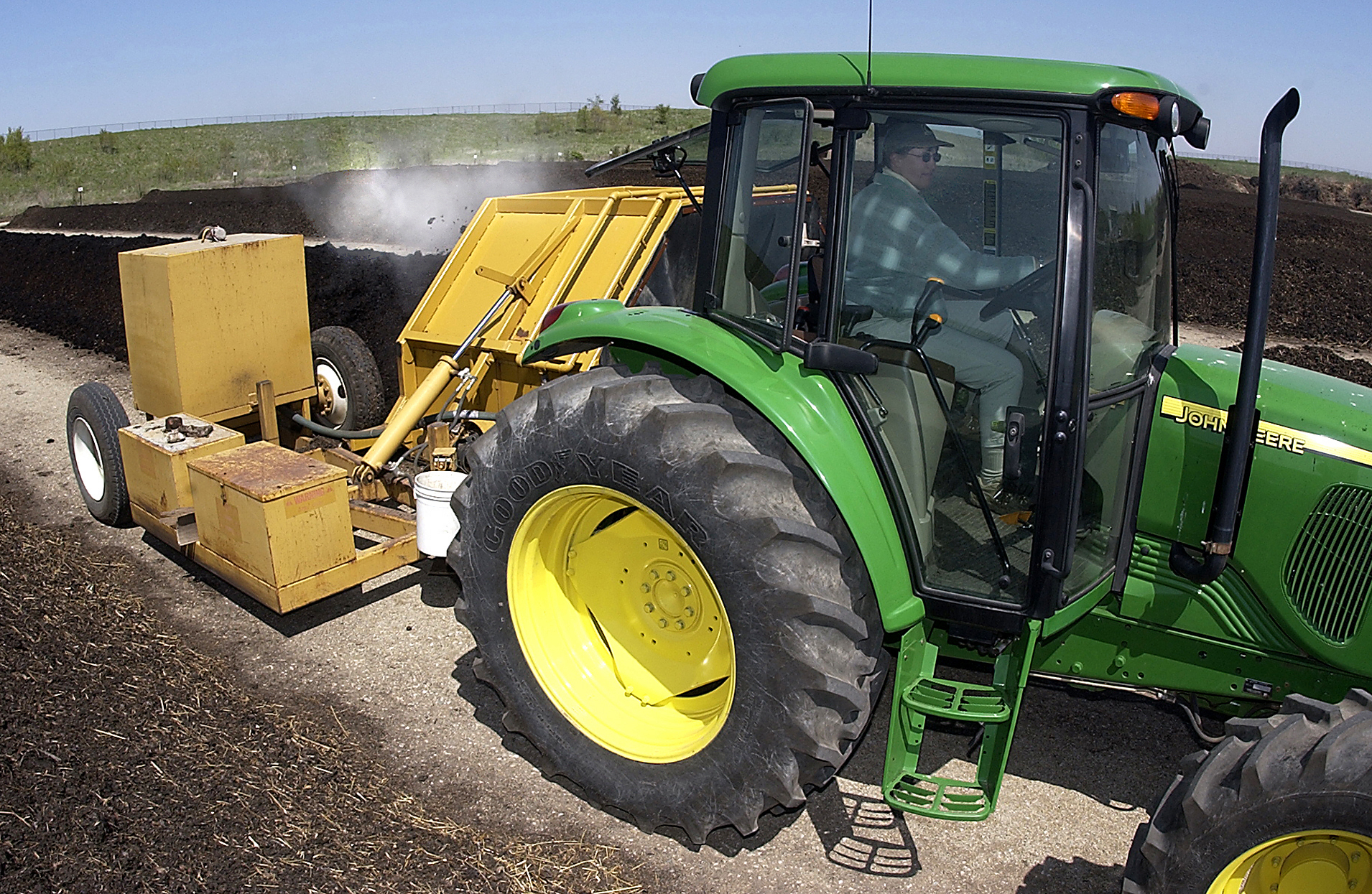
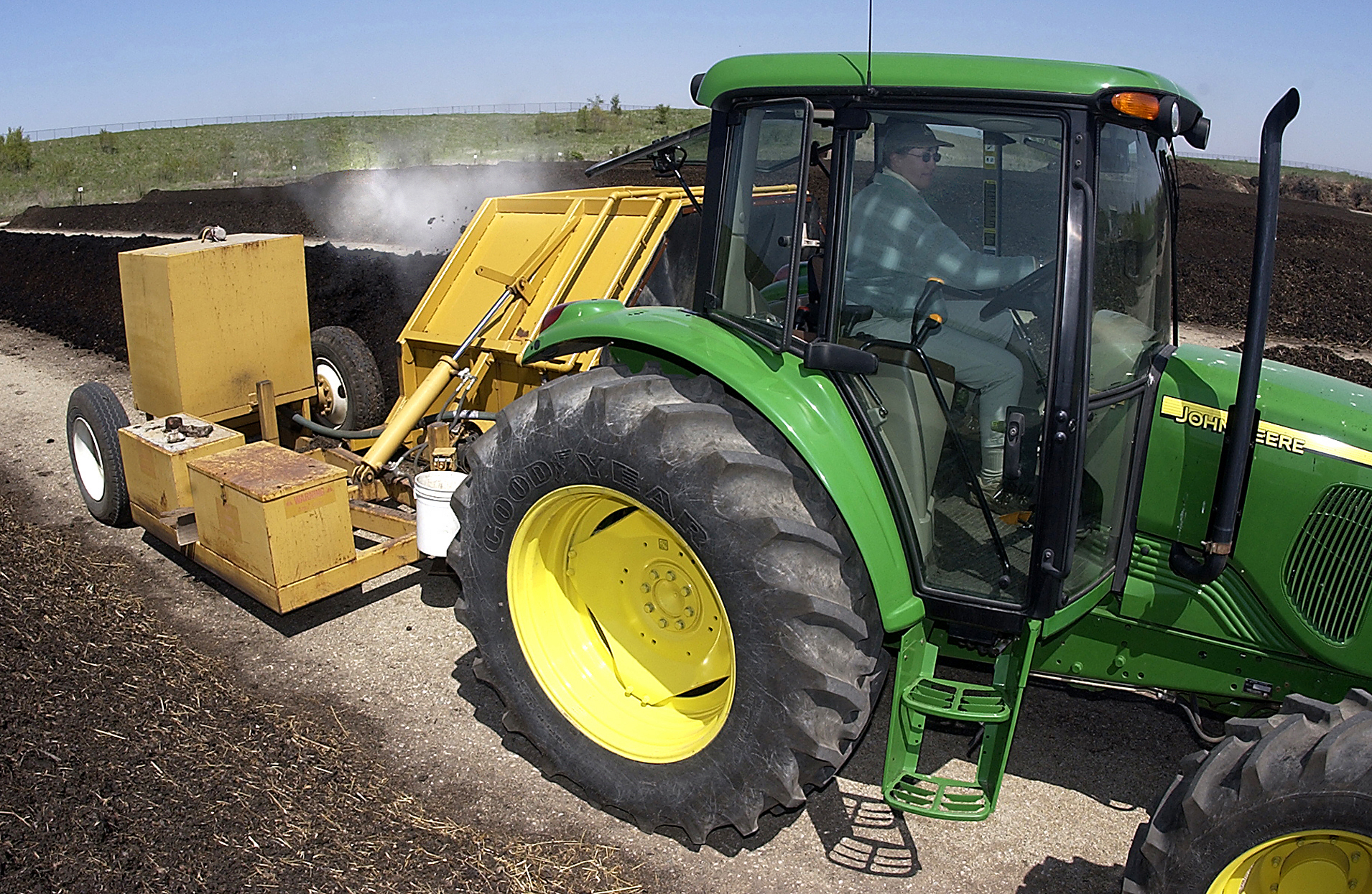
Jody Tishmack's business, called Soilmaker, produces high-quality synthetic soil at the site where the idea became reality on Purdue's campus 10 years ago. She leases the land from the university and operates her business with the endorsement of university officials who promote moving research from the laboratory to the community.
Tishmack has been with the project almost since soil researchers Cliff Johnston and Darrell Norton, of the Department of Agronomy, in 1994 hatched the idea of creating a synthetic soil using waste products. Since then, Tishmack has taken the original soil recipe, modified it and now sells various forms for different purposes.
"Composting is an art that you learn from mistakes," said Tishmack, who holds a soil science master's degree. She was a civil engineering doctoral student and employee of Purdue's Physical Facilities Department when the synthetic soil project began.
After Johnston and Norton, who also is a scientist with the USDA-Agricultural Research Service National Soil Erosion Research Laboratory, did initial testing to determine whether various waste products would harm plants, the researchers combined coal ash - a byproduct of Purdue's power plant - with a pharmaceutical byproduct from Eli Lilly and Company, veterinary school animal bedding, and leaves and grass from yard work.
"It was taking small ideas and building them into a commercially viable venture," Johnston said.
Tishmack received a $200,000 grant from the Indiana Department of Commerce to fund development of the idea. This led to a large-scale compost pile of the byproduct and waste recipe in the gravel pit near campus where Tishmack, no longer a university employee, now operates her business.
The original synthetic soil recipe was so successful that Lilly and Purdue joined forces with the Indiana Natural Resources Division of Reclamation and the Department of Environmental Management to revegetate 250 acres at the Chinook coal mines where acid soil made plant growth impossible for more than 20 years. It earned Eli Lilly and Purdue the 2002 Governor's Award for Recycling and Reuse at the Indiana Conference on the Environment.
"By Jody making the soil-making venture a private business, she is fulfilling one of Purdue's important functions, and that is to aid in development of people and technologies that build Indiana's economy," said Susan Davis director of the Greater Lafayette Indiana Small Business Development Center in the Purdue Office of Engagement. "She has brought value to this project for the university through her expertise in composting and soil science."
Tishmack said that it takes one to two years for the compost to become the rich garden soil for which the project has become known. The time it takes depends on air temperature and precipitation, but the basic composting process is the same.
The amount of each ingredient in the compost is measured just as you would a cake recipe and can be varied depending on the type of soil needed. The ingredients are piled in long rows that are turned over a number of times, depending on the age of the pile.
Tishmack no longer uses the ash byproduct, but instead relies on leaves, brush and grass clippings from Purdue and West Lafayette Street, Sanitation and Recycling Department and adds cornstarch byproducts from Tate & Lyle (formerly A.E. Staley). Finished compost is combined with silty clay from building sites to form organic-rich topsoil. An essential element of the soil-making process is the organisms that break down the material in the compost pile so that it becomes soil.
"The most important component in making the soil is to make the environment right for the micro- and macro-organisms, Tishmack said. "They chew up the material, and as they do that they add life to the soil and food for the plants. In many ways, composting is like winemaking."
The temperatures in the pile rise as the material-chewing organisms become busier degrading the waste.
"It becomes like a big chemical reactor as the organic material breaks down into simpler chemical forms producing carbon dioxide and heat," Johnston said. "Even on the coldest day, the temperature in the pile can be 140 degrees."
Tishmack has become so proficient at determining how the process is progressing that now she can just feel the compost piles rather than using instruments to check the temperature and carbon dioxide level.
In addition to the project at the Chinook coal mine, the first Soilmaker customer was the Purdue Grounds Department. The Lafayette Parks Department and the Tippecanoe County Fairgrounds also have used the soil product.
"It's incredible stuff, like black gold," said Cyndi Bodin, the Lafayette parks natural resource coordinator. She has used it for the planting beds in the municipality's 22 parks. "The plants have really thrived in it. It's well worth the money."
Tishmack is selling soil in amounts that meet customers' needs. Generally it is measured by cubic yard (a standard pickup truck can carry about two cubic yards) but she will sell smaller amounts. The cost for a cubic yard is $16 to $20 depending on the type of soil.
Writer: Susan A. Steeves, (765) 496-7481, ssteeves@purdue.edu
Sources: Jody Tishmack, (765) 414-5788, soilmaker@mintel.net
Cliff Johnston, (765) 496-1716, clays@purdue.edu
Darrell Norton, (765) 494-8682, norton@purdue.edu
Susan Davis, (765) 496-6491, sdavis@isbdc.org
Ag Communications: (765) 494-2722;
Beth Forbes, forbes@purdue.edu
Agriculture News Page
PHOTO CAPTION:
Jody Tishmack drives her tractor at a snail's pace of about 0.2 mph as she conditions a row of compost at her business, called Soilmaker. Tishmack acquired the venture for a private enterprise from Purdue University, where she developed the operation as an employee and doctoral student. (Purdue Agricultural Communication photo/Tom Campbell)
A publication-quality photo is available at https://www.purdue.edu/uns/images/+2005/johnson-soilmaker.jpg
To the News Service home page