
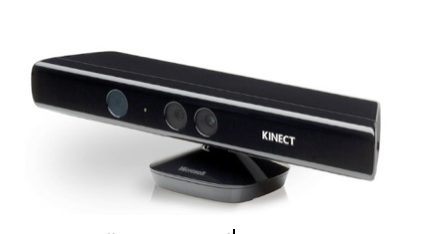
Our researchers examined the utility of video game technology to capture human movement
Josh Liddy (PhD student), Dr. Howard Zelaznik (HK), Dr. Jessica Huber (SLHS), Dr. Shirley Rietdyk (HK), Dr. Laura Claxton (HK), and Dr. Jeff Haddad (HK) conducted a studying examining the ability of the Microsoft Kinect, a widely-available and inexpensive video-game peripheral used for active gaming, to measure the coordination of rhythmic manual movements relative to a research-grade motion capture system. These types of movements were selected on the basis of their use in characterizing motor deficits in children and pathological populations. The study suggests that Kinect accurately estimates some aspects of these hand movements but fails to provide the same accuracy as research grade motion capture systems, such as those used in in the production of movies and video games. Despite these limitations, low-cost and portable technology, like the Kinect, provides the opportunity to collect human movement data in clinical or home-based settings. Future examinations involving the Kinect will determine the contexts and movements to which it is best-suited.