


August 28, 2008
Purdue Agriculture news ideas for Green Week Sept. 15-19
WEST LAFAYETTE, Ind. - The following news tips cover Purdue University faculty involved in green projects. Media are encouraged to contact them for news stories related to Purdue's Green Week on Sept. 15-19. Portraits of the researchers are available by contacting Tom Campbell at (765) 494-8084, tsc@purdue.eduScanner reduces waste: Using a Computed Tomography
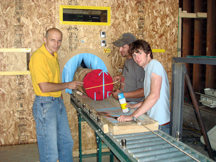 |

CONTACT: Rado Gazo, professor of forestry and natural resources, (765) 494-3634, gazo@purdue.edu
Diet decreases smell: Changing what pigs eat can reduce the odor of their manure. Modified diets can decrease nutrient excretions, thus reducing odors caused by ammonia, hydrogen sulfide and volatile organic acids. The primary focus is swine, but researchers are investigating whether altering diets for dairy cows, poultry and beef cattle can reduce nutrients in their manure, too.
CONTACT: Alan Sutton, professor of animal sciences, (765) 494-8012, asutton@purdue.edu
Poplars eliminate pollutants: About 250 transgenic
 |
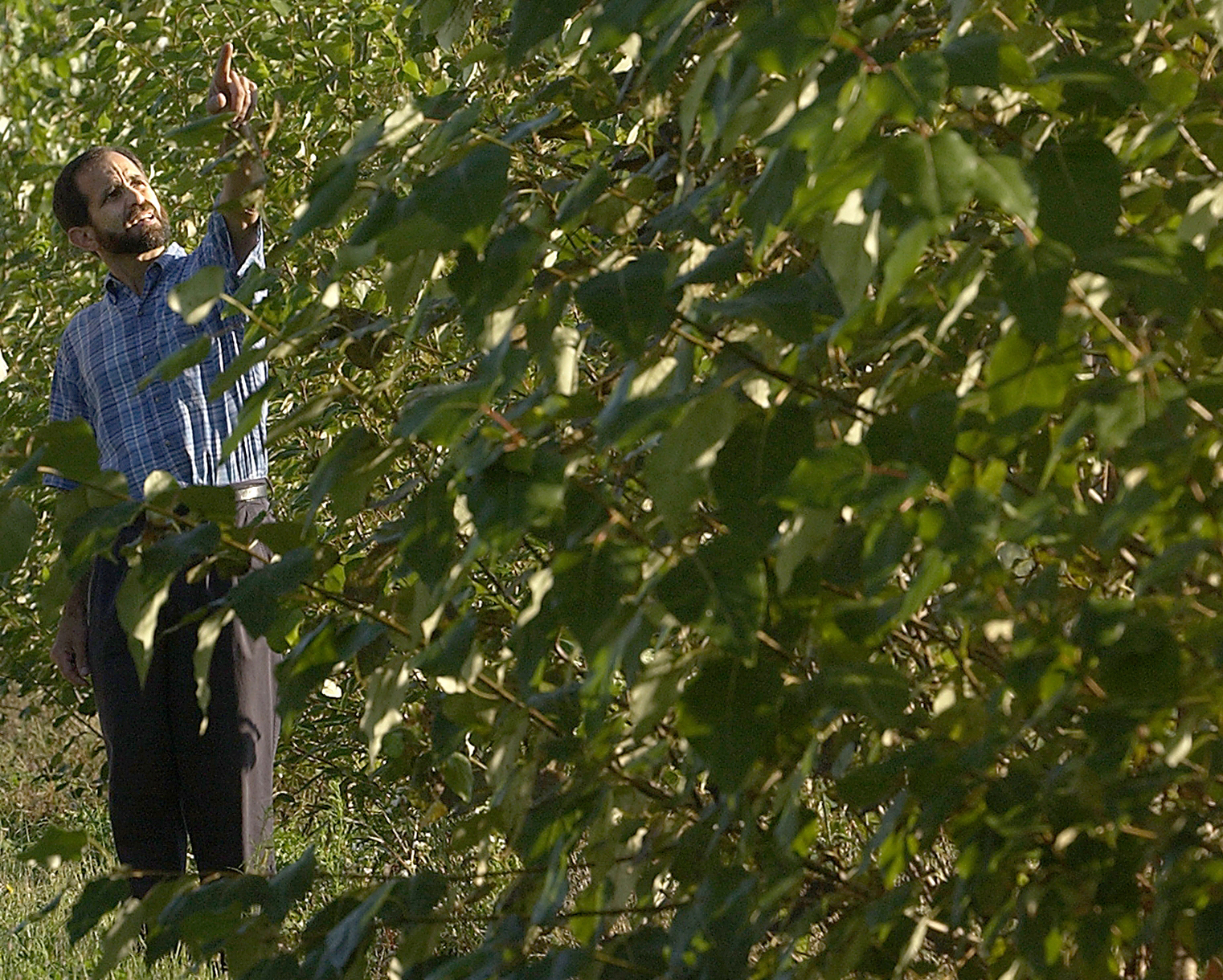
CONTACT: Rick Meilan, associate professor of forestry and natural resources, (765) 496-2287, rmeilan@purdue.edu
Switchgrass for fuel: Researchers are experimenting with using switchgrass combined with coal in existing coal-fired boilers as a possible and profitable energy alternative. Using biomass such as switchgrass to produce electricity and heat would reduce dependence on fossil fuels and reduce sulfur dioxide emissions.
CONTACT: Klein Ileleji, assistant professor agricultural and biological engineering, (765) 494-1198, ileleji@purdue.edu
Cover for conservation: The Midwest Cover Crops Council promotes planting cover crops on vast amounts of cropland. Cover crops on harvested ground improve water and soil quality by reducing runoff and erosion and trapping nutrients that would otherwise leach into drainage waters. In addition to traditional crop covers, such as wheat and rye grass, the council is investigating alternatives, such as oilseed radish, forage turnip, cowpeas, vetch and clover.
CONTACT: Eileen Kladivko, professor of agronomy, (765) 494-6372, kladivko@purdue.edu
High tunnels crop hope: Two 100-foot-long by 30-foot-wide, plastic-covered gardens (high tunnels) will be created near the Purdue power plant for the purpose of raising crops without fuel. Waste hot water will be pumped from the power plant to heat the soil underneath the structures, and the heated ground may produce fruits and vegetables without burning fuel throughout the entire fall-winter-spring cold season. In a traditional greenhouse, crops are gown in raised beds, and the air, rather than the soil, is heated. The first crop may go in the ground this winter.
CONTACT: Cary Mitchell, professor of horticulture, (765) 494-1347, cmitchel@purdue.edu
Writer: Beth Forbes, (765) 494-2722; forbes@purdue.edu
Ag Communications: (765) 494-2722;
Beth Forbes, forbes@purdue.edu
Agriculture News Page
To the News Service home page