
 On camera
Click here to view video
To make studio and satellite
arrangements contact the
br>(765) 494-2096. After hours,
call (765) 412-0864.
Craig Svensson
(765) 494-1368
svensson@purdue.edu
Related Web sites:
College of Pharmacy, Nursing, and Health Sciences:
https://www.pnhs.purdue.edu/
PharmaTAP:
https://www.purdue.edu/pharmatap/
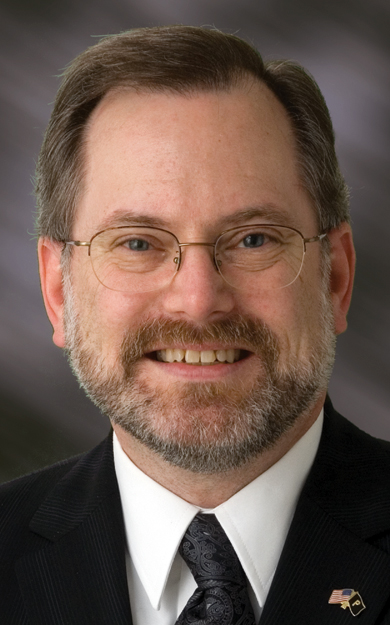
Craig Svensson photo:
https://www.purdue.edu/uns/images/
+2008/svensson-c08.jpg
Purdue Expert
Medication errors, causes and preventions, health-care trends
Written news tip below:
Simple solutions can reduce medication errors, expert says
Video at left, expert discusses:
• Medication errors
• Causes and prevention of errors
• Trends in the health-care system
News tip: Simple solutions can reduce medication errors, expert says
WEST LAFAYETTE - More than 1.5 million Americans a year experience preventable drug-induced injuries, says a Purdue University health sciences expert.
"Approximately one in every 400 hospitalizations is associated with a medication error that adversely impacts patient care," says Craig Svensson, dean of the College of Pharmacy, Nursing, and Health Sciences.
Such errors could be prevented through new technologies and standardizing hospital equipment and procedures, he says.
"One very significant way that we can reduce errors is to incorporate what is called e-prescribing, using electronic mechanisms for prescribing drugs," Svensson says. "Right now less than 20 percent of physicians use e-prescribing, even though more than 90 percent of pharmacies are capable of receiving electronic prescriptions.
"This can reduce errors that come from hearing drug names that are similar and confusing them, which account for about 20 percent or more of medication errors. It also prevents problems that relate to illegible prescriptions."
Standardizing equipment health-care providers use and the drug protocols in different areas of the hospital also could reduce medication errors, he says.
"Sometimes a drug in one unit is prescribed using volume and in another unit using mass, or weight," Svensson says. "Those types of things confuse people as patients or workers shift from one area of the hospital to another."
In addition, utilizing the expertise of the whole health-care team is important. A study in 1999 demonstrated that simply by having a pharmacist on medical rounds in a hospital reduced by 66 percent the number of medication order errors, he says.
"Humans are going to make mistakes, and what we need to do is to create a system where a human mistake doesn't result in a human tragedy," he said. "We want to have enough safeguards in place that a single human error does not get transmitted throughout the entire system and ultimately reach the patient."
More about Craig Svensson
Dean of the College of Pharmacy, Nursing, and Health Sciences and professor of medicinal chemistry and molecular pharmacology
As dean, Svensson oversees the research endeavors and partnerships of the College of Pharmacy, Nursing and Health Sciences. Purdue's pharmacy program is ranked among the top 10 in the nation. Under his direction, a program was created to assist health-care institutions in evaluating patient safety, applying new technology and optimizing performance. He has done numerous live interviews with television outlets.
Writer: Elizabeth Gardner, (765) 494-2081, ekgardner@purdue.edu