
| AUDIO |
| • Mimi Arighi, director director of Purdue's Veterinary Teaching Hospital, talks about the impact of the new radiation therapy facility on the state. (55 seconds) |
September 20, 2006
Purdue will dedicate state's first radiation therapy unit for small animals
WEST LAFAYETTE, Ind. — Purdue University officials today (Wednesday, Sept. 20) will dedicate Indiana's first radiation therapy facility to treat cancer in small animals as veterinarians throughout the region are booking its first patients.
|
"The Fleischhauers' decision to put their faith in this project, will make a tremendous difference for the School of Veterinary Medicine and for animals with cancer and their owners," said Purdue President Martin C. Jischke. "Now that the facility is fully operational, we can thank these generous donors for giving us the only place in Indiana that offers this type of treatment. In addition to helping animals suffering from this disease, the facility will allow our faculty to conduct research that will lead to better understanding, treatment and prevention of similar cancers."
|
Today's dedication ceremony is part of a two-week celebration leading up to Purdue's Homecoming on Saturday (Sept. 23). The events focus on ways Purdue is improving education and helping the state of Indiana as part of the university's strategic plan and $1.5 billion fund-raising campaign, which so far has garnered $1.426 billion.
Elikplimi Asem (pronounced E-leek-plee-me Ah-sem), interim dean of the veterinary school, said that the unit is a logical complement to the Purdue Comparative Oncology Program, started in 1979.
"We are training veterinary oncologists of the future at the same time that we are helping pet animals right now," Asem said. "In addition, specific forms of cancer in pet animals can very closely mimic those same forms of cancer in humans, so there's a tremendous opportunity for comparative research."
The facility adds a critical mode of cancer treatment to Purdue's resources in the field of comparative oncology, which is the study and treatment of cancer in pet animals that leads to better understanding, treatment and prevention of cancer in both humans and animals. Wallace B. Morrison, director of the radiation therapy unit, said the facility allows Indiana veterinarians, as well as those in adjoining states, to refer cancer patients to Purdue.
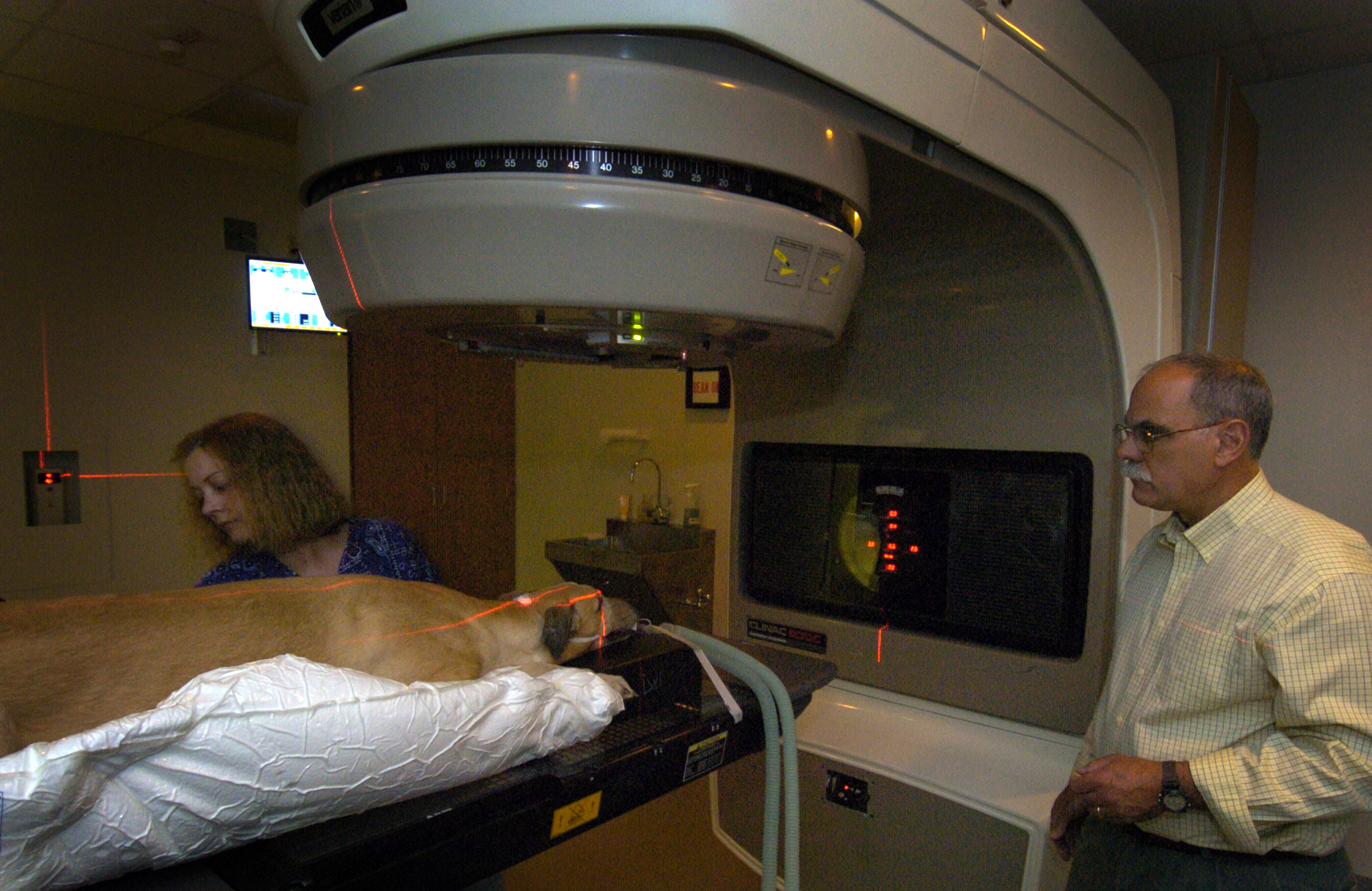
"Previously these animals and their owners would have to travel as far as Illinois or Ohio to get the kind of treatment we can provide with our linear accelerator, which targets cancerous tissue with highly focused radiation," Morrison said. "It's a better situation for both patient and caregiver."
The vault that contains the linear accelerator has walls between 6 inches and 18 inches thick in order to form an adequate radiation shield around the treatment area.
The facility also has a holding area for up to nine small animals, primarily dogs and cats; a control area where veterinarians and veterinary technicians manage the machine's operation; an induction-treatment area to prepare animals for the procedure; a film-developing room; and a planning room in which computer models will be built to plan treatments that will deliver dosages as accurately and rapidly as possible.
Alan Rebar, former dean of the School of Veterinary Medicine, began work on putting together this facility more than 10 years ago. He is the newly named executive director of Purdue's Discovery Park. He met the Fleischhauers through mutual acquaintances, Gary Wolfelt and Esther Chosnek, of Lafayette, who had a dog that was sick with cancer and had to travel to Illinois for radiation therapy.
The Fleischhauers came into contact with the School of Veterinary Medicine previously through Lafayette veterinarian and Purdue graduate John Pickett, from the VCA Lafayette Animal Hospital. The Fleischhauers said they travel great distances to make sure their two Maltese dogs are cared for by Pickett, but when they can't come to Lafayette, they seek out veterinary alumni from Purdue.
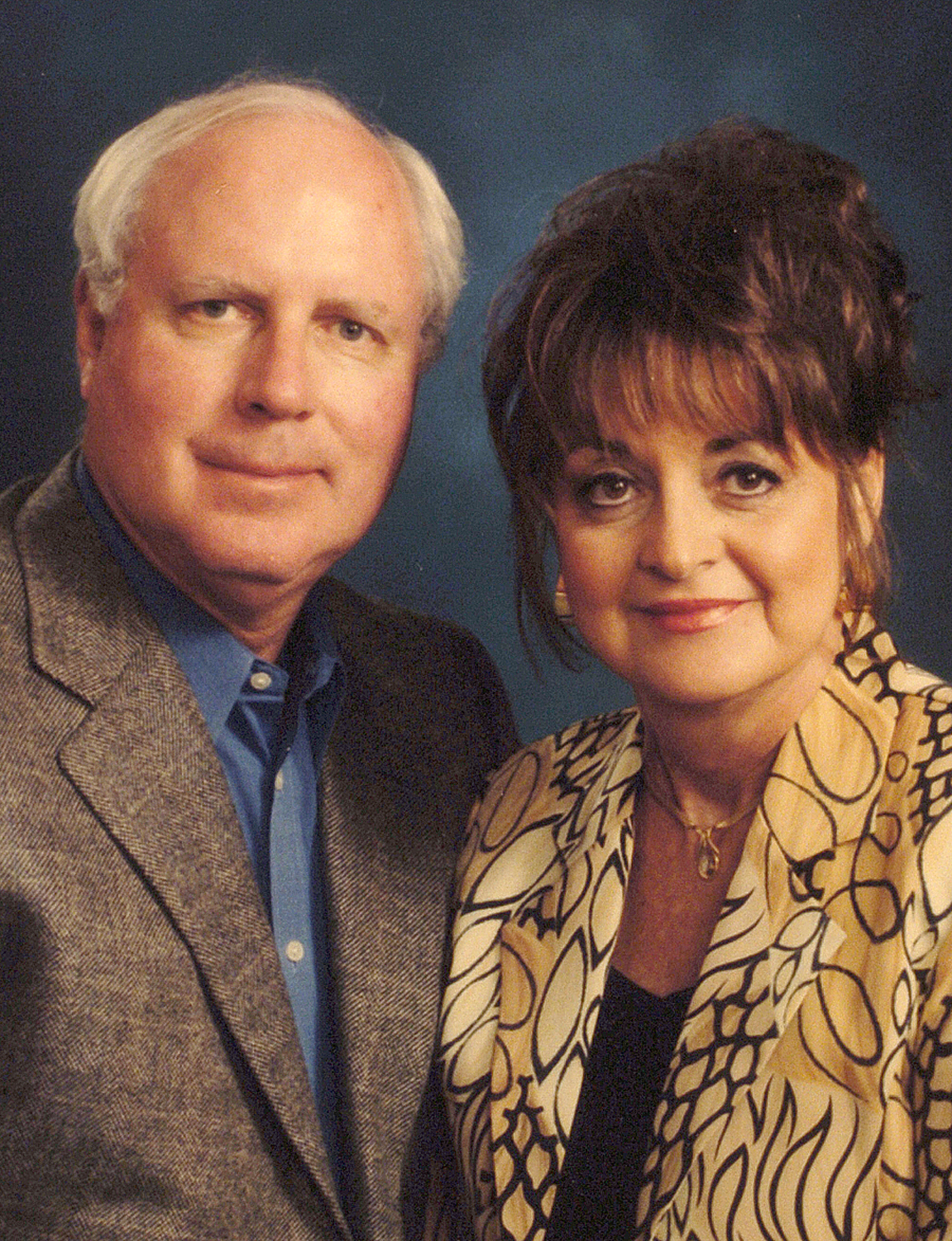
Bill Fleischhauer earned an associate's degree in 1967 and a bachelor's degree from Purdue's School of Technology in 1969. The Fleischhauers are longtime pet owners, animal lovers and clients of Purdue's veterinary hospital.
"Linda and I felt this is a good time in our life to try to make a difference," Bill Fleischhauer said. "Through this gift, we can express our appreciation to the community, to Purdue and to Purdue students — all of whom play major roles in the success of our business."
The radiation facility has been funded by a combination of other gifts and university funds. Dolores McCall, an independent oil and gas investor from Midland, Texas, whose cats benefited from the care of a Purdue alumnus, is giving the school a $1 million deferred gift to support research on cancer and other diseases in small animals.

|

|

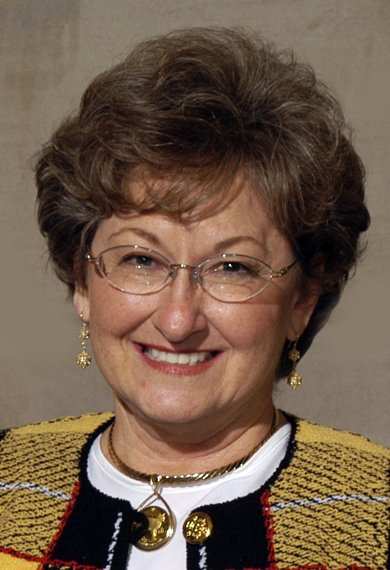
"Due to improved diagnostic tools, it is getting easier to diagnose cancer in animals, so we're seeing more cancer cases," Arighi said. "Also, pets are living longer, and people seem to be more willing to spend the money on treatment for their animals."
The 2,300-square-foot radiation therapy facility, designed by the Scholer Corp. of Lafayette, is an addition to Lynn Hall. Construction was completed in December, and the first patients were treated in this facility in July.
Writer: Maggie Morris, (765) 494-2432, maggiemorris@purdue.edu
Sources: Martin C. Jischke, (765) 494-9708, mcjischke@purdue.edu
Elikplimi Asem, (765) 494-6447, asem@purdue.edu
Wallace Morrison, (765) 494-1107, wbm@purdue.edu
Mimi Arighi, (765) 494-7235, arighi@purdue.edu
Purdue News Service: (765) 494-2096; purduenews@purdue.edu
Note to Journalists: Video b-roll is available by contacting Jesica Webb, Purdue News Service, at (765) 494-2079, jwebb@purdue.edu.
PHOTO CAPTION:
Radiation therapist Caroline Bolyard, from left, and Wallace B. Morrison, a professor of veterinary clinical sciences, adjust the cradle holding Lightning Bolt, a 6-year-old greyhound with skin cancer. The dog is one of the first to receive treatment from the linear accelerator at the Linda and William Fleischhauer Radiation Therapy Facility at Purdue's School of Veterinary Medicine. (Purdue News Service photo/David Umberger)
A publication-quality photo is available at https://www.purdue.edu/uns/images/+2006/morrison-vetaccelerator.jpg
To the News Service home page