
Purdue honors university supporters in Naples, Fla.
NAPLES, Fla. — Purdue University officials on Saturday (Feb. 11) honored several people with Florida ties who have contributed more than $20.5 million to university programs ranging from engineering to veterinary medicine.They were recognized as part of a Purdue on the Road visit to the area. Purdue has about 1,550 alumni and friends living in the Naples area.
To date, $1.3 billion has been raised for the $1.5 billion Campaign for Purdue, the university's seven-year fund-raising effort. The campaign, which began in 2000, will conclude in mid-2007.
"The tremendous generosity demonstrated by these seven individuals will help solve some of our nation's most pressing concerns, such as combating the problems of aging and developing better treatments for cancer," Purdue President Martin C. Jischke said. "These gifts will also be instrumental in attracting top-level students and faculty to the university.
"That will serve to benefit not only Purdue, but also society as a whole through a wide variety of disciplines."
Jischke honored George E. Goodwin, a Purdue alumnus who died in 2002, for providing $15 million that will lead to the creation of 20 endowed professorships. It will be part of a challenge match, whereby money from the estate will be used to match dollar for dollar every $750,000 gift, and the combined total of $1.5 million will fund each chair.
So far, Purdue has raised $165 million toward its $200 million goal to fund endowed professorships. Eighty new professorships have been funded so far as a result of the Campaign for Purdue.
Goodwin, who was born in New Castle, Ind., received a bachelor's degree from Purdue in civil engineering in 1930. After he retired as executive director of the Indiana Department of Transportation, he made his residence in Venice, Fla. He was a member of the Purdue Research Foundation since 1967 and was a lifetime member of the Purdue Alumni Association.
He also was a member of the President's Council for many years and, in 1997, the council honored him with its Distinguished Service Award.
James E. and Diane F. Perrella of Jupiter, Fla., were honored for giving $2.29 million to create a biomechanics laboratory that will be housed in a new mechanical engineering wing.
The James and Diane Perrella Bio-Mechanics Laboratory will be located in the Roger B. Gatewood Wing of the Mechanical Engineering Building. Purdue has raised $16 million in private gifts for the wing and is seeking another $13 million from the state of Indiana for the $29 million expansion project.
James Perrella earned a bachelor's degree in mechanical engineering in 1960 and a master's degree in industrial management in 1961 from Purdue. He is a retired CEO, president and chairman of Ingersoll-Rand Inc., a diversified industrial machinery company in Woodcliff, N.J. In 1994 he received an honorary doctorate degree in engineering from Purdue.
Diane Perrella earned a bachelor's degree in economics from Douglass College in 1976. She retired as a human resource consultant and is currently serving on the boards of Centenary College and the Maltz Jupiter Theatre. She was a college relations manager for Ingersoll-Rand.
"The Perrellas are a prime example of the loyal supporters who have enabled Purdue to provide learning experiences in mechanical and other engineering programs that are above and beyond what would have been possible with traditional funding sources alone," said E. Daniel Hirleman Jr., a professor and the William E. and Florence E. Perry Head of the School of Mechanical Engineering. "The generosity of people like the Perrellas is a major reason Purdue mechanical engineering continues to rank among the top 10 programs in the nation."
Researchers will use the laboratory to study how the human body is affected by forces such as those that cause damage to the vertebrae in the neck and spine, providing information needed to develop new devices, implants and systems to replace damaged and worn out body parts.
"I think we all know people who have suffered from back ailments and damage to the knees and hips from injuries or aging-related wear," James Perrella said. "We hope to help make a difference by boosting Purdue research in biomechanics."
In addition, the Perrellas' gifts have supported the Krannert School of Management and its new building, Rawls Hall. The couple also established the James E. Perrella Fellowship in Krannert and the James E. Perrella Scholarship in Mechanical Engineering.
|
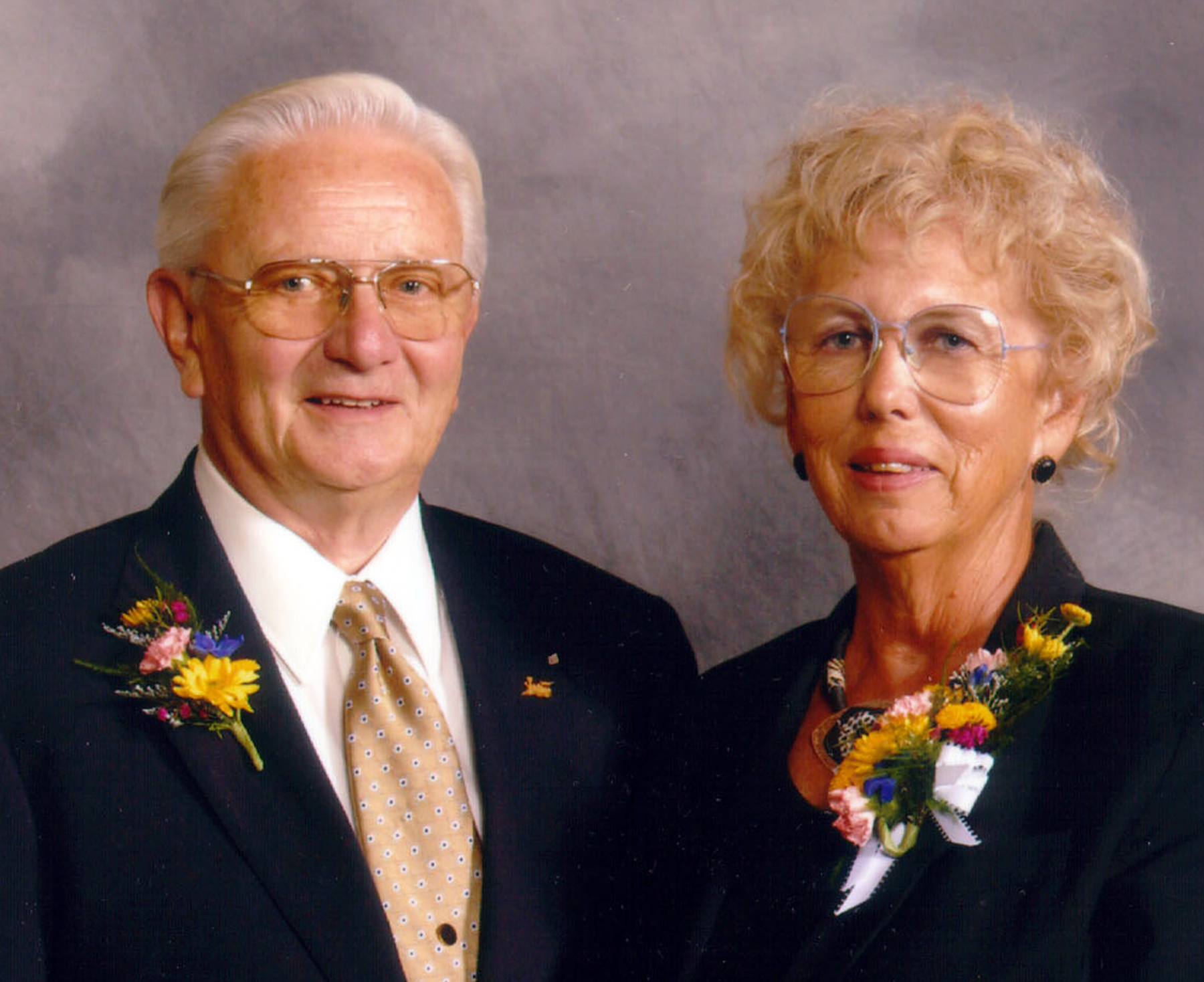
The Cordiers endowed the William K. and Gail E. Cordier Fellowship in Mechanical Engineering in 1999 to encourage engineering students to pursue graduate degrees in engineering, especially in manufacturing-related technologies.
Bill Cordier said he is concerned that while many young American engineers are choosing non-engineering fields for graduate study, competing countries are producing growing numbers of advanced-degree engineers.
"America's ability to remain competitive will depend on how we react to technology challenges from abroad," he said. "To meet those challenges, we should encourage more bright, young engineers, like the outstanding Cordier Fellows we have been privileged to meet, to stay in engineering and achieve master's- and Ph.D.-level competence."
The Cordiers also have contributed to the Purdue Cancer Center, Purdue Musical Organizations, Purdue Bands, the Dauch Alumni Center, the John Purdue Club, the Aquatic Center, biomedical engineering, the Beering Scholars, the College of Engineering and the Mechanical Engineering Preeminence Campaign.
Bill Cordier's career involved engineering, management and executive responsibilities, mostly in industrial businesses. At General Electric, he was the first engineer to help commercialize the GE research discovery of diamond synthesis. He then became general manager of GE's industrial diamond business.
After 23 years in various roles at GE, he assumed executive vice president positions at BF Goodrich and Macmillan Co. He was a manager or CEO of businesses in industrial diamonds, educational products, musical instruments, metal forging, metal fabricating and machine tools. In 1980 he formed Cordier Group Holdings Inc., and, in 1998, Cordier Management LLC.
At Purdue, Bill serves on the Mechanical Engineering Industrial Advisory Council, was 2001-02 chair of the President's Council and was involved in the university's strategic planning effort. His Purdue awards include the Distinguished Engineering Alumnus, Outstanding Mechanical Engineer, President's Council Distinguished Service Award and the President's Lifetime Service Award from the Engineering Alumni Association. He also is a Sagamore of the Wabash.
Gail Cordier was an elementary school teacher, a remedial education specialist, an inner-city tutor and served for 26 years with the Hudson, Ohio, Volunteer EMS. She was trustee of the Hudson Library and Historical Society and has engaged in various community, church, musical and philanthropic activities. Though not a graduate of Purdue, she has been a strong supporter of the university and serves on the Purdue Musical Organizations Advisory Council.
Linda and William Fleischhauer of Lafayette, Ind., were honored for their donation of $1 million to name the School of Veterinary Medicine's new radiation therapy facility.
|
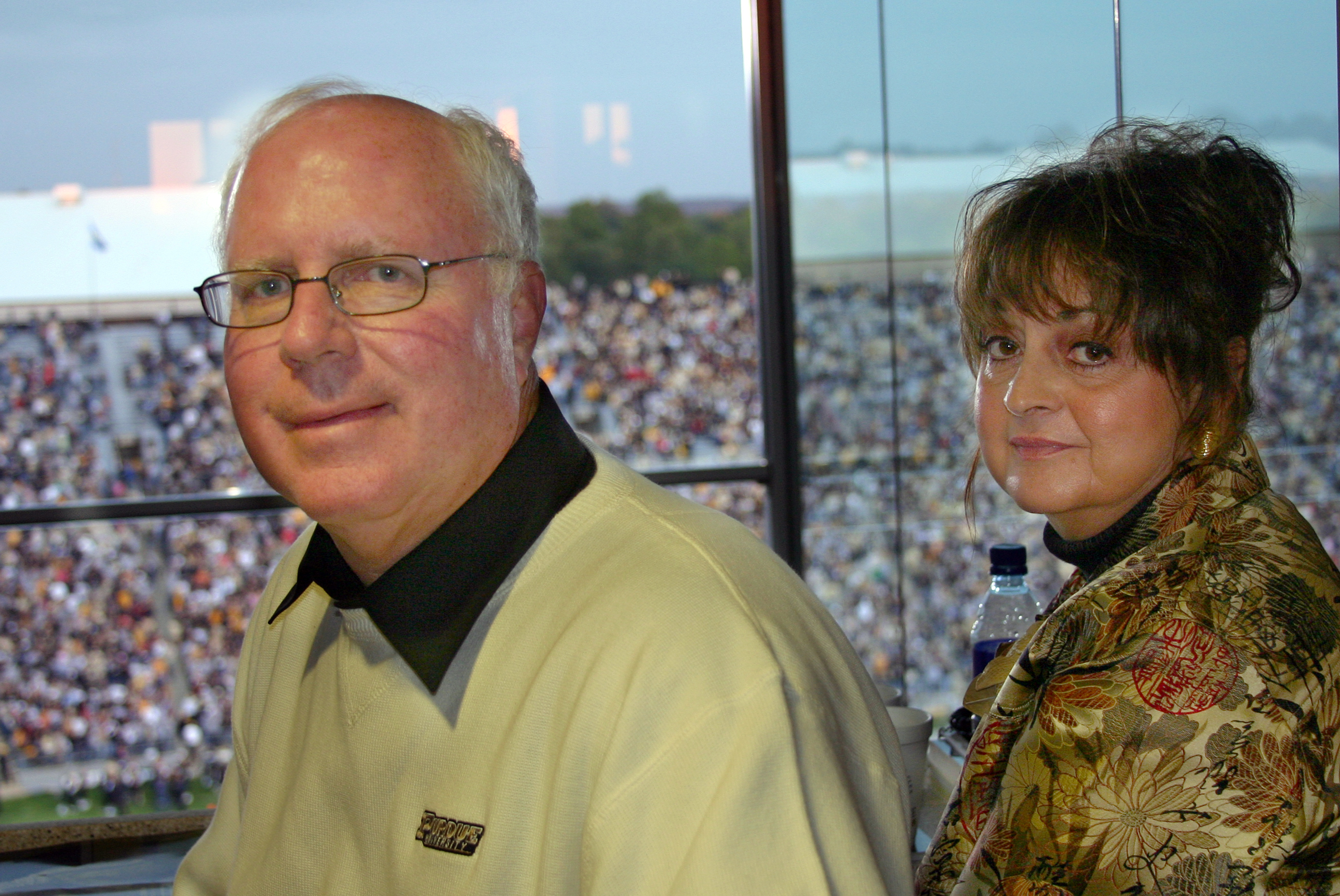
The Fleischhauers, both longtime pet owners and animal lovers, have owned West Lafayette-based Fleischhauer Rentals, which rents primarily to students, for more than 30 years. They also own a home construction business in Naples.
"Through this gift, we can express our appreciation to the community, to Purdue and to the Purdue students — all of whom play major roles in the success of our business," said Bill Fleischhauer, who received a bachelor's degree from Purdue's College of Technology in 1969. "Linda and I felt this is a good time in our life to try to make a difference."
The heart of the radiation facility, the linear accelerator, was delivered to the new facility in December. The equipment, which is a refurbished machine previously used for humans, targets cancerous tissue with therapeutic levels of highly focused radiation. The vault that contains the linear accelerator has walls between 6 inches and 18 inches thick in order to form an adequate radiation shield around the treatment area.
The facility also will have an animal holding area for up to nine small animals, primarily dogs and cats; a control area where veterinarians and veterinary technicians manage the operation of the machine; an induction-treatment area to prepare animals for the procedure; a film-developing room; and a planning room in which computer models will be built to plan the treatment that will deliver dosages as accurately and rapidly as possible.
Also honored in Naples were the anonymous donors of a $1 million deferred gift to be shared by the College of Liberal Arts' endowed scholarship program, Department of Communication's endowed teaching award, Purdue Musical Organization's Purduettes and the College of Engineering's endowed scholarships.
Writer: Kim Medaris, (765) 494-6998, kmedaris@purdue.edu
Source: Murray Blackwelder, senior vice president for advancement, (765) 496-2144, mblackwelder@purdue.edu
Purdue News Service: (765) 494-2096; purduenews@purdue.edu
Related Web site:
Purdue University Development Office
To the News Service home page