
New nursing programs seek to improve health-care design, delivery

|
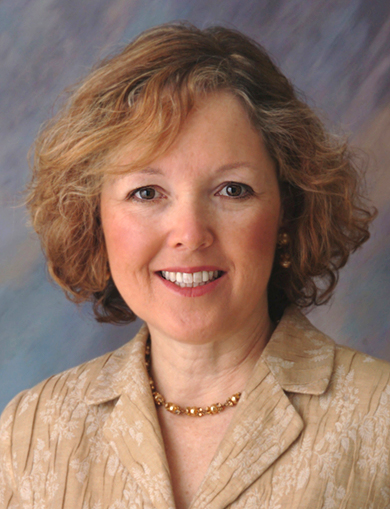
"Ultimately, our goal is to change the face of health care, and to do that we need to remove the many barriers that are blocking the way," said Julie C. Novak, associate dean of the College of Pharmacy, Nursing and Health Sciences and head of the School of Nursing at Purdue University.
"To do this, schools like Purdue have created new doctoral degrees that will be the first step in giving nurses an equal seat at the table, alongside physicians and administrators, when it comes to evaluating and designing hospital and health-care systems that can help keep more nurses in the profession."
Purdue's doctor of nursing practice program, approved by Purdue's board of trustees in May and by the Indiana Commission for Higher Education in December, is the first such degree offered in the state of Indiana and one of only 10 offered nationwide, Novak said. The first five students were admitted into the program in fall 2005.
Through a partnership with the Regenstrief Center for Healthcare Engineering in Purdue's Discovery Park, the new nursing program also has the unique feature of emphasizing engineering and management principles to improve the efficiency, effectiveness and delivery of heath care.
Regenstrief (pronounced REE-gen-streef) also is funding the tuition for the program's first five doctoral candidates.
Ken Musselman, the Regenstrief Center's director of strategic collaborations, said providing scholarships for School of Nursing students advances many of the center's initiatives.
"We're applying systems engineering to areas of health-care delivery, such as admissions and operating room procedures," he said. "Including expert nurse practitioners and educators on the front end of our projects with hospitals and other health-care providers has obvious advantages."
The Regenstrief Center in Discovery Park, the university's research and enterprise hub, aims to re-engineer health-care delivery by applying a multidisciplinary approach emphasizing systems engineering and management principles.
The doctorate program is funded by a $716,410 grant from the U.S. Department of Health and Human Services for rural advanced-practice nursing.
The post-baccalaureate degree is designed as a four-year program with a dual focus. The first two years will be devoted to earning a master's degree with a specialization as an adult nurse practitioner or pediatric nurse practitioner. Years three and four are focused on health-care systems, clinical residencies and research-related projects. Students also will receive advanced training and perform research in information technology, environmental epidemiology, evidence-based practice and biostatistics.
Novak said the doctor of nursing practice degree differs from a doctor of philosophy in nursing, which is offered at many universities throughout the country.
"Graduates of a Ph.D. program focus on bench research, but these nursing practice doctorate graduates will have the ability to take bench research and apply it to the bedside," she said.
The graduates of the practice doctorate program can choose to work in a variety of health-care settings. Novak said many will choose to see patients as an advanced nurse practitioner while at the same time working to change systems at the hospital and medical system administrative level that are impeding the ability for nurses to do their jobs. Others will choose to be full-time administrators.
"There is a serious nursing shortage in this country," Novak said. "There are 2.7 million nurses in the country, but only a half a million of them are practicing because they have been driven out of the system due to barriers put in place by an outdated system."
She said the main barrier nurses face is a general lack of control. Due to the shortage, there are too few nurses to do an increasing amount of work, which leads to overtime and, ultimately, burnout.
"It is the environment at the bedside that drives nurses away," Novak said. "Many nurses feel that because they don't have the resources or time to do their job, they are in an unsafe situation that puts patients at risk."
Also, she said the design of many hospitals creates frustration. Many facilities were built 40 to 50 years ago and haven't been redesigned to keep up with needs. For instance, Novak said emergency or obstetric rooms are often located in difficult-to-find locations that are not the same from facility to facility. And even from room to room, there are inconsistencies as to where equipment is located, which adds to the frustration and inefficiency.
She said graduates of the practice doctorate program will be able to work alongside administrators and design specialists at medical facilities or hospitals and quickly identify the problems.
"Nurses will play a major role in design," Novak said. "With nurses having a say in designing these units, they will be more nurse-friendly, and that will undoubtedly improve patient care and keep more nurses on the job."
Through a focus on what is known as evidence-based practice, graduates also will be able to critically evaluate common treatments used in medicine to determine if they are the best and most cost-effective.
For example, Novak said in the standard treatment for ear infections, antibiotics are routinely prescribed, but as newer drugs have come to the market, doctors are often choosing fourth- and fifth-generation antibiotics instead of the older and less costly ones. The mistaken belief is that newer medicines are better when studies have shown that the older ones — in a higher dose — are just as effective.
"Many treatments in use today are with us not because they have been scientifically proven to be the best treatments, but because they are only thought to be better," she said.
"By analyzing data using advanced research methods, as well as looking at patient outcomes, doctor of nursing practice graduates will be able to develop better treatment plans for acute and chronic diseases. And when they figure out the best ways to do that, then replicate them, the result is more efficient and effective care."
The practice doctorate also will help alleviate the nursing shortage by attracting more people into the profession, Novak said. Nursing will now have a comparable degree to what other professions in the health-care industry offer, such as the doctor of pharmacy or doctor of audiology degrees. Novak said this will draw more people to nursing who may have avoided the profession in the past because it didn't offer a similar advanced credential for comparable credit hours.
"There is a great need for nurses beyond the baccalaureate level," she said. "The bedside has grown more complex, so the nurses need to be more educated. With the doctor of nursing practice degree in place, we expect more applications to both the bachelor's and master's programs, which is a good first step in solving the nursing shortage."
Writer: Kim Medaris, (765) 494-6998, kmedaris@purdue.edu
Sources: Julie C. Novak, (765) 494-6644, novakj@purdue.edu
Ken Musselman, (765) 494-4973, kenmus@purdue.edu
Purdue News Service: (765) 494-2096; purduenews@purdue.edu
Related news release:
New effort to help alleviate nursing shortage, improve health care
To the News Service home page