
August 30, 2005
Purdue Extension, partners launch pregnant pig housing Web site
WEST LAFAYETTE, Ind. - If given a choice, would pigs want a solitary stall or to live in a group with peers? Studies by animal-welfare scientists to find out has lead to a multi-institutional effort aimed at informing farmers and the public about housing options.

|
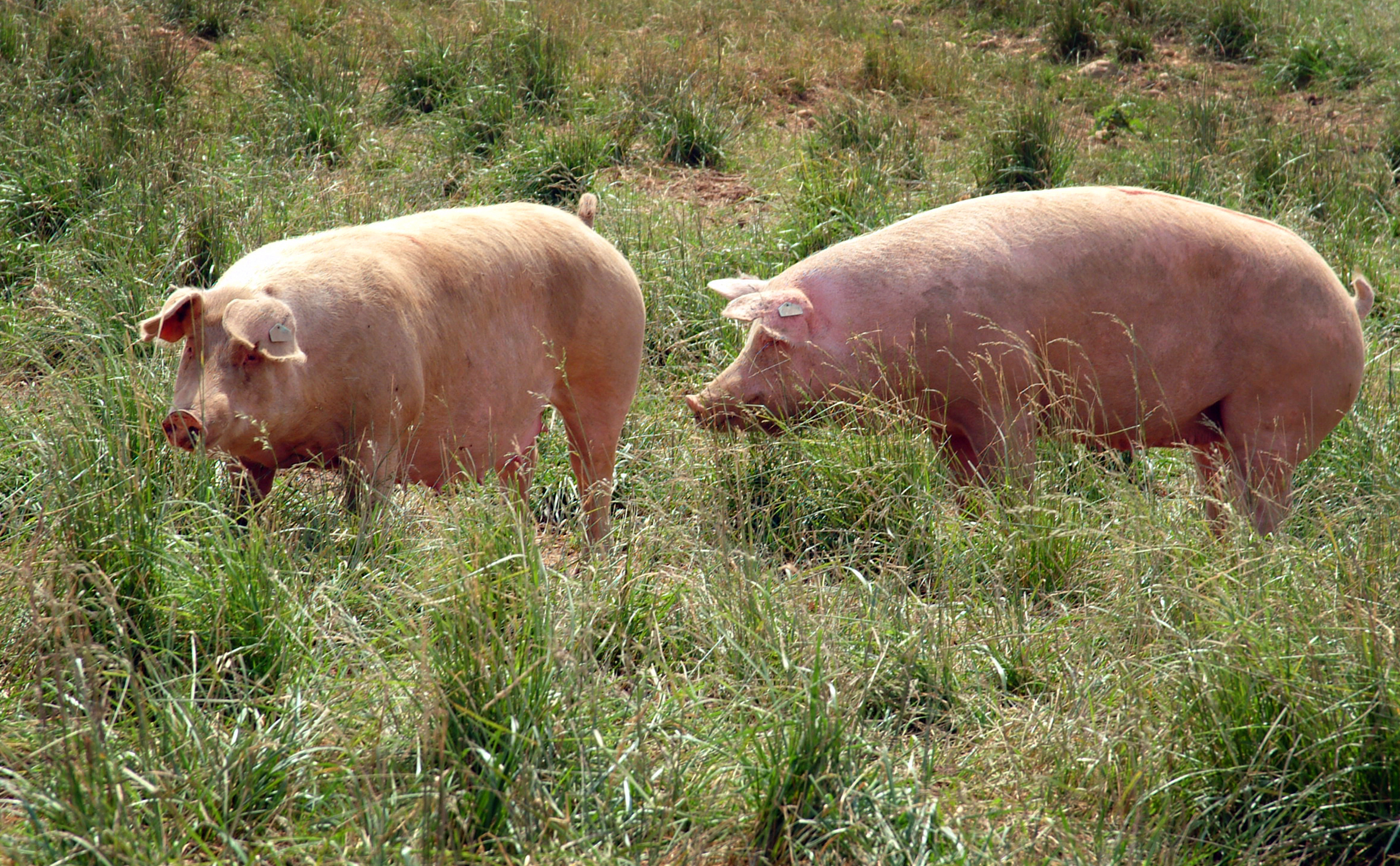
Purdue University researchers, along with governmental agencies and private organizations, have produced an educational package to help tackle the complex and controversial subject of the best housing for pregnant pigs.
"There are so many questions about sow gestation housing that people need to investigate the option that is best for them and for their animals," said Ed Pajor, director of the Purdue Center for Food Animal Well-Being. "It's important to talk about the advantages and disadvantages of the different systems."
The collaboration has resulted in a two-disc video and a newly launched Web site that includes presentations by hog farmers about their sow gestation housing choice, video of part of the National Pork Board conference on the topic and other resources. The Web site also has news and events listings, photos, printed information, video ordering information and links to other informational sites.
Pajor researches how sows react in various types of housing and whether one type of housing or another affects animals' anxiety levels, injury rate, feed consumption, fitness and/or reproduction.
One of his studies compared keeping gestating sows in small individual stalls, which has become the industry standard, and in small groups. He found that the pigs in the group housing had more scrapes and cuts than those in the stalls, while sows in stalls exhibited more abnormal behaviors such as stall bar biting.
Pajor currently is refining the knowledge of pigs' living preferences using a motivational test that includes feed or a group-housing unit as reward options.
Gestating sows normally housed in a single-animal stall are taught a job - how to press a panel. Pressing the panel will give them access to food or entry to a group pen with two other female pigs. They already know the animals with which they will be housed, so they won't be hesitant to enter the pen.
Sows are tested to determine how hard they will work for access to a small amount of food. Their amount of work is then compared to how hard sows work for access to the group-housing situation. Comparing the effort they expend for food with their effort for group housing allows researchers to measure the sows' motivation to live in a group, Pajor said.
The results of the latest study are not yet known.
"This motivational approach allows us to understand the animals' perspective on their environment," he said. "There is a clear link between animal welfare and motivation. If animals are prevented from doing something they are highly motivated to do, it's likely their welfare is compromised."
Pajor's research is intended to help pig producers make more educated animal housing choices. This also is the object of the new DVD and Web site package.
"The video and Web site are aimed at educating hog producers, potential producers, Extension educators and school-age youngsters about the different sow gestation housing options," Pajor said.
"We aren't promoting one system or the other. We want hog producers to determine if a system will work for them. We hope the materials we're providing will answer some of their questions about alternative sow gestation housing."
The video includes interviews with five different hog farmers in three different states, each of whom uses a different sow housing system. The operations highlighted use stalls, small groups, large groups with electronic feeding, outdoor pasture and hoop housing. Cost of the video is $25 and can be ordered online or by phone from Purdue Extension Knowledge to Go, or 1 (888) EXT-INFO.
The USDA-Cooperative State Research, Education and Extension Service (CSREES) provided funding for the video/Web site project. Richard Reynnells, CSREES national program leader for plant and animal systems, lead the agency's efforts. The partnership also includes The Animal Welfare Institute, National Pork Board, The Humane Society of the United States, USDA-Agricultural Research Service National Agricultural Library, USDA-Agricultural Research Service Aquaculture and Animal Well-Being, and the American Veterinary Medicine Association.
Writer: Susan A. Steeves, (765) 496-7481, ssteeves@purdue.edu
Source: Ed Pajor, (765) 496-6665, pajor@purdue.edu
Ag Communications: (765) 494-2722;
Beth Forbes, forbes@purdue.edu
Agriculture News Page
Related Web sites:
Purdue Extension Sow Gestation Housing
USDA-Cooperative State Research, Education, and Extension Service, animal well-being
CAPTION:
Pasture is one of the housing options for pigs. Producers are especially interested in the best way to care for their gestating sows. Purdue and collaborators have produced an educational DVD set and Web site to help answer questions about different hog housing. (Photo by Whitney Copeland, Purdue University)
A publication-quality photo is available at https://www.purdue.edu/uns/uns/images/+2005/pajor-sowhouse.jpg

To the News Service home page