
PERSPECTIVE
SUMMER 2005
From research to product
Purdue is one of America's most aggressive universities in its efforts to lead state economic development. People in Indiana are familiar with the University's "Go Businessmakers!" ad campaign and the Purdue Research Park’s slogan "The idea economy is here!" These initiatives, and similar ones by universities across the nation, stem from lobbying efforts by Purdue that helped changed federal law 25 years ago.
Ralph Davis, from Purdue’s first patent office, asked Indiana's U.S. Sen. Birch Bayh (B.S. 1951) to help revise government patent policies in order to stimulate the transfer of technology from the academic sector to the marketplace. Davis, now retired, has been credited as the underlying force in the Bayh-Dole Act (or Patent and Trademark Law Amendments Act), which Bayh co-authored with Sen. Robert Dole of Kansas.
In addition to creating a uniform patent policy, the law gave American universities intellectual property control over their inventions, even if the inventions were the fruit of government-funded research.
The impact of the Bayh-Dole Act can be measured by the subsequent increase in the number of institutions engaged in technology-transfer efforts and the rise in the number of patents issued to universities. Since its inception in 1992, Purdue’s Office of Technology Commercialization has licensed technology to 40 start-up companies, of which 23 are Indiana firms. The office holds patents on technologies that are being used (or have the potential to be used) to treat cancer, detect chemical weapons, help skin grow back scar-free, stymie computer hackers, monitor the blood pressure of premature babies, produce new turfgrass and apple varieties, and much more.
One company, Memphis, Tenn.-based Medtronic Sofamor Danek, recently licensed polyethylene glycol, a central nervous system treatment innovation that emerged from research led by Richard Borgens, the Mari Hulman George Professor of Applied Neuroscience and director of the Center for Paralysis Research in Purdue's School of Veterinary Medicine. PEG, when injected within 72 hours of serious spinal injury, was shown to prevent or reduce permanent spinal damage in most dogs (Journal of Neurotrauma, December 2004).
Of the 23 Indiana companies granted licenses to commercialize Purdue technologies, 20 firms were or are located at Purdue Research Park. A business development services provider/incubator, the park was recognized by Indiana technology leaders in 2004 with a TechPoint MIRA Award as outstanding service provider. The research park’s national peers, the Association of University Research Parks, called it best in the nation.
To date, more than 35 Purdue faculty members are in involved in park startups (see list). Among those faculty members are David Nolte, professor of physics, and Fred Regnier, J.H. Law Distinguished Professor of Chemistry. They discovered that a compact disc, instead of just holding digital information like computer data or music, could be used to function as billions of tiny test tubes, each binding specific proteins that can then be detected with a laser. Their interdisciplinary research efforts led to the creation of an instrument similar to a CD player, which can scan for more than 10,000 diseases by identifying proteins in a single drop of blood.
The result of that research is QuadraSpec Inc., a new Purdue Research Park firm that took the top prize in the $50,000 Opportunity for Indiana Business Plan Competition in November and also won $80,000 in cash and business services in the third annual Purdue Life Sciences Business Plan Competition.
In early 2005, Purdue’s efforts to accelerate business growth were recognized among the top eight models in the country on a list that included Stanford University and the Massachusetts Institute of Technology. The report, "Accelerating Economic Development through University Technology Transfer," was commissioned by the state of Connecticut to find exemplary practices related to university technology transfer. It credited Purdue with having one of the most successful research parks in the country, primarily because of the unusually close link between Purdue and the park's firms.
"Our ability to form strategic relationships sets Purdue Research Park apart from other university-affiliated business incubation programs," said Joseph Hornett, senior vice president and treasurer of the Purdue Research Foundation.
These bonds are formed even before the companies get off the ground. "In order to provide emerging companies with the best chance for success, we strive to combine the right technology with the right people," said Simran Trana, interim director of the Office of Technology Commercialization. "This process requires that we work closely with Purdue researchers to license the technology and protect the intellectual property, then recruit investors and a talented management team and, finally, build out space for these companies to grow within our incubators."
By working in tandem with its client firms, the foundation continues to evolve its tech-transfer program.
"Gathering feedback along the way from entrepreneurs gives us further direction on how to proceed to become a more valuable resource," said Steven Gerrish, the foundation’s business development services director. He provides three recent examples of relationship-based, value-added assistance:
The foundation’s relationship with Purdue researchers led to early identification of a technology’s commercial potential, which helped QuadraSpec Inc. break out of the gate with a solid, early-stage management team and investor backing;
An ongoing connection with cancer treatment company Endocyte Inc. helped it attain anchor position in the park’s flagship incubator in West Lafayette, which was expanded to accommodate the biotechnology company’s needs this year; and
Close ties with the emerging biotechnology company Andara Life Science Inc. and the expressed need for an Indianapolis presence by two existing research park companies led to the expansion of Purdue’s business development services to Indianapolis at INTECH Park, located at 71st Street and I-465. Because of Purdue's sponsorship of INTECH Park, the capital city’s second Certified Technology Park, services will be available to companies that have a connection with Purdue or its regional campuses through the university's sponsored research or technology-transfer initiatives.
Andara will establish headquarters at INTECH Park to commercialize a second technology developed in Professor Borgens’ lab called an oscillating field stimulator, which has shown early promise in bringing quality-of-life improvements to patients with paralysis by stimulating nerve regeneration (Journal of Neurosurgery).
At Purdue, entrepreneurs are encouraged with "Go Businessmakers!" and given space to grow in an "idea economy." Ralph Davis, whose initiative 25 years ago spurred the federal legislation that changed the way universities and government do business, left behind another legacy for Purdue. His son, Craig, was hired to get the $6.5 million Chao Center for Industrial Pharmacy & Contract Manufacturing at Purdue Research Park up and running. The center, yet another industry-university bridge, will manufacture drugs while developing the next generation of pharmaceutical manufacturing professionals.
Story by Jeanine Phipps
Faculty member's name is symonymous with technology transfer
One Purdue faculty member whose name is practically synonymous with technology transfer is analytical chemist R. Graham Cooks, whose eminent reputation in academia is complemented by his innovations upon tools used for pharmaceutical development throughout the world.
|
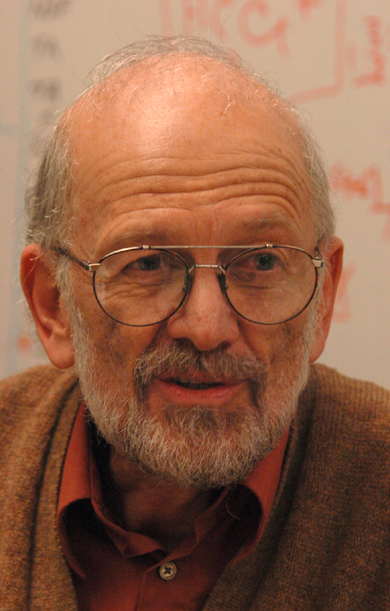
"I see technology transfer as one of the primary missions of the university, and working on applications as well as basic science also gives our students more varied career options," said Cooks, the Henry Bohn Hass Distinguished Professor of Chemistry in the College of Science. "It's demanding because you're not just tossing an idea out there and hoping somebody will pick it up, but you're also taking the first steps toward turning it into something that will have a practical application in the near future. The work is thrilling because along with the risk of failure, you also get the chance to make a broader contribution."
Taking such risks has benefited both Cooks' lab and Purdue. Patents and technologies spawned in Cooks' lab today generate royalties and $2 million in annual research funding for the university, whose Office of Engagement recently recognized him with its Outstanding Commercialization Award for his contributions to the field of mass spectrometry. Though "mass spec," as its practitioners call it, is not exactly a household phrase, the discipline produces much of the technology used to develop new drugs.
"Mass spectrometry has proven quite good at analyzing successively more complex molecules for the past half-century," Cooks said. "Its ability to characterize and quantify individual chemical components is an essential step in drug development. But about a decade ago, we realized we needed machines that are both smaller in size and gentler on the increasingly fragile molecules pharmaceutical scientists and biotechnologists work with."
Experiments in his lab led to mass spectrometers that could create ions easily and gently and the founding of the Griffin Analytical Technologies in 2001 to manufacture miniaturized versions of mass spectrometers. Griffin now employs 18 people at the Purdue Research Park and sells the devices for approximately $100,000 apiece. Another company, Prosolia Inc. of Indianapolis, has also developed products based on technology from Cooks' lab, and will introduce them at the American Society for Mass Spectrometry meeting in early June.
Story by Chad Boutin, Purdue News Service
Purdue University faculty involved with companies at Purdue Research Park
As of June 1, 2005
Dor Ben-Amotz
Professor of Chemistry, Purdue University
Co-founder and Vice President, SpectraCode, Inc.
Co-founder, Optical Therapeutic Technologies, Inc.
Principal Investigator, Tienta Sciences, Inc.
Mikhail Atallah
Distinguished Professor of Computer Science, Purdue University
Co-founder and Scientific Advisor, Arxan Technologies, Inc.
Rashid Bashir
Professor of Electrical and Computer Engineering and Biomedical Engineering, Purdue University
Scientific Director, Bionanotechnology, Bindley Bioscience Center, Purdue’s Discovery Park,
Co-founder and VP of Technology Development, BioVitesse, Inc.
Richard Borgens
Mari Hulman George Professor of Applied Neuroscience, Purdue University
Chief Scientific Officer, Andara Life Science, Inc.
Ray Bressan
Distinguished Professor of Horticulture, Purdue University
Director, Center for Plant Environmental Stress Physiology, Purdue University
Founder and Director of Board of Scientific Advisors, FuturaGene, PLC
Steve Byrn
Charles B. Jordan Professor of Medicinal Chemistry
Head, Department of Industrial and Physical Pharmacy
Director, Center for AIDS Research
Co-founder and Consultant, SSCI (Solid State Chemical Information), Inc.
Nicholas Carpita
Professor of Plant Biology, Purdue University
Co-founder, Prima Specialty Vectors
Alok Chaturvedi
Associate Professor of Management and Computer Science, Purdue University
Founder and Chief Technology Officer, Simulex Inc.
R. Graham Cooks
Henry Bohn Hass Distinguished Professor of Analytical Chemistry, School of Science, Purdue University
Sponsored Research, Griffin Analytical Technologies, Inc.
Stephen Elliott
Assistant Professor of Industrial Technology, Purdue University
CEO, bioSENSE, Inc.
Neal Fearnot
Adjunct Professor of Biomedical Engineering
President, MED Institute, Inc.
Chairman of the Board, Cook Biotech, Inc.
Leslie Geddes
Showalter Distinguished Professor Emeritus of Bioengineering, Purdue University
Initial Discovery Team, Cook Biotech, Inc.
James Goldman
Professor and Associate Head, Department of Computer Technology, Purdue University
Co-founder, Executive VP and Chief Technology Officer, InfoComm Systems, Inc.
Jay Gore
Associate Dean of Engineering for Research and Entrepreneurship, Purdue University
Vincent P. Reilly Professor of Mechanical Engineering, Purdue University
Sponsored Research, En’Urga
Sponsored Research, Vista Biosciences, LLC
Ed Grant
Professor of Chemistry, Purdue University
Co-founder and CEO, SpectraCode, Inc.
Peter Kissinger
Professor of Chemistry, Purdue University
Chairman and CEO, Bioanalytical Systems, Inc. (BASi)
Board Member, Tienta Sciences, Inc.
Paul Krause
Professor of Electrical and Computer Engineering, Purdue University
Founder and President, P.C. Krause and Associates, Inc.
Philip Low
J. F. Foster Distinguished Professor of Chemistry, Purdue University
Founder and Chief Science Officer, Endocyte, Inc.
Shailendra Raj Mehta
Visiting Associate Professor of Management, Purdue University
Director of Entrepreneurship and Small Business Outreach initiative, Purdue University
Founder and Chief Economist, Simulex, Inc.
D. James Morré
Dow Distinguished Professor of Medicinal Chemistry, Purdue University
Co-founder and Consultant, NOX Technologies, Inc.
Dorothy M. Morré
Professor of Foods and Nutrition, Purdue University
Co-founder, Consultant and Board Member, NOX Technologies
Issam Mudawar
Professor of Mechanical Engineering, Purdue University
Director of the International Electronic Cooling Alliance, Purdue University
Founder, Mudawar Thermal Systems, Inc.
David Nolte
Professor of Physics, Purdue University
Co-founder and Principal Scientist, QuadraSpec, Inc.
Kinam Park
Professor of Pharmaceutics and Biomedical Engineering, Purdue University
Founder and CEO, Akina, Inc.
Joseph Pekny
Director of Discovery Park’s e-Enterprise Center, Purdue University
Professor of Chemical Engineering, Purdue University
Co-founder and CEO, Advanced Process Combinatorics Inc. (APC)
Karthik Ramani
Professor of Mechanical Engineering, Purdue University
Director of PRECISE, Purdue University
Chief Scientist, Imaginestics LLC
Fred Regnier
Distinguished Professor of Analytical Chemistry, Purdue University
Co-founder, QuadraSpec, Inc.
John Rusek
Adjunct Professor of Propulsion, School of Aeronautics and Astronautics, Purdue University
Research Director, Swift Enterprises, Ltd.
Yudaya Sivathanu
Adjunct Professor, School of Mechanical Engineering, Purdue University
Founder and Technical Director, En’Urga, Inc.
David Thompson
Professor of Chemistry, Purdue UniversityChief Scientific Officer, Janus Biosystems, Inc.
David Waters
Professor of Veterinary Clinical Science, Purdue University
Executive Director, Gerald P. Murphy Cancer Foundation
George Wodicka
Professor and Head, Weldon School of Biomedical Engineering, Purdue UniversityFounder, SonarMed, Inc.
Wei Zheng
Associate Professor of Health Sciences, Purdue University Chairperson, Neurotoxicology Division, School of Health Sciences, Purdue University
CEO, Life Plus LLC
|
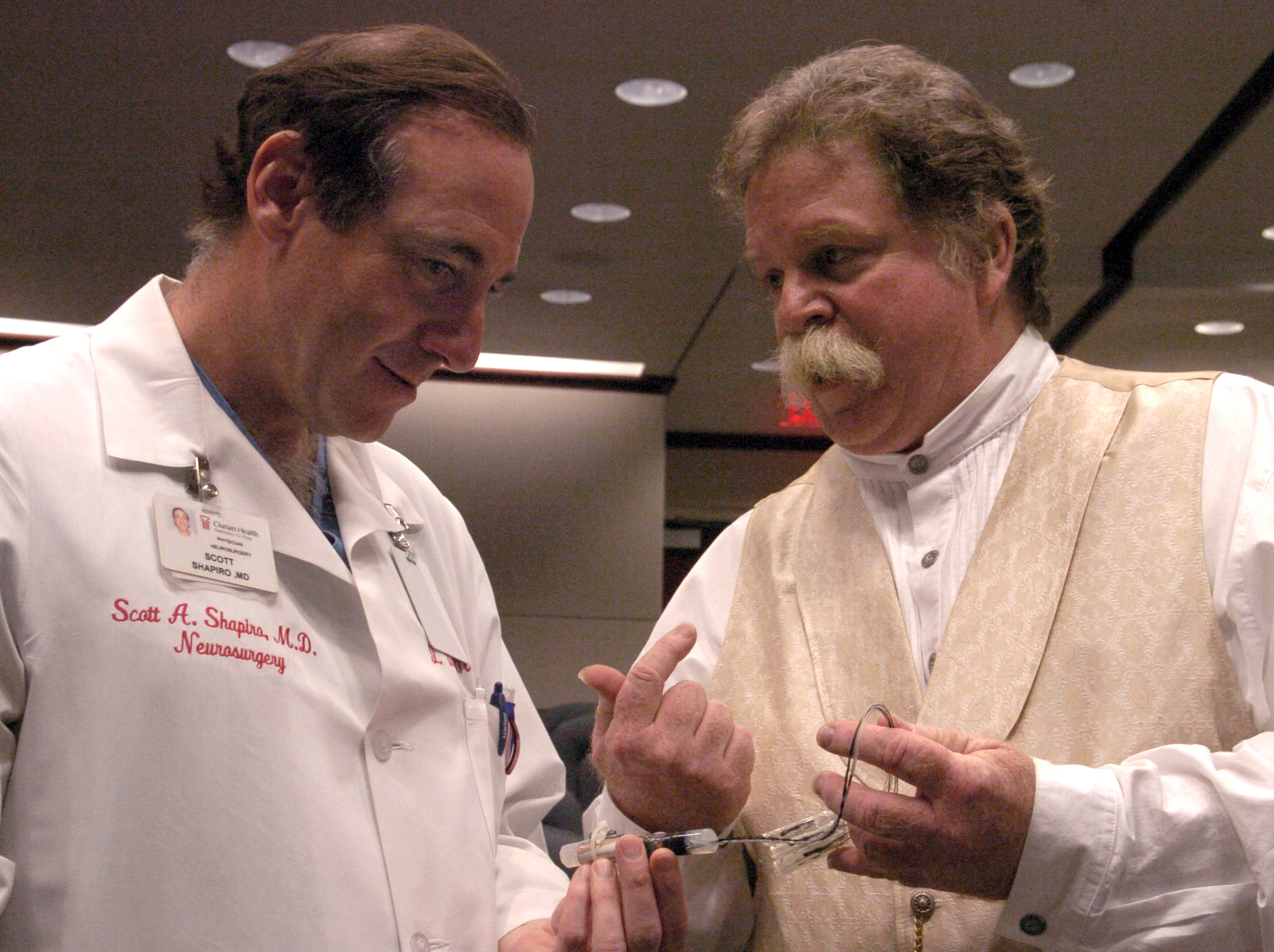
PHOTO CAPTION:
Dr. Scott Shapiro, left, talks with Purdue professor Richard Borgens about the oscillating field stimulator device developed by Borgens' team in the Center for Paralysis Research in Purdue's School of Veterinary Medicine. It was announced in April that Indiana startup company Andara Life Science Inc. has licensed the technology, which shows promise in treating central nervous system injuries and diseases. Shapiro, the Robert L. Campbell Professor of Neurological Surgery at the Indiana University School of Medicine, is chief of neurosurgery at Wishard Memorial Hospital as well as Andara's chief clinical investigator. Borgens serves as Andara's chief scientific officer.
(Purdue News Service photo/David Umberger)

|
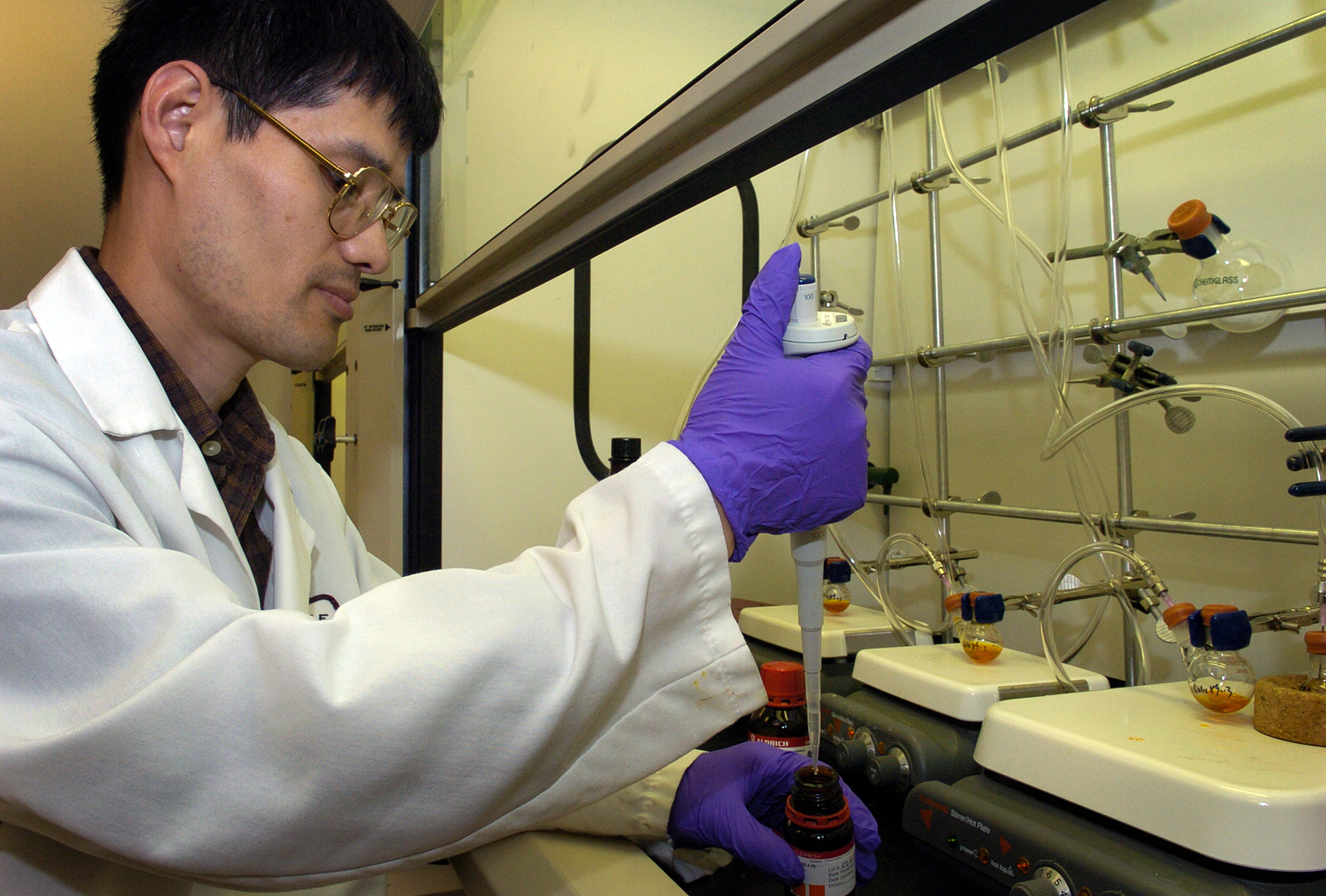
PHOTO CAPTION:
Process chemist Le-Cun Xu works in Endocyte Inc.'s state-of-the-art facilities in Purdue Research Park's newly expanded flagship incubator. The biotechnology firm holds the anchor tenant position for the Prudue Technology Center's 45,000-square-foot wing.
(Purdue News Service photo/David Umberger)
To the News Service home page