2004 Honorary Degree
2004 Honorary Degree

|
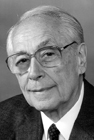
Melvin J. Glimcher
Doctor Of EngineeringMelvin J. Glimcher has distinguished himself as one of the most productive and creative scientists concerned with the general field of biologically mineralized tissues such as bone and tooth.
For some 45 years, he has been associated with the Department of Orthopedic Surgery at the Children’s Hospital of the Harvard Medical School, while living in Boston, Mass. Born in Brookline, Mass., and raised in nearby Chelsea, Glimcher left high school early to enlist in the Marines during World War II. He eventually joined a Marine Corps unit at Purdue University, where he continued his education and, after being discharged, earned two bachelor’s degrees – one in mechanical engineering and one in science. He then moved back to the Boston area to work on his doctorate at Harvard Medical School. After graduating magna cum laude from Harvard Medical School, Glimcher completed his clinical training in orthopedic surgery in the Harvard Medical School program at the Massachusetts General and Children’s Hospital in Boston. After also completing graduate school studies and research at Massachusetts Institute of Technology, Dr. Glimcher returned to the Harvard Medical School and became the first tenured chair in orthopedic surgery. Because of his interests in the growth and development of bone and other biologically mineralized tissues, Dr. Glimcher moved to the Children’s Hospital as orthopedic surgeon-in-chief and established his laboratories. His unique education in clinical medicine, biology, engineering and the basic physical chemical sciences permitted him to take advantage of the many new advanced tools of high technology and to contribute a significant number of original seminal concepts and to design creative experiments which have contributed to the entire field of biologically calcified tissues. His laboratory also has been a national and international research center for the training of MD and Ph.D. scientists, postdoctoral fellows, and more senior scientists already established in the biological or physical and engineering sciences who wished to develop research centers in the basic sciences of the musculoskeletal system. To date, more than 40 such individuals now hold academic positions throughout the United States and beyond.
|