
August 23, 2004
Disease-carrying mosquitoes are on the wing in late summer, fall
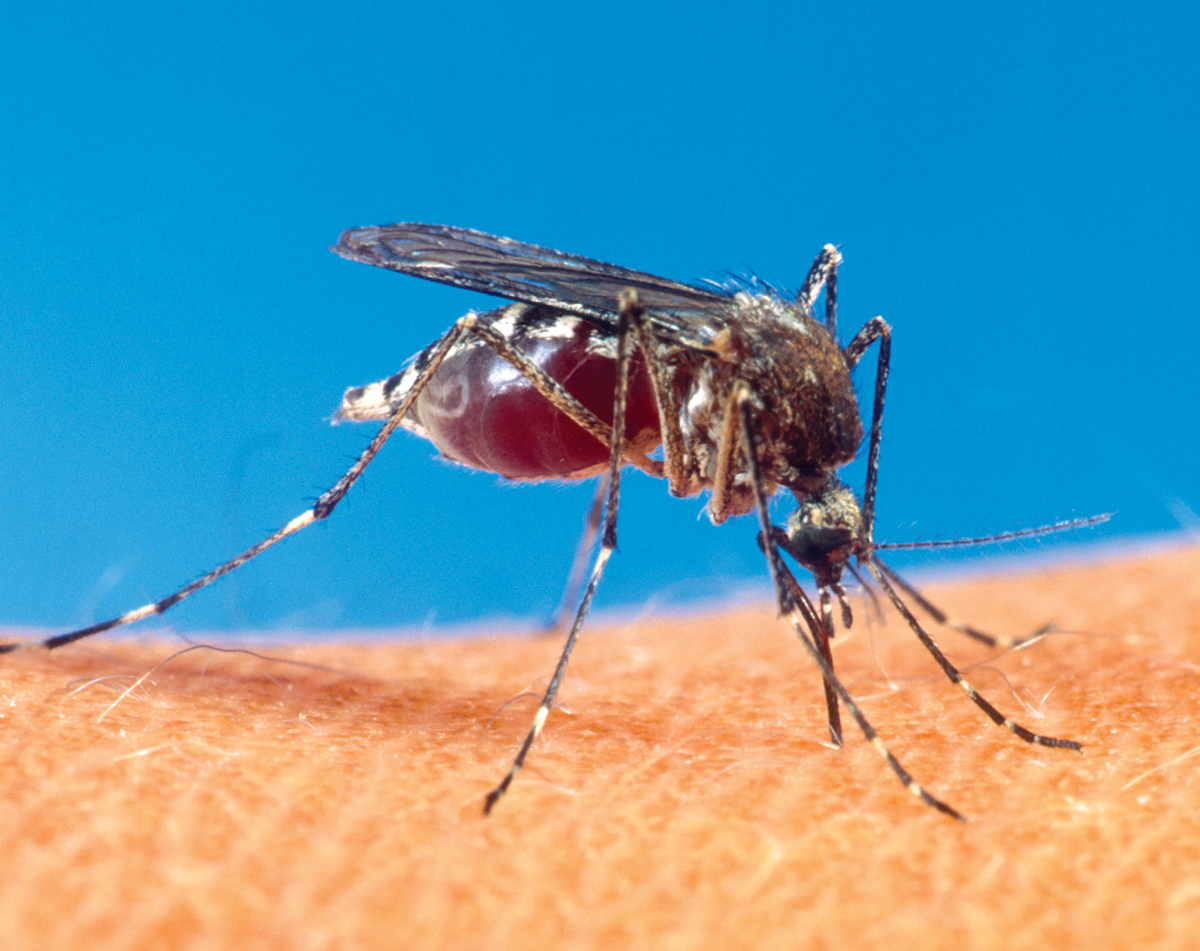
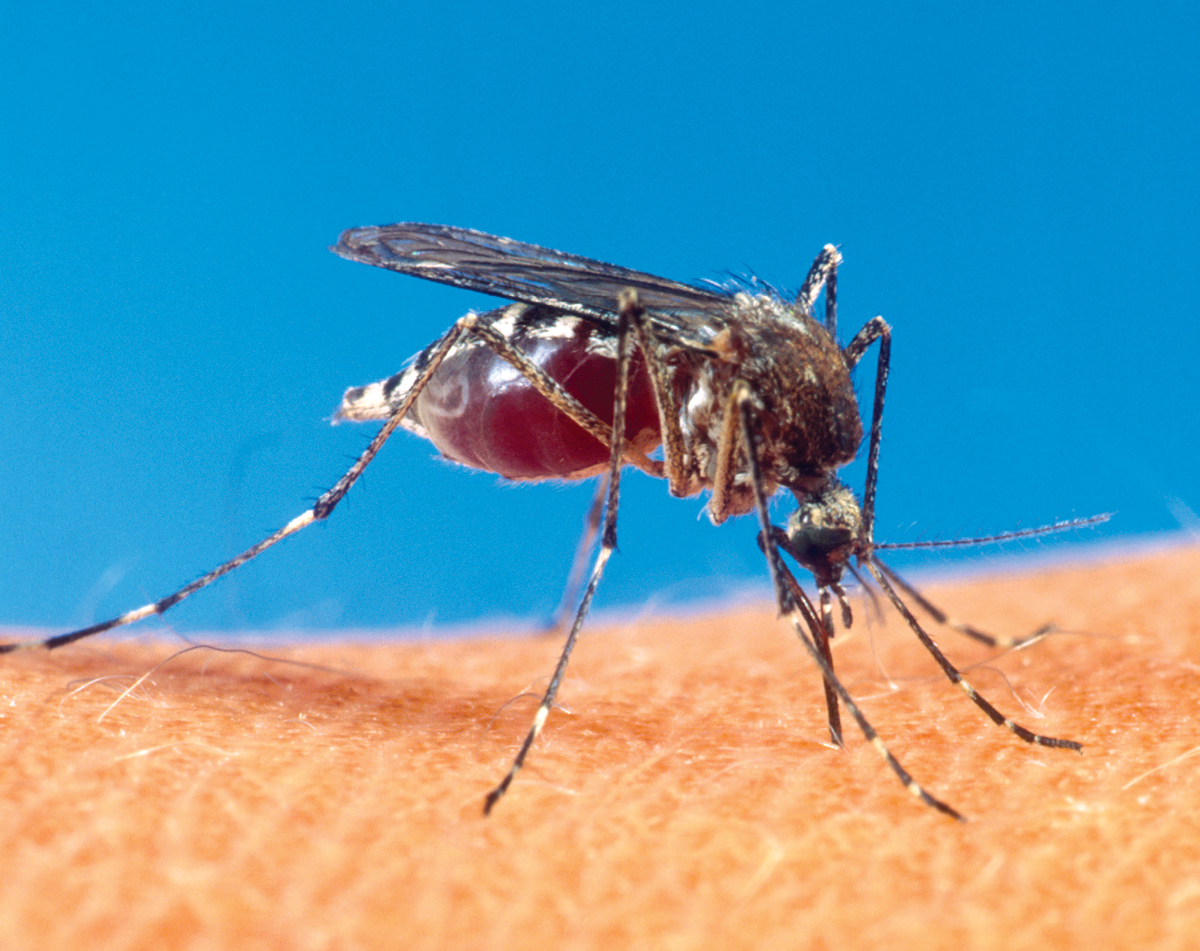
WEST LAFAYETTE, Ind. – The types of mosquitoes that carry deadly diseases, including West Nile virus, are generally at their peak in late summer and fall, so Purdue University experts say people must be vigilant to avoid being bitten and must revaccinate their horses.
Earlier in the year, the prevalent mosquitoes tend to be nuisance mosquitoes that bite but don't spread illness as they suck blood, said entomology professor Ralph Williams. Although mosquitoes and birds have tested positive for West Nile virus in Indiana during 2004, only one human case of the disease and no equine cases have been reported.
|
"We are not seeing large numbers of mosquitoes so far this year because of cooler than normal temperatures and sporadic heavy rain," he said. "I don't think we'll be seeing a lot of activity unless we have a longer period of dry, warm weather.
"However, people need to avoid being bitten and should protect their pets as much as possible, because different mosquitoes carry different diseases."
Among diseases that mosquitoes spread are West Nile virus, and Eastern and Western equine encephalitis. Both people and animals are susceptible to these.
"Horse owners should make sure their animals are protected as much as possible from mosquito-borne disease," said Bill Hope, Purdue community practice equine veterinarian. "This includes giving their horses the second of their annual West Nile virus shots."
Vaccines against West Nile and the encephalitic diseases are available for horses but not for people. The first year a horse receives the West Nile shot, there are two immunizations spaced three to six weeks apart, followed by a booster six months later. After that, the vaccine should be given twice annually, approximately six months apart with the first one given between February and April, Hope said.
Although West Nile virus hasn't devastated Indiana this year, many parts of the country have record levels of illness, especially Colorado and California. Eastern equine encephalitis was a problem last year and again this year, especially on the East coast.
In general, Eastern equine encephalitis is more severe than West Nile virus. Initially, cases of Eastern equine encephalitis may appear similar to West Nile virus, however, they progress more rapidly. In horses, the eastern form of the disease can cause fever and paralysis within a few days.
Eastern equine encephalitis is fatal in 35 percent to 50 percent of human cases and in 90 percent or more of the equine cases, according to the Centers for Disease Control and Prevention (CDC) and the U.S. Department of Agriculture Animal and Plant Health Inspection Service. West Nile virus has a fatality rate of about 3 percent in people and less than 25 percent in horses if treated promptly.
People should take precautions against mosquito-borne diseases, including:
• Dispose of, empty and/or clean livestock watering troughs, ditches, puddles, birdbaths, rain gutters, buckets, old tires, ponds and swimming pools so mosquitoes can't breed.
• Use repellents with N,N-diethyl-meta-toluamide (DEET) and follow label instructions.
• Make sure the repellent is registered with the U.S. Environmental Protection Agency and check that the concentration is approved for use on children.
• Don't use human anti-insect products on animals; those repellents could sicken an animal. Special repellents are available for horses, but not for dogs and cats.
• Wear light-colored clothing, long-sleeve shirts, long pants, socks and hats when outside.
• Cover horses with light-colored, lightweight or netted sheets to help keep insects away.
• Keep people and pets away from mosquito-infested areas. Mosquitoes are most likely to bite at dawn and dusk.
Writer: Susan A. Steeves, (765) 496-7481, ssteeves@purdue.edu
Sources: Bill Hope, (765) 494-8548, hopew@purdue.edu
Ralph Williams, (765) 494-4560, rew@purdue.edu
Ag Communications: (765) 494-2722; Beth Forbes, forbes@purdue.edu
Agriculture News Page
Related Web sites:
Purdue School of Veterinary Medicine
Purdue Department of Entomology
Purdue Extension resources for West Nile virus
Indiana Animal Disease Diagnostic Laboratory
Purdue Department of Veterinary Pathobiology
Indiana Board of Animal Health
Animal and Plant Health Inspection Service
Centers for Disease Control and Prevention West Nile virus information
U.S. Geological Survey West Nile virus information
PHOTO CAPTION:
Late summer and fall are prime times for disease-carrying mosquitoes, so Purdue University experts recommend people take precautions for themselves and for their pets and livestock. Mosquitoes can transmit a variety of illnesses to people and animals, including West Nile virus, and Eastern and Western equine encephalitis. (Photo/USDA-Agricultural Research Service)
A publication-quality photograph is available.
To the News Service home page