Purdue News
Purdue News

|
|
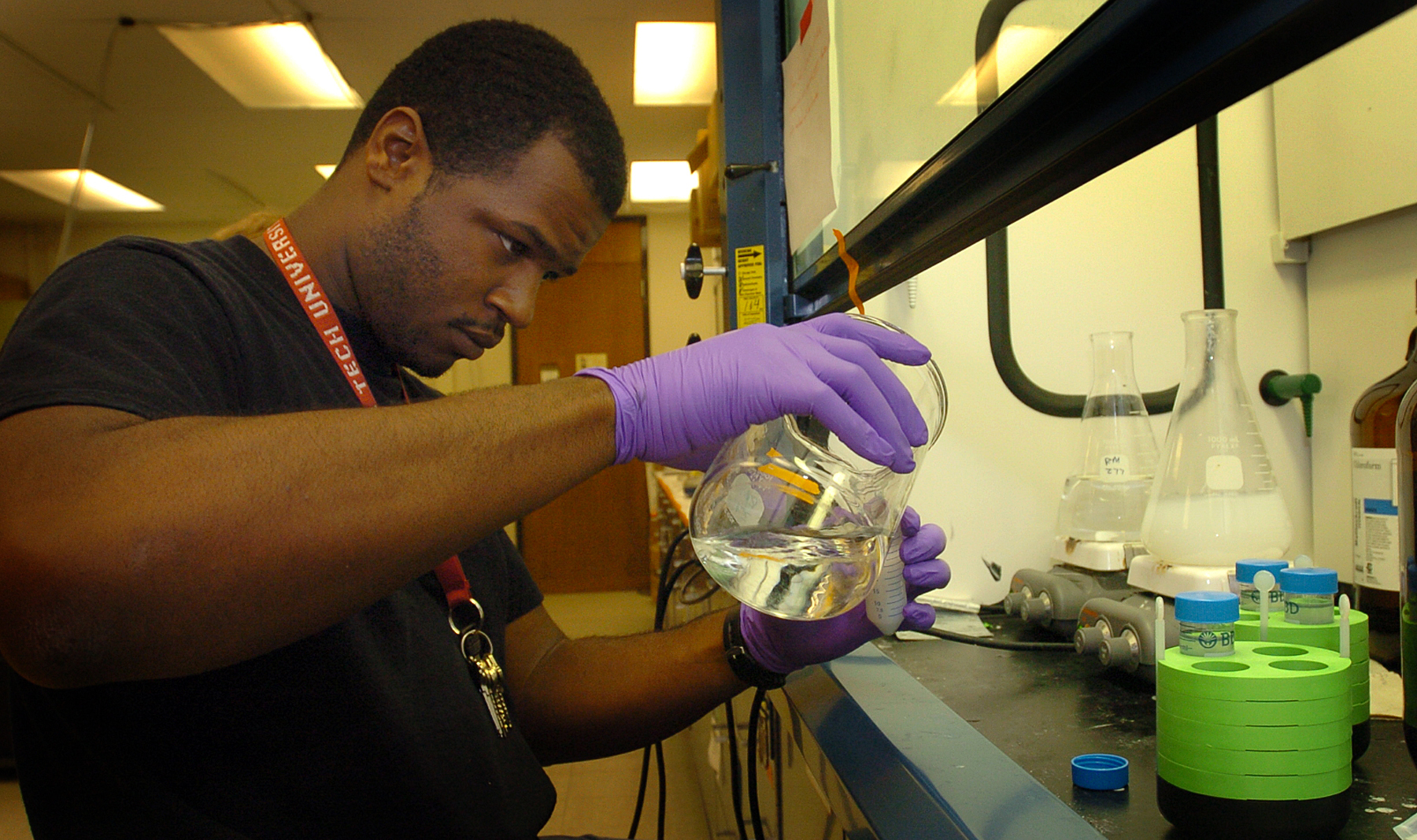
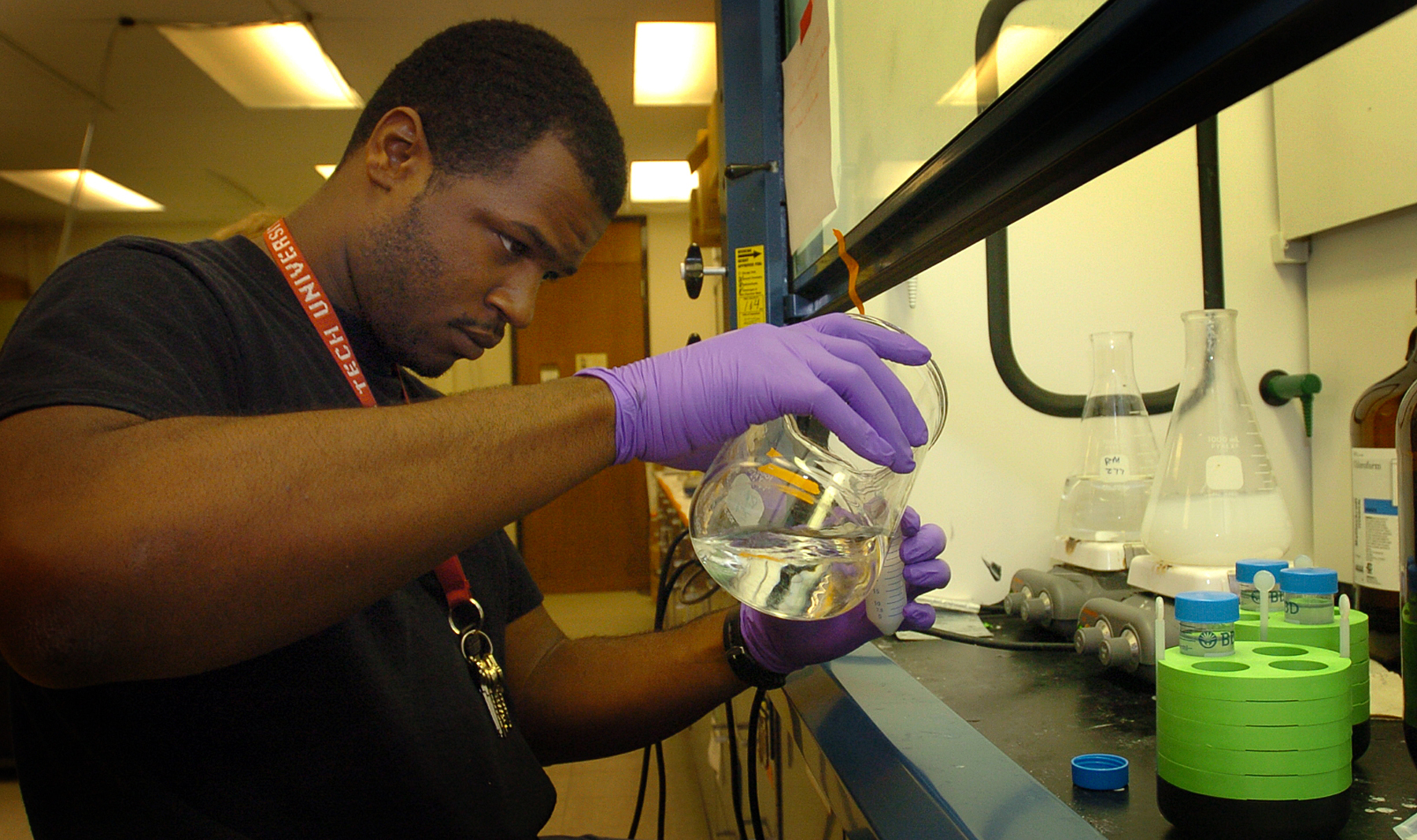
August 2, 2004 NSF-funded program at Purdue steers students toward biomed careersWEST LAFAYETTE, Ind. – Eleven undergraduate students are getting a firsthand look at careers in biomedical engineering through a federally funded program at Purdue University aimed at filling future jobs in burgeoning high-tech health-care fields.
The students have come to Purdue from universities around the nation to attend the Research Experiences for Undergraduates program, sponsored by the National Science Foundation. U.S. jobs in healthcare fields are predicted to climb 26.1 percent by the year 2012, representing an increase about twice that of expected overall job growth. Many of those jobs will be in biomedical engineering, said Thomas Webster, an assistant professor of biomedical engineering. Webster is leading the program, which is in its fourth year, with Karen M. Haberstroh, also an assistant professor of biomedical engineering. "The students get a firsthand taste of what it's like to practice biomedical engineering in various fields," Webster said. "We know the program is having an impact because about 60 percent of participating students go into graduate programs in biomedical engineering." During the 10-week program, which begins in early June, students are exposed to biomedical engineering in medicine, industry and academia. They shadow doctors, university faculty and corporate researchers, learning about biomedical engineering in those career paths. The students observe clinical surgeries, visit facilities such as radiology and anesthesiology centers, attend seminars to learn about recent advances in clinical medicine and participate in panel discussions with medical doctors. They also visit area companies that manufacture medical devices and products, where they learn about the business side of health-care fields. The students engage in panel discussions with industry representatives. The students conduct their own research, as well, and present findings during poster and oral sessions at Purdue. Courtney M. Creecy, a junior from the University of Texas at Austin, studied T-cell signaling to better understand flaws that, if corrected, could lead to new treatments for disease. T-cells are critical to the immune system’s ability to detect and eliminate foreign invaders, such as disease-causing pathogens. Creecy, a biomedical engineering major, wrote a software program to determine the sensitivity of a T-cell model created by Purdue researchers. The ultimate goal is to refine the model to improve its accuracy. Joshua Lannu, a senior at the Georgia Institute of Technology, used the opportunity to work on a project aimed at developing a "biosensor" for detecting the bacterium Listeria monocytogenes, one of the deadliest food-borne bacteria. The biosensor is based on a design that mimics living cells and would be used to quickly test foods for Listeria contamination. Kathryn Antle, a senior from Tufts University, used a new type of microscopy to study damage to cell membranes for research ultimately aimed at treating paralysis victims. Antle said she wants to pursue a career related to prosthetics. The students said the program enables them to see how academic lessons in biomedical engineering are applied to real-world problems. "This is the best summer job I have ever had," Creecy said, adding that she is seriously considering graduate studies in biomedical engineering. The students receive a stipend to pay for housing, food and transportation. Other universities with students in the program include the University of Northern Colorado, Rosary College of Arts and Science, University of Virginia, Luther College, Virginia Commonwealth University, University of Puerto Rico, Rose-Hulman Institute of Technology and the University of Alabama. Writer: Emil Venere, (765) 494-4709, venere@purdue.edu Sources: Thomas Webster, (765) 496-7516, twebster@purdue.edu Karen Haberstroh: (765) 496-7517, khaberst@purdue.edu Purdue News Service: (765) 494-2096; purduenews@purdue.edu Note to Journalists: The 11 students will be available to be interviewed during a conference from 9 a.m. to 5 p.m. Thursday (8/5) in Stewart Center's Room 214 D. Related Web site: PHOTO CAPTION: A publication-quality photo is available at https://www.purdue.edu/uns/images/+2004/NSF-undergrad-research.jpg
|