Purdue News
Purdue News

|
|
July 1, 2004 Scientist at Purdue uses DNA evidence to solve 'tree rustling' caseWEST LAFAYETTE, Ind. – In much the same way forensic scientists use DNA evidence to crack murder cases, a forest geneticist at Purdue University used genetic analysis to help the state of Indiana secure a settlement in a case for "tree rustling."
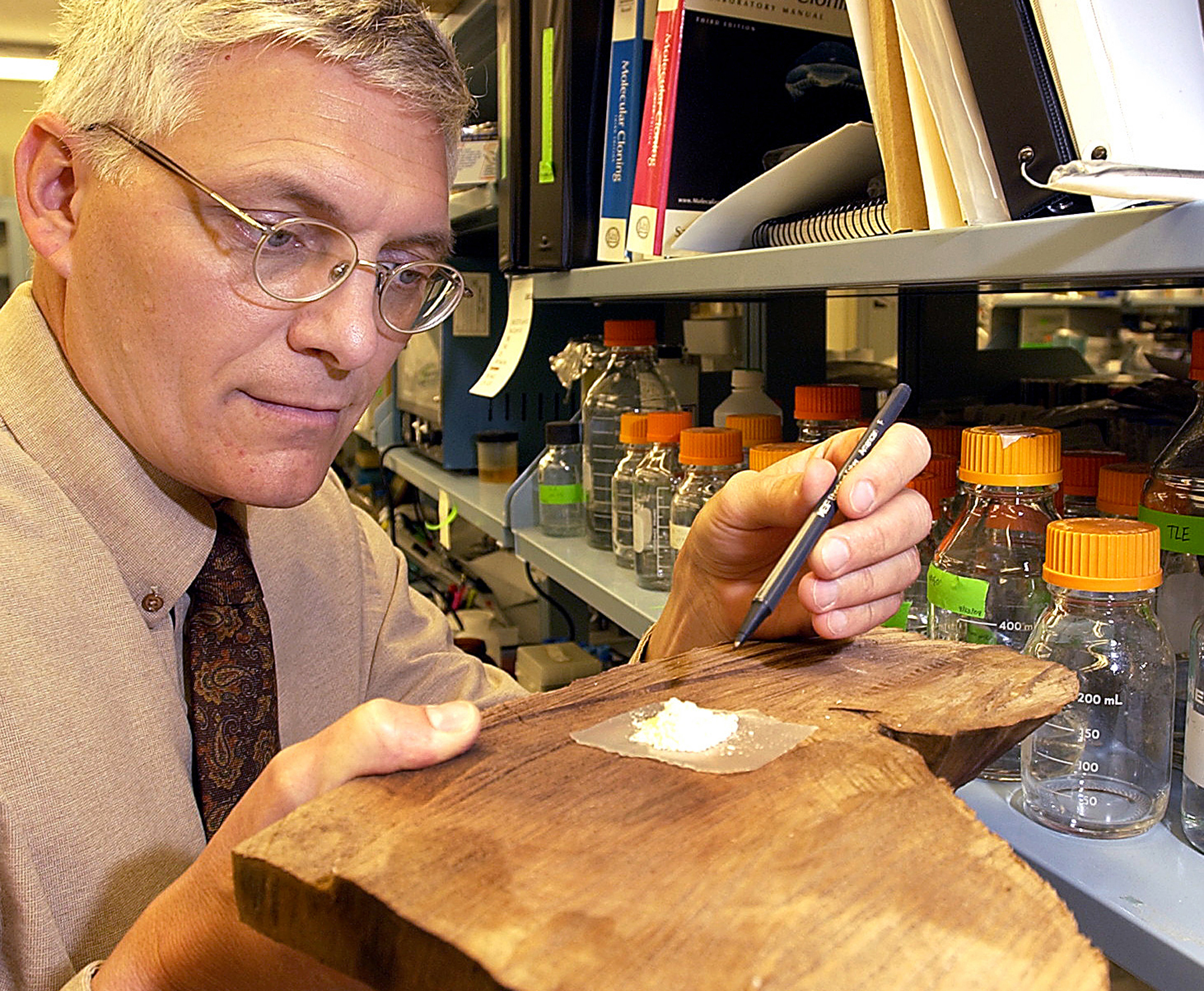
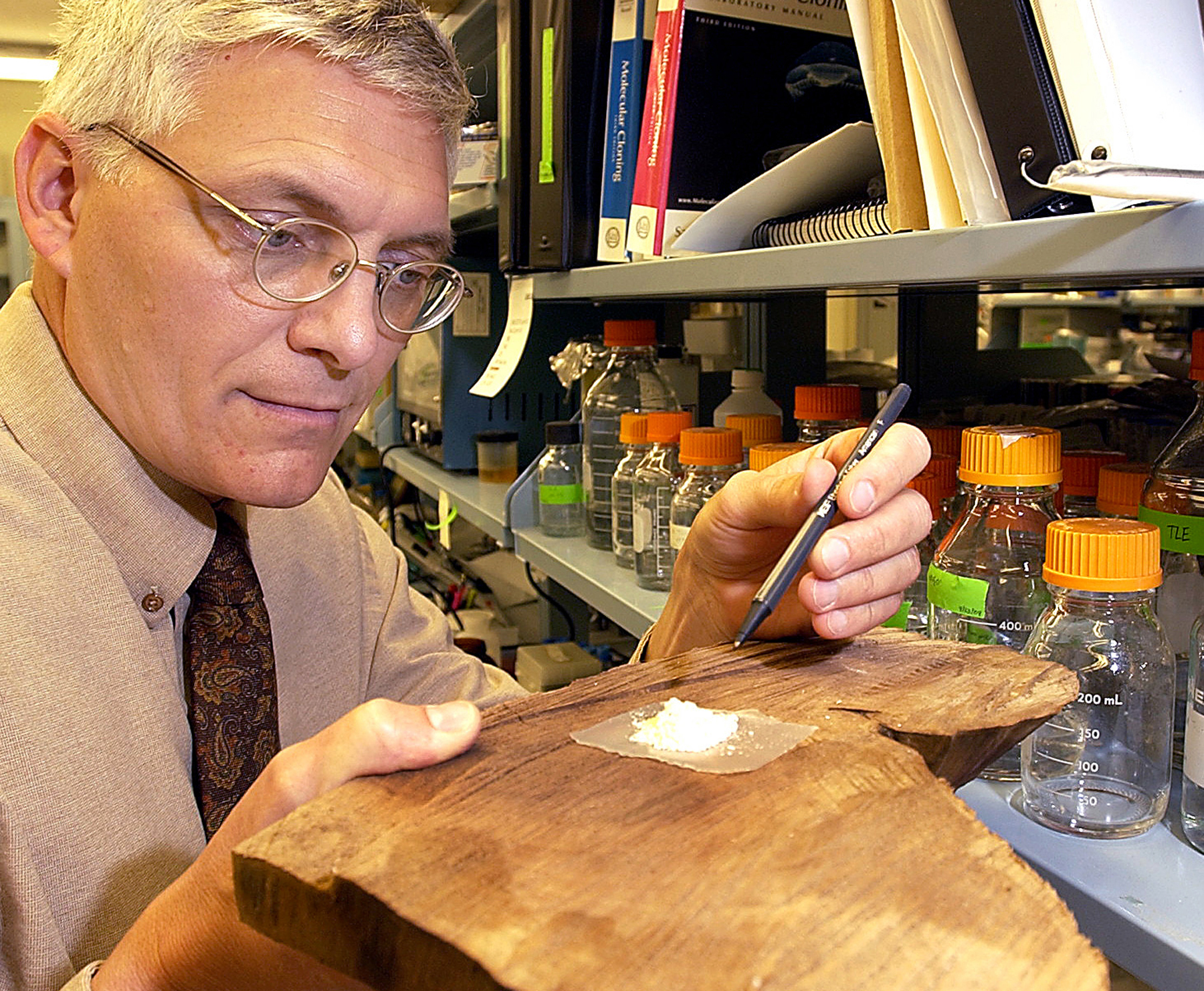
Tree rustling, or tree poaching, a crime analogous to cattle rustling, occurs when trees are illegally taken from private or public lands. "Some trees are valuable enough that there is an underground economy of people who rustle them. They sneak onto a piece of property, cut the tree, remove it quickly and sell it, "said Keith Woeste, a molecular geneticist with the Hardwood Tree Improvement and Regeneration Center, a collaborative research effort between Purdue University and the U.S. Department of Agriculture Forest Service. Woeste, who also is an adjunct assistant professor of forestry and natural resources, provided the DNA analysis for the state. "The kinds of trees people rustle aren't just run-of-the-mill trees," he said. "These trees look like columns in a cathedral – they can be 4 to 5 feet in diameter, and the first row of branches can be 60 feet high. Trees like that can sell for hundreds to thousands of dollars." The types of trees most likely to fall to this crime are those prized for fine furniture, cabinetry and veneers, including walnut, cherry and white oak, Woeste said. Investigators with the Indiana Department of Natural Resources contacted Woeste when a landowner in Warren County reported a prized walnut tree and a cherry tree had been stolen from his property, with only the stumps and some branches left behind. Investigators confiscated a walnut log from a lumber mill and knew the identity of the person who sold the log to the mill, but they had no way to determine whether the log matched the stump. Woeste used a type of genetic analysis called DNA fingerprinting to match both pieces of wood – the key piece of evidence in the case. DNA fingerprinting determines the unique genetic structure of an organism to a degree of accuracy high enough to stand up in court. "Using data and techniques optimized by graduate students and researchers and my lab, we were able to show conclusively that the log in the yard was, without a doubt, the log that belonged to the stump and branches left at the crime scene. We found the needle in the haystack," Woeste said. While DNA analysis has been used to investigate other types of wildlife crimes – such as illegal harvesting of fish stocks in the Atlantic and identifying organs taken from endangered species for medicinal purposes – Woeste believes this is the first time DNA has been used in this kind of case. "To my knowledge, this hasn't been done with trees before," he said. Woeste and colleagues recently completed a survey of Indiana's walnut trees and compiled a large database of genetic information to be used in his research on improving the genetic quality of Indiana's hardwood trees. That data also allowed him to estimate the probability that the log in question matched the stump that was left behind at the crime scene. "This type of crime has been very hard to prosecute, up until now," he said. "Now we have the tools to find out who these criminals are and what they've done." Using Woeste's analysis, Indiana conservation officials determined that the poacher was a licensed logger under contract to remove trees from an adjacent property. "The fact that we had not only located the logs but also that we had Keith's DNA evidence gave us a very strong case," said Don Dyson, the Indiana Department of Natural Resources conservation officer who investigated the case. "When the wood cutter realized how much evidence we had, he decided to settle out of court." As a result of the settlement, the property owner received triple damages for the value of his trees. A conviction for tree poaching can put a licensed logger out of a job, Woeste said. "The threat of losing a license is the threat of losing your livelihood," he said. "This should be a powerful disincentive to anyone thinking of illegally removing trees." Property owners often grow trees of this quality as a source of income, Woeste said. "Losing a tree like the one stolen in this case means a family lost an important financial resource," he said. "Any time you have a valued commodity, you'll find somebody who will want to steal it. Trees are no different." According to the Indiana Department of Natural Resources, individuals considering selling timber from their property should verify with the state Division of Forestry that the tree cutter is bonded and licensed to buy timber in Indiana. Property owners who believe they have been the victims of tree theft should contact Gary Gretter at the Division of Forestry at (317) 232-4107. Writer: Jennifer Cutraro, (765) 496-2050, jcutraro@purdue.edu Sources: Keith Woeste, (765) 496-6808, woeste@purdue.edu Don Dyson, (765) 567-2080 Ag Communications: (765) 494-2722; Beth Forbes, forbes@purdue.edu PHOTO CAPTION: A publication-quality photograph is available.
|