Purdue News
Purdue News

|
Liberal Arts research in behavior, health and well-being helps keep nation fitFrom Perspective Researchers in Purdue’s School of Liberal Arts are battling the bulge, helping Baby Boomers as they age and inspiring low-income children to be active. Liberal arts faculty engaged in discovery are converting what they learn into solutions to current and anticipated health problems.
"When most people think of the traditional liberal arts, images of philosophers, rhetoric, modern dance and women’s studies come to mind," says Toby Parcel, dean of the School of Liberal Arts. "Purdue’s liberal arts is all that and much, much more. While we study how matters of culture, art and society enhance lives, we are conducting research in liberal arts that also has immediate and important application to the health and well-being of people everywhere." The importance of this work is evident by the amount of support the school has received from outside organizations, such as National Institutes of Health, American Heart Association and American College of Sports Medicine. Since 1994, the School of Liberal Arts’ external funding has jumped 60 percent to $8.2 million to support research in health, well-being and behavior.
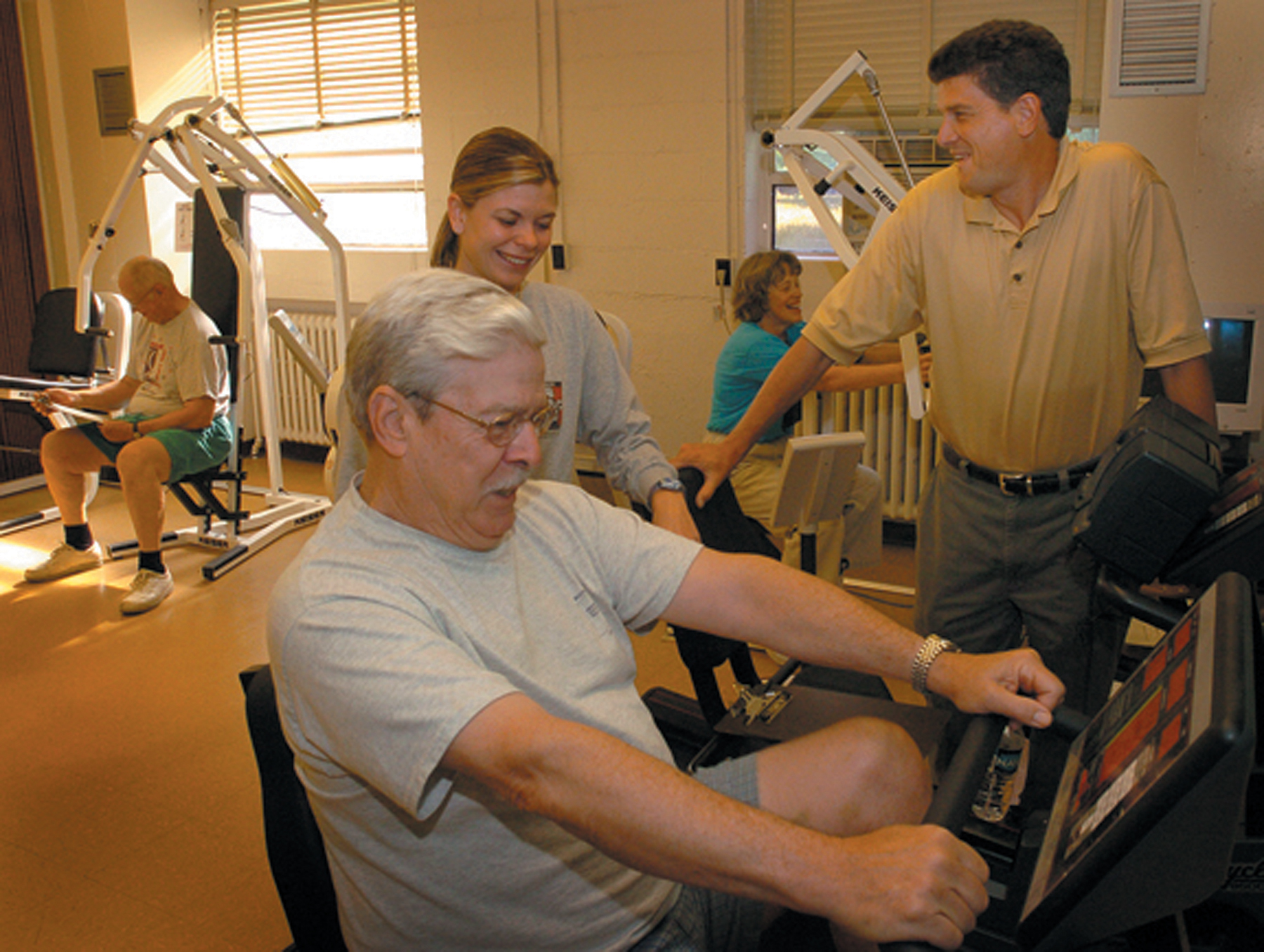
Professor Michael Flynn’s current study is one of those research projects. In the Department of Health and Kinesiology, Flynn is researching the potential anti-inflammatory effects of exercise and possible links to prevention of chronic disease in older adults. His current research is evaluating a mechanism for exercise’s anti-inflammatory effect by looking at a protein responsible for producing inflammatory molecules. "Chronic inflammation is becoming an explosive area of biomedical research because there are several promising links between inflammation and disease," Flynn says. "The inflammation that helps to clean up and heal a physical injury, or ward off bacteria from something as simple as a splinter, can play a role in the development of cardiovascular disease, obesity, type II diabetes, osteoporosis and Alzheimer’s disease." Leading by speaking, hearing The Department of Audiology and Speech Sciences – ranked nationally as one of the best in the country by U.S. News & World Report –also has people talking. The department’s external funding has nearly tripled in the past five years to $2.7 million. Anne Smith, department head, says speech and language development is one of her department’s strongest research niches. In various research projects faculty and students analyze standard language development, ranging from infant vocalization, babbling and early speech to disorders such as language impairment and stuttering in infants through adolescents. This work spans through adolescence and often makes the latest in therapy available to patients of all ages.
Every year, dozens of children under age 5 who struggle with language development receive assessment or therapy from the Purdue Child Language Program. Laurence Leonard, the Rachel E. Stark Distinguished Professor who runs Purdue’s program, assesses the effectiveness of different treatments for language delay in one of the nation’s largest language-delay studies. At the other end of the age spectrum, Jessica Huber’s work in speech science focuses on speech production in patients with Parkinson’s disease. "Many individuals with Parkinson’s disease have quiet and weak voices," Huber says. "They often do not realize that they are speaking more quietly than they used to and do not understand why their family is having problems hearing and understanding them." Huber is analyzing speech systems – respiratory function and lip and jaw movement – to see how Parkinson’s patients respond to different cues to talk louder. The goal is to determine which cues might be most effective in speech therapy with these individuals. "Most scientists have looked at the limb movement and gait of these patients," Huber says. "But a greater emphasis needs to be placed on how to help these patients communicate successfully to ensure their quality of life." Seeking answers across disciplines Faculty in the Ingestive Behavior Research Center in the Department of Psychological Sciences have found a correlation between obesity and the body’s behavior. Associate Professor Susan Swithers and Professor Terry Davidson are analyzing the relationship between the body’s senses and how senses measure the body’s calories based on viscosity and sweetness. The researchers are specifically looking at how artificially sweetened foods and low-viscosity, high-calorie beverages, such as soft drinks, prevent the body from using its natural ability to account for calories, which can lead to overeating. "This research is a great example of how the world has become increasingly interdisciplinary in the last few years," Parcel says. "These faculty members in psychology formed strong ties with others who are experts in foods and nutrition in the School of Consumer and Family Sciences. Faculty in health communication have developed links with Purdue’s Center for the Human-Animal Bond in the School of Veterinary Medicine to study communication between veterinarians and pet owners, and a professor in sociology is collaborating with Purdue’s Center for Education and Research in Information Assurance and Security to study the use of medical information technology. Together we are not only making better use of campus resources, but we are integrating ideas and expertise to address today’s complex problems." One of the School of Liberal Arts’ most recent interdisciplinary endeavors takes place in the Gerontology Program and the Center on Aging and the Life Course. Kenneth Ferraro, professor of sociology, developed the Gerontology Program in 1996. With support from the National Institute on Aging, he founded a University-wide center last year to facilitate research collaboration across campus. Researchers associated with the center focus on issues ranging from cellular processes to human relationships that will help them understand aging. "Liberal arts has been there from the get-go, and played a critical role in the development of this center," says Ferraro, director of the center. "Professor Flynn’s research on exercise and immunology is a great example of how a liberal arts researcher has stepped across disciplines to collaborate with faculty interested in aging in consumer and family sciences and veterinary medicine." Other members of the center, health and kinesiology professors Roseann Lyle, Gerry Hyner and Roger Seehafer, are researching the obstacles older adults face when trying to adopt healthy lifestyles. They recently surveyed older adults in Lafayette-West Lafayette to learn about their exercise habits, what keeps them from exercising and what their doctors tell them about physical activity. The researchers also have teamed with faculty from other schools to launch an engagement initiative, the Living Well After 50 Coalition, to help older adults adopt healthier lifestyles. "The reason adults are not exercising is something that many people just take for granted," Ferraro says. "They blame it on age. Our faculty associates, however, are finding that physical activity patterns vary widely among older people and are related to earlier life experiences. For some, it is a matter of maintaining physical activity; for others, it is finding the best ways to increase activity. The information collected by researchers is helping the coalition find the best approach for promoting fitness and wellness." Measuring minds In addition to meeting the needs of a larger older-adult population, the growing minority demographic has inspired Mia Smith Bynum, assistant professor of psychological sciences, to study family relationships in African-Americans. Through her study of Indianapolis families, she seeks to understand the factors that predict self-esteem, depression and anxiety issues in African-American teen-agers. Her work studies how black families cope with racism, and how they teach their children how to handle it. Closer to Lafayette, Alan Smith studies how youths’ physical activity habits are influenced by their friends and classmates at an Indiana middle school. He has partnered with Lebanon Middle School physical education and health teachers to better understand students’ attitudes toward, and involvement in, physical activity. Smith, professor of health and kinesiology, and his research team began tracking sixth-graders in 2002, and hope to continue following them through their high school years. Their early findings show that friends and classmates of children can have a significant impact on physical activity levels. "A better understanding of what influences America’s youth to be physically active will help educators curb the sharp decline in physical activity seen across the adolescent years," Smith says. "Helping youth maintain active lifestyles through the adolescent years is a critical springboard for promoting healthy living in adulthood. Our goal is to help the next generation live longer, experience fewer health challenges related to chronic disease, and to discover the social and personal benefits of leading a physically active lifestyle."
Story by Amy Patterson-Neubert, Purdue News Service Photographs by David Umberger
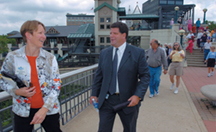
Cutline #1: West Lafayette Mayor Jan Mills and Lafayette Mayor Tony Roswarski led the kickoff for the Living Well After 50 Coaltion programming, held in May at Riehle Plaza in Lafayette. Cutline #2: Michael Flynn, professor of health and kinesiology, and doctoral student Jennifer Felker, from Toronto, Canada, talk with David Kuebler, 66, in the Exercise Research Room at Lambert Fieldhouse. Flynn is studying the potential anti-inflammatory effects of exercise and possible links to prevention of chronic disease in adults. Cutline #3: Jessica Huber, professor of audiology and speech sciences, adjusts the microphone for Dorothy Jones, who is participating in a study evaluating speech production in patients with Parkinson’s disease. Master’s degree students Bharath Chandrasekaran, Chennai, Indi;, and Jay Wolstencroft, Seekonk, Mass.; prepare to record the study participants’ movements.
|