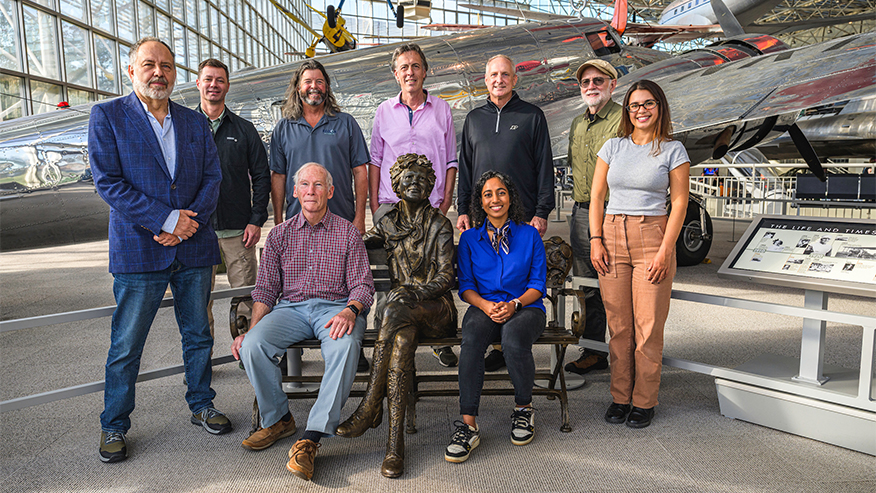
Archaeological Legacy Institute, Purdue Research Foundation and Purdue University announced Friday (July 24) that the Taraia Object Expedition will depart in October in search of Amelia Earhart’s lost aircraft. The expedition seeks to help complete the historic journey that ended with her disappearance 89 years ago.
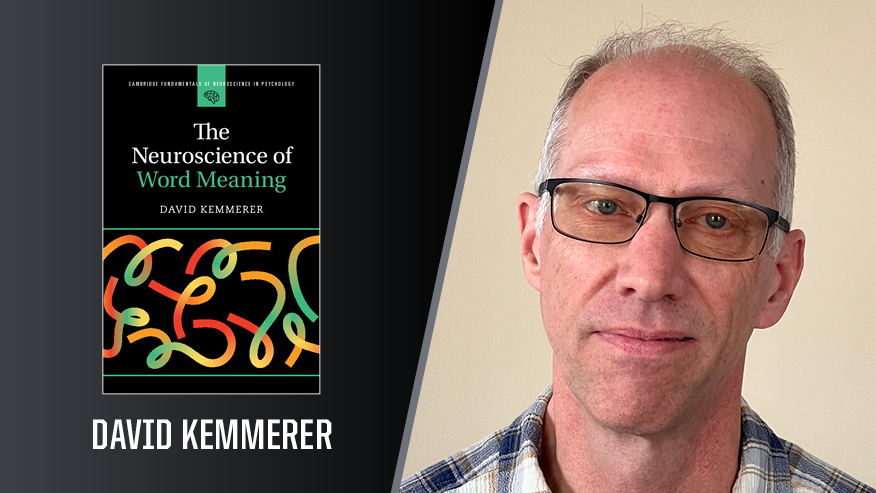
In “The Neuroscience of Word Meaning,” David Kemmerer, a professor in the Department of Speech, Language, and Hearing Sciences, summarizes current research on how the human brain represents, organizes and processes words. The book integrates linguistics and neuroscience to examine how neural networks map various semantic categories, ranging from concrete objects to abstract concepts.
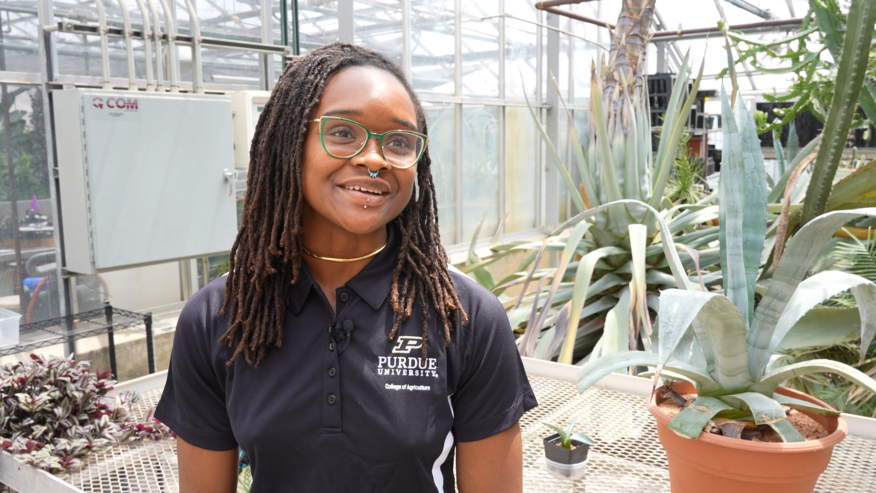
Krista Johnson is a lab coordinator in the College of Agriculture’s Department of Botany and Plant Pathology. In this video, Johnson explains what an agave death bloom is and why this is a once-in-a-lifetime experience.
When Samuel Vessat arrived in the United States chasing a basketball dream, he never imagined he might one day represent France in track and field. Yet, that possibility now feels increasingly real. The Purdue standout has emerged as a top 400-meter runner despite less than three years of serious track experience.