Supercomputer allocation enables Purdue hypersonics research

WEST LAFAYETTE, Ind. —
Vehicles traveling at hypersonic speeds (faster than Mach 5) experience tremendous aerodynamic stress. Purdue University researchers are investigating ways of managing that stress passively, using materials and geometry built into the vehicle’s body design. They have received a supercomputer allocation from the U.S. Department of Energy to enable large-scale simulations supporting current and future hypersonic experiments at the Air Force Research Laboratory.
As part of the program Innovative and Novel Computational Impact on Theory and Experiment, the DOE awards time on its leadership-class supercomputers at both Argonne and Oak Ridge national laboratories, which enables researchers to accelerate discovery and innovation. Purdue’s entry in this competitive program was recognized for both its timely research subject and its robust software infrastructure.
Read more on the School of Mechanical Engineering website.
Media are encouraged to share, post and publish this content.
Media contact: Brian Huchel, bhuchel@purdue.edu
More Purdue News
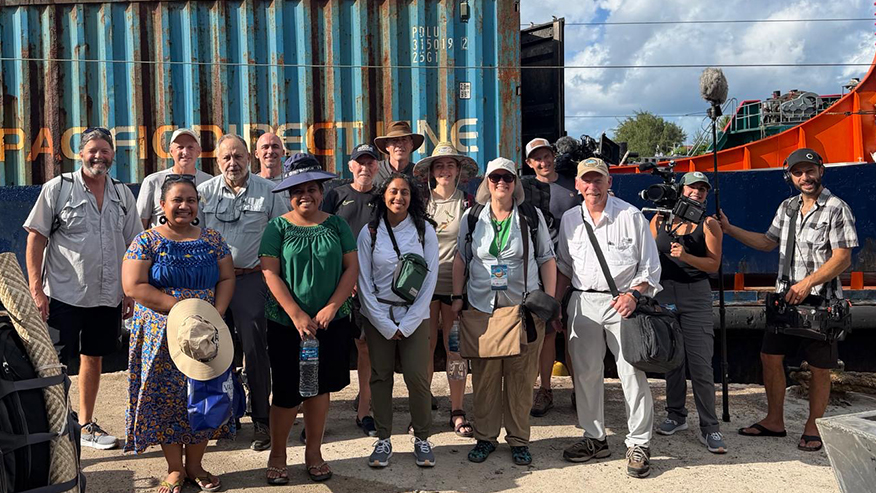
Earhart expedition update: Crew begins 6-day sea voyage to South Pacific atoll Nikumaroro
October 7, 2026

Purdue, Elanco, partners celebrate One Health Research Institute groundbreaking
October 7, 2026

Earhart expedition update: Crew arrives at Tarawa, prepares for departure
October 6, 2026
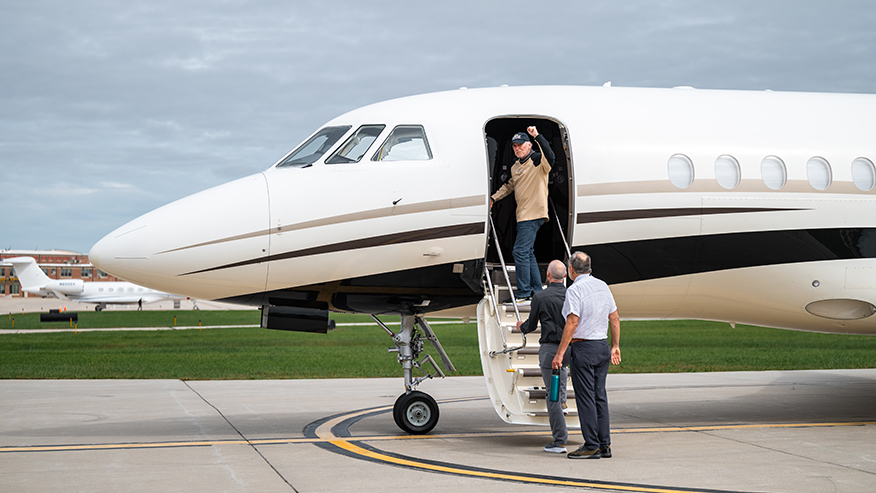
Earhart expedition update: Crew departs from Purdue University Airport
October 2, 2026