 Purdue University - Extension - Forestry and Natural Resources
Got Nature? Blog
The Wisconsin Forestry Center at the University of Wisconsin–Stevens Point has just released a new episode of SilviCast, the go-to podcast for silviculture professionals. In this episode, titled “Black Gold,” forestry expert Lenny Farlee is interviewed about the science and management of black walnut, one of North America’s most valuable hardwoods.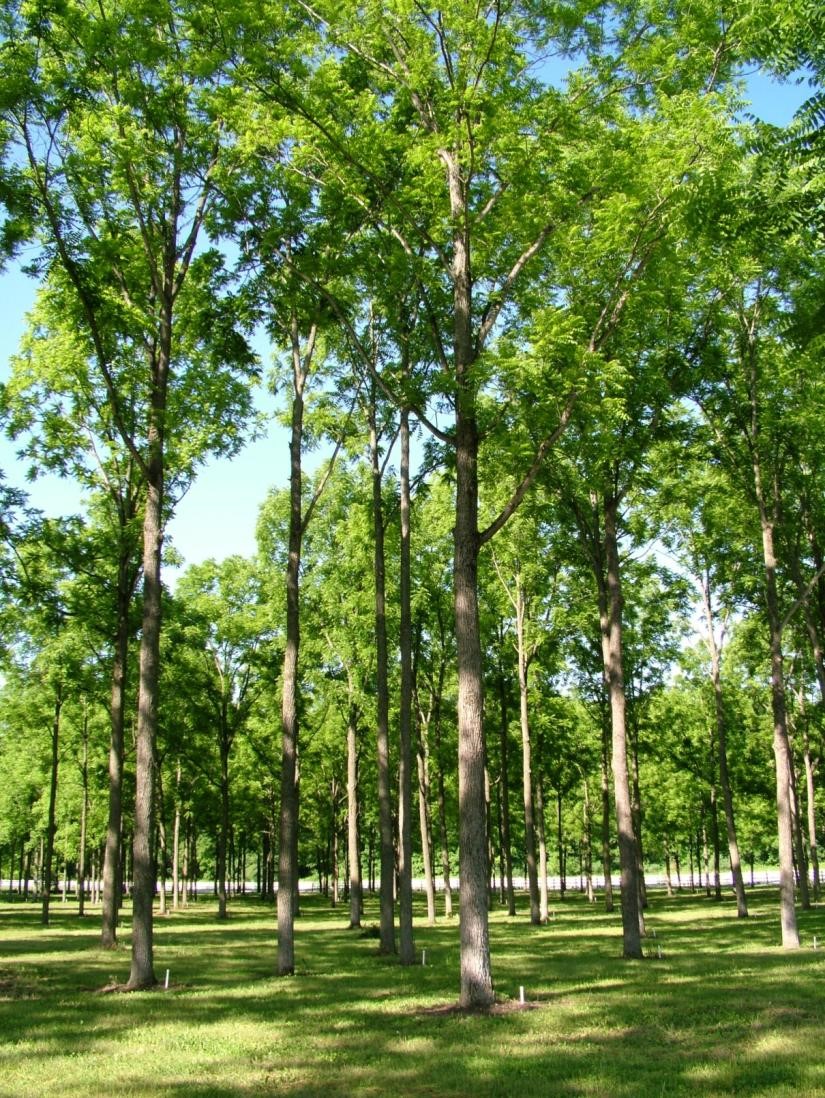
Eastern black walnut is often regarded as one of the most valuable timber species in central and eastern North America. A single high-quality tree can be worth thousands of dollars, sometimes even shaping the outcome of an entire timber sale. Given that level of interest, it may seem like we already know everything about this remarkable species. While researchers and foresters have gained a deep understanding of its silviculture and genetics, there is still more to discover.
Lenny Farlee is a Purdue University Extension Forester and a member of the Hardwood Tree Improvement & Regeneration Center (HTIRC). With decades of experience in hardwood silviculture, he brings practical insight and research-based knowledge to the conversation around managing black walnut for long-term forest health and productivity.
To listen, search SilviCast on your favorite podcast app or listen directly on the SilviCast: Black Gold episode page. You can also explore the full series at linktr.ee/SilviCast.
Other Resources:
ID That Tree: Black Walnut
Hardwoods of the Central Midwest: Black Walnut
Hardwood Lumber and Veneer Series: Black Walnut
Morton Arboretum: Black walnut
Facts About Black Walnut, The Education Store
Purdue Arboretum Explorer
Black Walnut, Native Trees of Indiana River Walk, Purdue Fort Wayne
The Woody Plant Seed Manual, U.S. Forest Service
Fifty Common Trees of Indiana
An Introduction to Trees of Indiana
Native Trees of the Midwest, Purdue University Press
Shrubs and Woody Vines of Indiana and the Midwest, Purdue University Press
Investing in Indiana Woodlands, The Education Store
Forest Improvement Handbook, The Education Store
ID That Tree, Purdue Extension-Forestry & Natural Resources (FNR) YouTube playlist
Woodland Management Moment , Purdue Extension-FNR YouTube playlist
University of Wisconsin-Stevens Point
Diana Evans, Extension & Web Communications Specialist
Purdue University Department of Forestry and Natural Resources
 Indiana Forestry & Woodland Owners Association (IFWOA) News: If you live in Indiana and own more than ten acres of woodlands, then you may want to enroll in the Classified Forest and Wildlands Program offered through the Indiana Department of Natural Resources (DNR), Division of Forestry. This program encourages timber production, watershed protection, and wildlife habitat management on private lands in Indiana. Program landowners receive a property tax reduction in return for following a professionally written management plan. In addition to the tax incentive, landowners receive free technical assistance from DNR foresters and wildlife biologists, priority for cost-share to offset the cost of doing management, and the ability to “green” certify their forests. The minimum requirement for program enrollment is 10 acres of forest, wetland, shrubland, and/or grassland.
“Once enrolled in our program, you get a reduced property tax assessment,” says Gretchen Herbaugh, District Forester with Indiana DNR serving southwestern Indiana.
“Property can be anything from forest ground to native grasses to pollinator habitats to wildlife food plots—we span a large range of habitat types and management styles,” Herbaugh says.
For full IFWOA article view: Indiana DNR Offers a Special Program for Woodland Owners.
To learn more about the program with more resources view the Hoosier Ag Today article, Indiana DNR Offering a Special Program for Woodland Owners.
Resources:
Subscribe, IFWOA YouTube Channel (includes The Nature of Oaks, Be Tick Aware, Population Ecology of Deer and more)
Find an Indiana Professional Forester, Indiana Forestry & Woodland Owners Association (IFWOA)
Purdue Arboretum Explorer
Native Trees of the Midwest, The Education Store
Shrubs and Woody Vines of Indiana and the Midwest, The Education Store
Investing in Indiana Woodlands, The Education Store
Forest Improvement Handbook, The Education Store
ID That Tree, Purdue Extension-Forestry & Natural Resources (FNR) YouTube playlist
Woodland Management Moment , Purdue Extension-FNR YouTube playlist
District Foresters for 10 plus acres, Indiana Department of Natural Resources
Financial and Tax Aspects of Tree Planting
Diana Evans, Extension and Web Communication Specialist
Purdue University Department of Forestry and Natural Resources
Liz Jackson, Engagement Lead
Indiana Forestry & Woodland Association (IFWOA)
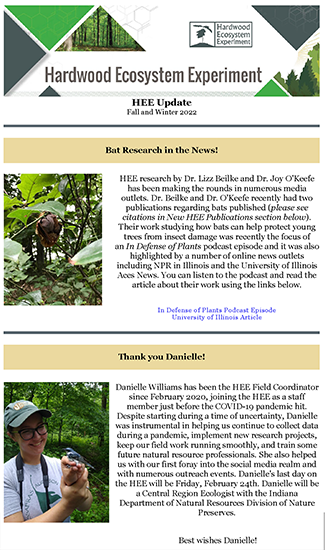 The Fall/Winter 2022 HEE Update newsletter is now available online. Research highlights and student news include:
- Bat Research in the News
- Thank You Danielle
- We Are Hiring
- A Second HEE Departure
- Welcome New Graduate Students
- HEE Publications
“The HEE Update” is distributed to anyone interested in receiving updates on the Hardwood Ecosystem Experiment (HEE). The newsletter includes updates of field work, media attention, committee meetings, extension events, job announcements, publications, and presentations. Anyone can receive this newsletter. If you would like to be added to the newsletter list email Dr. Mike Saunders, associate professor of silviculture, Purdue Forestry and Natural Resources, at msaunder@purdue.edu.
What is HEE?
The focus of forest science is increasingly shifting to the management of forests as complex systems rather than as simple agricultural landscapes—with a much greater appreciation for the interactive ecosystem processes. In addition, now for many forest landowners, the ecological value of their land is at least as important as the economic return. It is, therefore, vital to understand how forest management affects not only timber production, but also the overall function of forested ecosystems.
The Hardwood Ecosystem Experiment (HEE) is a long-term, large-scale experimental study of forest management and its impacts. The project was initiated in 2006 with partners including: Ball State University, Drake University, Indiana State University, Purdue Entomology, Indiana Department of Natural Resources (IN DNR), and the Indiana Chapter of the Ruffed Grouse Society.
For information about study sites, harvesting treatments, sampling design, and more, see our Project Overview and Design page and US Forest Service General Technical Report NRS-P-108, The Hardwood Ecosystem Experiment: A Framework For Studying Responses to Forest Management.
Resources
Hardwood Ecosystem Experiment, Website
Hardwood Ecosystem Experiment (HEE), YouTube Playlist, Purdue Extension–Forestry and Natural Resources (FNR)
Prescribed Fire, Hardwood Ecosystem Experiment (HEE) YouTube Video
Ask an Expert: Hardwood Ecosystem Experiment (HEE) Birds and Salamander Research, Video, Purdue Extension-FNR YouTube Channel
Hardwood Ecosystem Experiment – Wildlife Responses to Timber Harvesting, The Education Store, Purdue Extension’s resource center
The Hardwood Ecosystem Experiment: Indiana Forestry and Wildlife, The Education Store
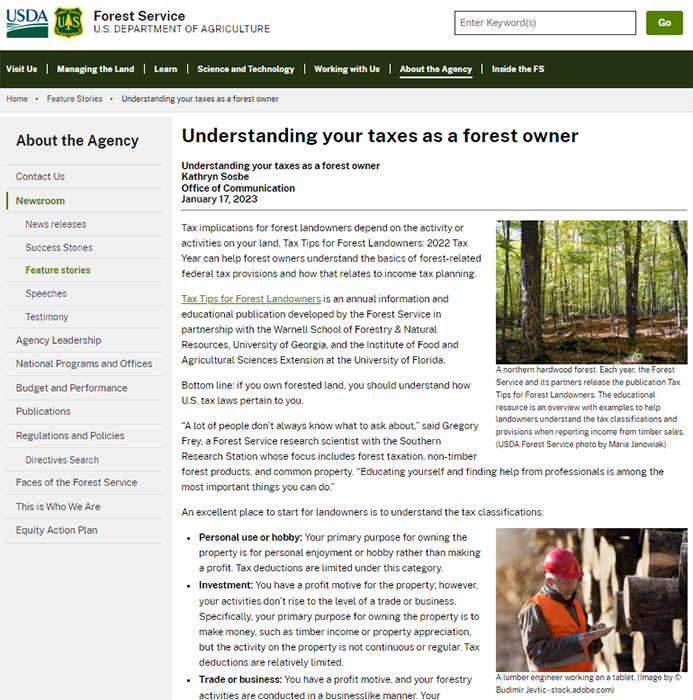 Tax preparation time usually brings with it questions about what is deductible, how do I report this income, and what can I do to save on my taxes in the future. Fortunately for forest landowners, this resource for tax tips from the U.S. Department of Agriculture-Forest Service provides several excellent resources to help you find some guidance. View Understanding Your Taxes as a Forest Owner.
The National Timber Tax Website, which is also shared in this article, addresses tax issues for forest landowners. This site provides updated tax tips for the 2022 filing year, as well as many guides and references to help you effectively plan a tax strategy for your property.
The USDA Forest Service mission of sustaining the health, diversity and productivity of the nation’s forests and grasslands to meet the needs of present and future generations, continues on as they provide many resources including managing your land, science and technology, and working with the U.S. Forest Service.
More resources: Purdue Extension – Forestry and Natural Resources offers some publications covering taxation issues for timber sales and tree planting.
How to Treat Timber Sale Income, The Education Store, Purdue Extension’s resource center
Determining Tax Basis of Timber, The Education Store
Financial and Tax Aspects of Tree Planting, The Education Store
The Education Store (for a list of all timber resources or woodlands place in search field: “timber” or “woodlands”)
Classified Forest and Wildlands Program , Indiana Department of Natural Resources: Division of Forestry
Find an Indiana Professional Forester, Indiana Forestry & Woodland Owners Association (IFWOA)
You may have many reasons why you want to plant trees on your land and this webinar Conservation Tree Planting will help you as you define your objectives and plan your planting. This webinar explains the difference between conservation tree planting and ornamental or landscape tree planting. The research based techniques and resources shared will help guide you as you work toward meeting your goals.
Lenny Farlee, Purdue extension forester, discusses topics including:
- reforestation
- tree species
- growth rates
- ordering seedlings
- weed control/herbicides
- equipment
- erosion control
- windbreaks
- soil health
- post-planting care/thinning
- fencing options
- wildlife habitat management
We Want to Hear From You:
After you have viewed the webinar please fill out the Qualtrics Survey and let us know if the video was helpful.
Resources:
Resources and Assistance Available for Planting Hardwood Seedlings, The Education Store, Purdue Extension’s resource center
Creating a Wildlife Habitat Management Plan for Landowners, The Education Store
Planting Forest Trees and Shrubs in Indiana, The Education Store
Forest Improvement Handbook, The Education Store
How to Build a Plastic Mesh Deer Exclusion Fence, The Education Store
Woodland Stewardship for Landowners Purdue Extension – Forestry & Natural Resources (FNR) Extension YouTube Playlist
Woodland Management Moment, Purdue Extension – FNR YouTube Playlist
Lenny Farlee, Sustaining Hardwood Extension Specialist
Purdue University Department of Forestry and Natural Resources
Purdue College of Agriculture News: Timber rattlesnakes are widely distributed across the eastern half of the United States, living as far north as New Hampshire and as far south as Florida. Hilly forests like those found in Brown, Monroe and Morgan County, Indiana suit the secretive lifestyle of the venomous snake. According to Purdue Extension wildlife specialist Brian MacGowan, there is no reliable estimate of the number of Timber rattlesnakes living in Indiana. Sightings are rare but most likely to occur during the hottest parts of the year.
“Late July and August are the peak of their breeding season in Indiana,” said MacGowan. “The males move around a lot more, tracking the scent of the females.”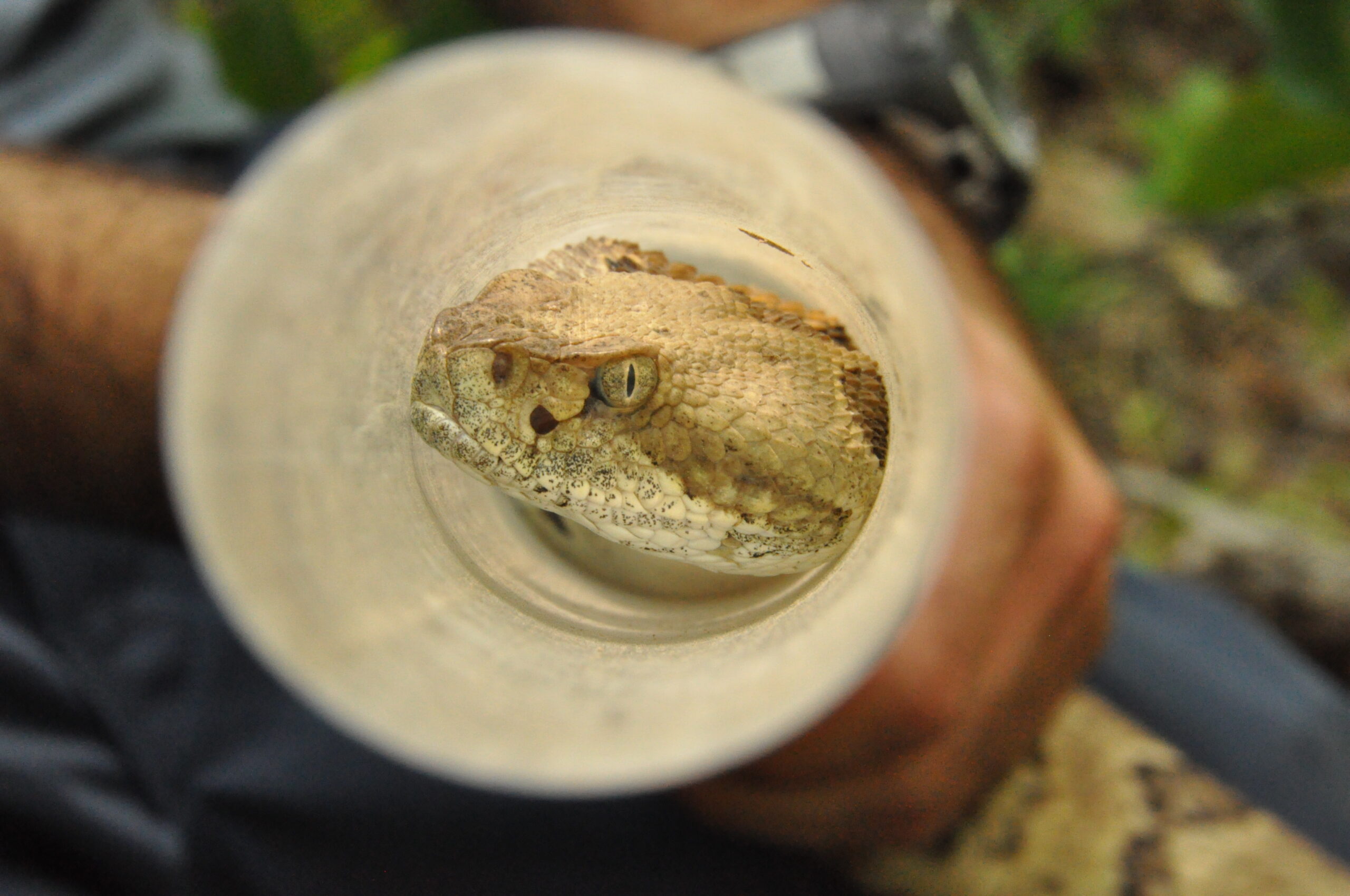
While they are normally hidden among rocks and brush, rattlesnakes have been observed 20 feet high in trees on rare occasion.
“Chipmunks are their primary food source in Indiana, but larger males eat squirrels and similarly-sized prey,” MacGowan explained. “They even consume songbirds.” A typical adult grows to be between three and five feet in length.
Rattlesnakes are patient hunters. Most often they use their natural camouflage to ambush prey. They inject a lethal venom, potentially strong enough to kill a human if left untreated. The venom contains hemotoxic elements, meaning it can damage or destroy blood vessels and cells.
But just because rattlesnakes are venomous does not mean they create frequent problems for nature lovers. “Timber rattlesnakes are reclusive and are quite unaggressive as far as snakes go,” MacGowan explained. “A lot of the locals in the areas I research don’t realize rattlers live nearby since the snakes keep to themselves.” According to the CDC, roughly 7,500 instances of venomous snakebites are recorded a year in the United States. Of those, about 5 are fatal. During his time as part of the Hardwood Ecosystems Experiment, MacGowan realized that even when looking, finding a rattlesnake is not an easy task.
For full article on the rattlesnake please visit: Unexpected Plants and Animals of Indiana: Timber Rattlesnake
Resources:
Snakes and Lizards of Indiana, The Education Store, Purdue Extension’s resource center
Snakes of the Central and Northeastern United States, The Education Store
Snakes of Indiana, The Education Store
Indiana Amphibian and Reptile ID Package (4 softcover books), The Education Store
Reptiles: Turtles, Snakes, and Lizards, Purdue Nature of Teaching Website
Ask An Expert, Playlist, Purdue Extension – Forestry and Natural Resources YouTube channel
A Moment in the Wild: Eastern Hognose, Purdue Extension – FNR Video
A Moment in the Wild: Eastern Kingsnake, Purdue Extension – FNR Video
A Moment in the Wild: Racer, Purdue Extension – FNR Video
Purdue University Department of Agricultural Communication
Dr. Brian MacGowan, Extension Wildlife Specialist
Department of Forestry & Natural Resources, Purdue University
The classic and trusted book “Fifty Common Trees of Indiana” by T.E. Shaw was published in 1956 as a user-friendly guide to local species. Nearly 70 years later, the publication has been updated through a joint effort by the Purdue Department of Forestry and Natural Resources, Indiana 4-H, and the Indiana Department of Natural Resources, and reintroduced as “An Introduction to Trees of Indiana.”
 The full publication is available for download for $7 in the Purdue Extension Education Store. The field guide helps identify common Indiana woodlot trees.
Each week, the Intro to Trees of Indiana web series will offer a sneak peek at one species from the book, paired with an ID That Tree video from Purdue Extension forester Lenny Farlee to help visualize each species as it stands in the woods. Threats to species health as well as also insight into the wood provided by the species, will be provided through additional resources as well as the Hardwoods of the Central Midwest exhibit of the Purdue Arboretum, if available.
This week, we introduce the Blue Beech or Carpinus caroliniana.
The blue beech, also known as the American hornbeam, musclewood or the water beech, is an understory tree that stands out due to its gray bark and striations that resemble muscles and sinews as well as its doubly toothed leaves.
The small tree, which typically grows to a height of 20 to 35 feet, has oblong leaves with doubly toothed leaf margins, arranged alternately on very fine twigs. Lower leaf veins are seldom forked. The fruit is in clusters, consisting of small, seed-like nuts on small, three-lobed leaves. It’s bark and fruit help differentiate blue beech from its close relative, the ironwood.
Blue beech’s natural range is the majority of the midwestern and eastern United States, reaching as far south as Texas.
For full article and photos view Purdue Forestry and Natural Resources News: Trees of Indiana: Blue Beech.
Other Resources:
Beech – Hardwood Lumber and Veneer Series
Fifty Common Trees of Indiana
An Introduction to Trees of Indiana
Native Trees of the Midwest, The Education Store, Purdue Extension’s resource center
Shrubs and Woody Vines of Indiana and the Midwest
ID That Tree YouTube playlist
Woodland Management Moment YouTube playlist
Investing in Indiana Woodlands, The Education Store
Forest Improvement Handbook The Education Store
Wendy Mayer, FNR Communications Coordinator
Purdue University Department of Forestry and Natural Resources
Lenny Farlee, Sustaining Hardwood Extension Specialist
Purdue University Department of Forestry and Natural Resources
The classic and trusted book “Fifty Common Trees of Indiana” by T.E. Shaw was published in 1956 as a user-friendly guide to local species. Nearly 70 years later, the publication has been updated through a joint effort by the Purdue Department of Forestry and Natural Resources, Indiana 4-H, and the Indiana Department of Natural Resources, and reintroduced as “An Introduction to Trees of Indiana.”
The full publication is available for download for $7 in the Purdue Extension Education Store. The field guide helps identify common Indiana woodlot trees.
Each week, the Intro to Trees of Indiana web series will offer a sneak peek at one species from the book, paired with an ID That Tree video from Purdue Extension forester Lenny Farlee to help visualize each species as it stands in the woods. Threats to species health as well as also insight into the wood provided by the species, will be provided through additional resources as well as the Hardwoods of the Central Midwest exhibit of the Purdue Arboretum, if available. 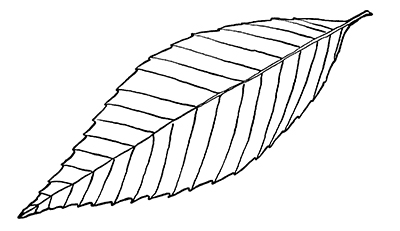
This week, we introduce the beech, or Fagus grandifolia.
The Beech is easily identified by its smooth gray bark and its simple leaves, which feature straight-line veins from the midrib to the small teeth on the margin. Beeches produce a 3/4-inch long fruit covered in spines, which typically holds two triangular-shaped nuts.
American beech is a shade tolerant species found in the understory often on moist but well-drained soils, that also reaches up into the forest canopy at around 70 to 80 feet tall. Beech is found throughout the Great Lakes region as well as the central and southeastern United States.
Beech is used to make items varying from wooden clothes pins to brush banks, handles and woodenware. Due to its strength and ease of turning, it is also used for chair production. Flooring, railroad ties, pallets and container veneer are other uses for this species.
For full article and photos view Purdue Forestry and Natural Resources: Trees of Indiana: Beech.
 View the Purdue Online Tour: Hardwoods of the Central Midwest and find out beech species workability, strength, if it can be steam bent, drying details and much more.
Resources:
Beech – Hardwood Lumber and Veneer Series
Fifty Common Trees of Indiana
An Introduction to Trees of Indiana
Native Trees of the Midwest, The Education Store, Purdue Extension’s resource center
Shrubs and Woody Vines of Indiana and the Midwest, The Education Store, Purdue Extension’s resource center
ID That Tree, YouTube playlist
Woodland Management Moment, YouTube playlist
Investing in Indiana Woodlands, The Education Store, Purdue Extension’s resource center
Forest Improvement Handbook, The Education Store, Purdue Extension’s resource center
Wendy Mayer, FNR Communications Coordinator
Purdue University Department of Forestry and Natural Resources
Lenny Farlee, Sustaining Hardwood Extension Specialist
Purdue University Department of Forestry and Natural Resources
In this HEE Prescribed Fire video, Charlotte Owings, project coordinator on the Hardwood Ecosystem Experiment (HEE) explains the forest management technique of prescribed fire and how it is being utilized on the HEE.
What is HEE?
The focus of forest science is increasingly shifting to the management of forests as complex systems rather than as simple agricultural landscapes—with a much greater appreciation for the interactive ecosystem processes. In addition, now for many forest landowners, the ecological value of their land is at least as important as the economic return. It is, therefore, vital to understand how forest management affects not only timber production, but also the overall function of forested ecosystems.
The Hardwood Ecosystem Experiment (HEE) is a long-term, large-scale experimental study of forest management and its impacts. The project was initiated in 2006 with partners including: Ball State University, Drake University, Indiana State University, Purdue Entomology, Indiana Department of Natural Resources (IN DNR), and the Indiana Chapter of the Ruffed Grouse Society.
For information about study sites, harvesting treatments, sampling design, and more, see our Project Overview and Design page and US Forest Service General Technical Report NRS-P-108, The Hardwood Ecosystem Experiment: A Framework For Studying Responses to Forest Management.
Resources
Hardwood Ecosystem Experiment, Website
Hardwood Ecosystem Experiment (HEE), YouTube Playlist, Purdue Extension–Forestry and Natural Resources (FNR)
Ask an Expert: Hardwood Ecosystem Experiment (HEE) Birds and Salamander Research, Video, Purdue Extension-FNR YouTube Channel
Hardwood Ecosystem Experiment – Wildlife Responses to Timber Harvesting, The Education Store, Purdue Extension’s resource center
The Hardwood Ecosystem Experiment: Indiana Forestry and Wildlife, The Education Store
Charlotte Owings, Hardwood Ecosystem Experiment Project Coordinator
Purdue University, Department of Forestry and Natural Resources
The classic and trusted book “Fifty Common Trees of Indiana” by T.E. Shaw was published in 1956 as a user-friendly guide to local species. Nearly 70 years later, the publication has been updated through a joint effort by the Purdue Department of Forestry and Natural Resources, Indiana 4-H, and the Indiana Department of Natural Resources, and reintroduced as “An Introduction to Trees of Indiana.”
The full publication is available for download for $7 in the Purdue Extension Education Store. The field guide helps identify common Indiana woodlot trees.
 Each week, the Intro to Trees of Indiana web series will offer a sneak peek at one species from the book, paired with an ID That Tree video from Purdue Extension forester Lenny Farlee to help visualize each species as it stands in the woods. Threats to species health as well as also insight into the wood provided by the species, will be provided through additional resources as well as the Hardwoods of the Central Midwest exhibit of the Purdue Arboretum, if available.
First up, we introduce the white ash or fraxinus americana.
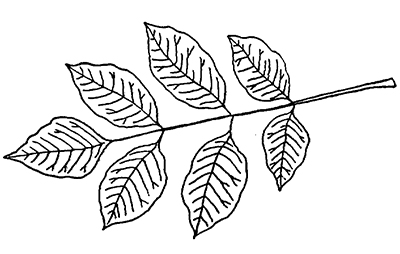
The white ash, which is typically found on higher and drier sites than its cohorts in the ash family, has been threatened due to the invasive beetle called the emerald ash borer. This species features opposite leaf arrangement, compound leaves with seven to nine leaflets, and squatty terminal buds as well as a bud that dips down into the leaf scar, which resembles a smiley face. The bark is gray, has a corky feel, and features an interlacing network of ridges forming a diamond shape.
Among the Hardwoods of the Central Midwest, white ash is the best known and preferred species among the five ash species located throughout the eastern United States. The species is found from the Great Plains east and from southern Canada south, with the exception of the lower Mississippi River Delta and coastal plains areas.
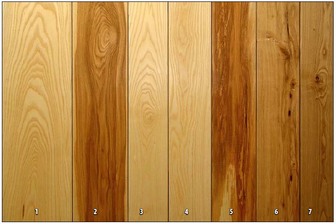
White ash is very hard and firm and with a 12% moisture content, it is comparable to white and red oak as one of the strongest woods. The wood grain appears much like oak, but does not have the large rays seen on the quartered surface of oak.
Ash is used on exposed surfaces in furniture and cabinets and also for millwork and flooring. Due to its high strength in bending and high shock resistance, it is also used in athletic equipment such as baseball bats and tennis rackets.
The history, color and texture and wood properties of white ash are available in more detail on the Hardwoods of the Central Midwest page for the species.
For full article and photos view Purdue Forestry and Natural Resources News.
Other Resources:
Ash (pdf)- Hardwood Lumber and Veneer Series
Fifty Common Trees of Indiana
An Introduction to Trees of Indiana
Native Trees of the Midwest, The Education Store, Purdue Extension’s resource center
Shrubs and Woody Vines of Indiana and the Midwest, The Education Store
ID That Tree, Purdue Extension-Forestry and Natural Resources (FNR) YouTube playlist
Woodland Management Moment, Purdue Extension-FNR YouTube playlist
Investing in Indiana Woodlands, The Education Store
Forest Improvement Handbook, The Education Store
Emerald Ash Borer puts trees on path to functional extinction, Purdue Agriculture News
Emerald Ash Borer, Purdue Entomology
Emerald Ash Borer University, Purdue Entomology
Emerald Ash Borer Management, Purdue Entomology
New tips for managing emerald ash borer, Purdue Landscape Report
Avoid deadly risk of dying ash trees with timely tree removal, Purdue Landscape Report
Wendy Mayer, FNR Communications Coordinator
Purdue University Department of Forestry and Natural Resources
Lenny Farlee, Sustaining Hardwood Extension Specialist
Purdue University Department of Forestry and Natural Resources

Recent Posts
- Spotted Lanternfly Feeds on Over 70 Plus Plant Species
Posted: May 20, 2026 in Alert, Forestry, Forests and Street Trees, Gardening, Invasive Insects, Urban Forestry, Wildlife - Painted Hickory Borer, Purdue Landscape Report
Posted: May 14, 2026 in Forestry, Invasive Insects, Wildlife - Saving Giants of the Blue River: Purdue Team Earns Statewide Recognition
Posted: in Aquaculture/Fish, Aquatic/Aquaculture Resources, Wildlife - Restoring Roots to Save the Salamanders, USDA – Natural Resources Conservation Service
Posted: May 6, 2026 in Aquaculture/Fish, Forestry, Wildlife - Spring Storms Are Coming: How to Reduce Tree Damage and Risk
Posted: May 1, 2026 in How To, Urban Forestry, Wildlife, Woodlands - Cryptocline Leaf Spot (Anthracnose) of Elm, Purdue Landscape Report
Posted: April 30, 2026 in Disease, Forestry, Woodlands - Mechanical Damage to Trees: Mowing and Maintenance Equipment
Posted: April 24, 2026 in Forestry, Forests and Street Trees, Urban Forestry - A Woodland Management Moment: Growing Quality Black Walnut in Openings
Posted: April 20, 2026 in Urban Forestry, Woodland Management Moment, Woodlands - Spring Into Bloom With ID That Tree
Posted: in Forests and Street Trees, Urban Forestry, Woodlands - Question: Have Whippoorwill Birds Declined in Numbers?
Posted: in Ask the Expert, Wildlife
Archives
Categories
- Alert
- Aquaculture/Fish
- Aquatic/Aquaculture Resources
- Ask the Expert
- Christmas Trees
- Community Development
- Disease
- Drought
- Forestry
- Forests and Street Trees
- Gardening
- Got Nature for Kids
- Great Lakes
- How To
- Invasive Animal Species
- Invasive Insects
- Invasive Plant Species
- Land Use
- Natural Resource Planning
- Nature of Teaching
- Plants
- Podcasts
- Ponds
- Publication
- Safety
- Spiders
- Timber Marketing
- Urban Forestry
- Webinar
- Wildlife
- Wood Products/Manufacturing
- Woodland Management Moment
- Woodlands