
Project Overview
Rationale
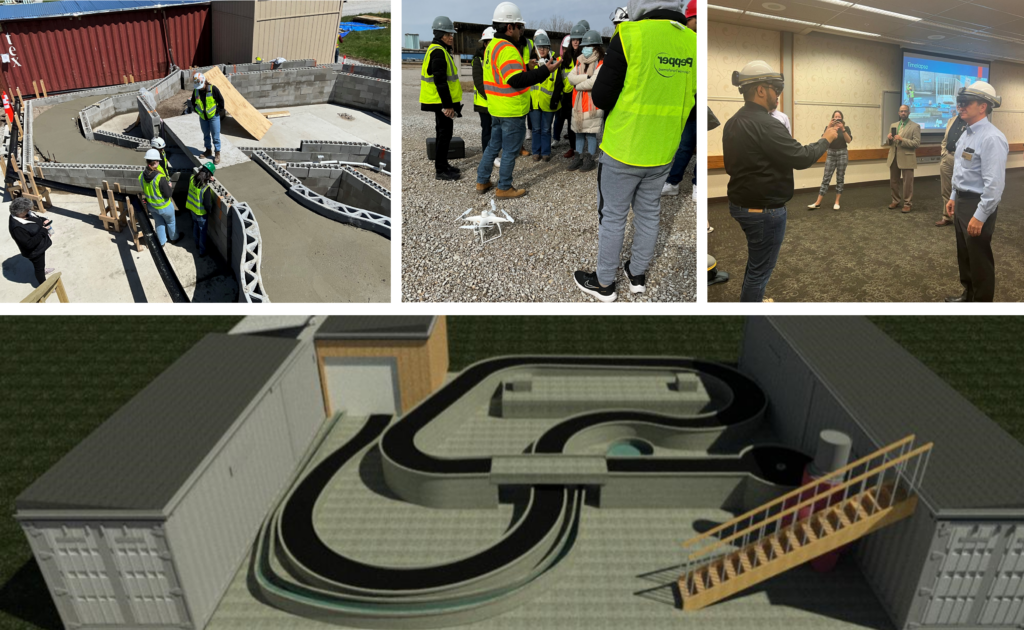
Experiential learning bridges the gap between classroom instruction and real-world construction practice by immersing students in authentic, technology-enabled learning environments. Through VR/AR simulations, robotics, drones, digital modeling, industry engagement, and collaborative project-based activities, students gain opportunities to apply theoretical knowledge to practical challenges. These experiences foster critical thinking, communication, teamwork, and problem-solving skills while accommodating diverse learning styles. By creating meaningful interactions with emerging technologies and industry stakeholders, this initiative prepares students to become adaptable, career-ready professionals capable of addressing the evolving demands of the construction industry.
Impact
- Enhance students’ practical skills and confidence through hands-on engagement with emerging construction technologies.
- Strengthen teamwork, communication, and interdisciplinary collaboration in realistic project environments.
- Improves career readiness by exposing students to industry practices, expectations, and professional workflows.
- Support inclusive and engaging learning experiences that accommodate diverse backgrounds and learning preferences.
- Foster innovation and adaptability by integrating digital tools, automation, robotics, and immersive technologies into construction education.
Publication List
Conference Proceedings
- Fulk, B. & Hasanzadeh, S. (2025). “Bridging Academia and Construction Industry: Insights from Sequential Multi-Internship Experiences”. The CIB World Building Congress. West Lafayette, Indiana.
- Fulk, B. & Hasanzadeh, S. (2026), “From Curriculum to Capstone: Advancing Career Readiness in Construction Engineering,” Construction Research Congress 2026, Texas.
Researcher

Brandon Fulk