Drug Discovery
at Purdue 2016-2017
Drug Discovery
at Purdue 2016-2017


Table of Contents
Introduction
The drug discovery process at Purdue University begins at the nano level and ends with a viable human therapy that can reduce mortality and morbidity of disease. There is a considerable effort in enhancing our portfolio of novel and innovative drug candidates to treat chronic and acute illnesses.

Our researchers are also invested in various approaches to drug discovery, which include understanding of drug targets for future drug therapies, detection technology that will aid clinicians in early diagnosis or monitoring of therapies and design and delivery of drugs.
Researchers associated with the Institute for Drug Discovery are affiliated with colleges from all across campus including Pharmacy, Science, Nutrition, Agriculture, Engineering and Veterinary Medicine.
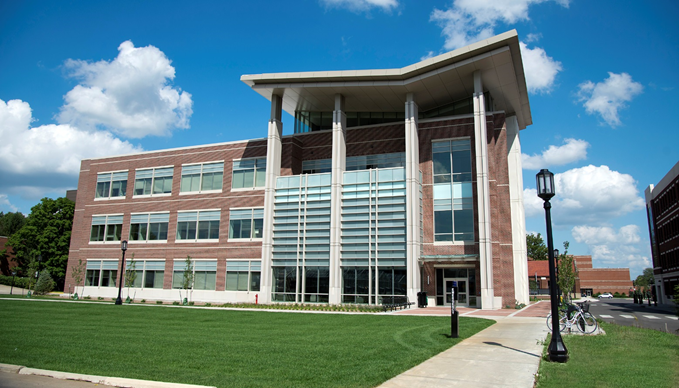
Purdue University's Institute of Drug Discovery was completed in 2014 and is located at 720 Clinic Drive West Lafayette, Indiana 47907.
Our Drug Discovery facility promotes the discovery, design and development of new drugs through innovative architecture that encourages collaborations in chemistry, medicinal chemistry and biology. The structure accommodates 90 multidisciplinary researchers with 9 faculty offices as well as several conference rooms and common eating facilities. Conference rooms are equipped with videoconferencing capabilities that enable research teams from across the world to interact as though they were present at Purdue. The building provides facilities for organic synthesis, cell culture, analytical chemistry, molecule purification, biochemistry, molecular biology and fluorescent imaging. Core facilities located within the building include the high-throughput screening & chemical genomics, NMR, and mass spectrometry facilities.
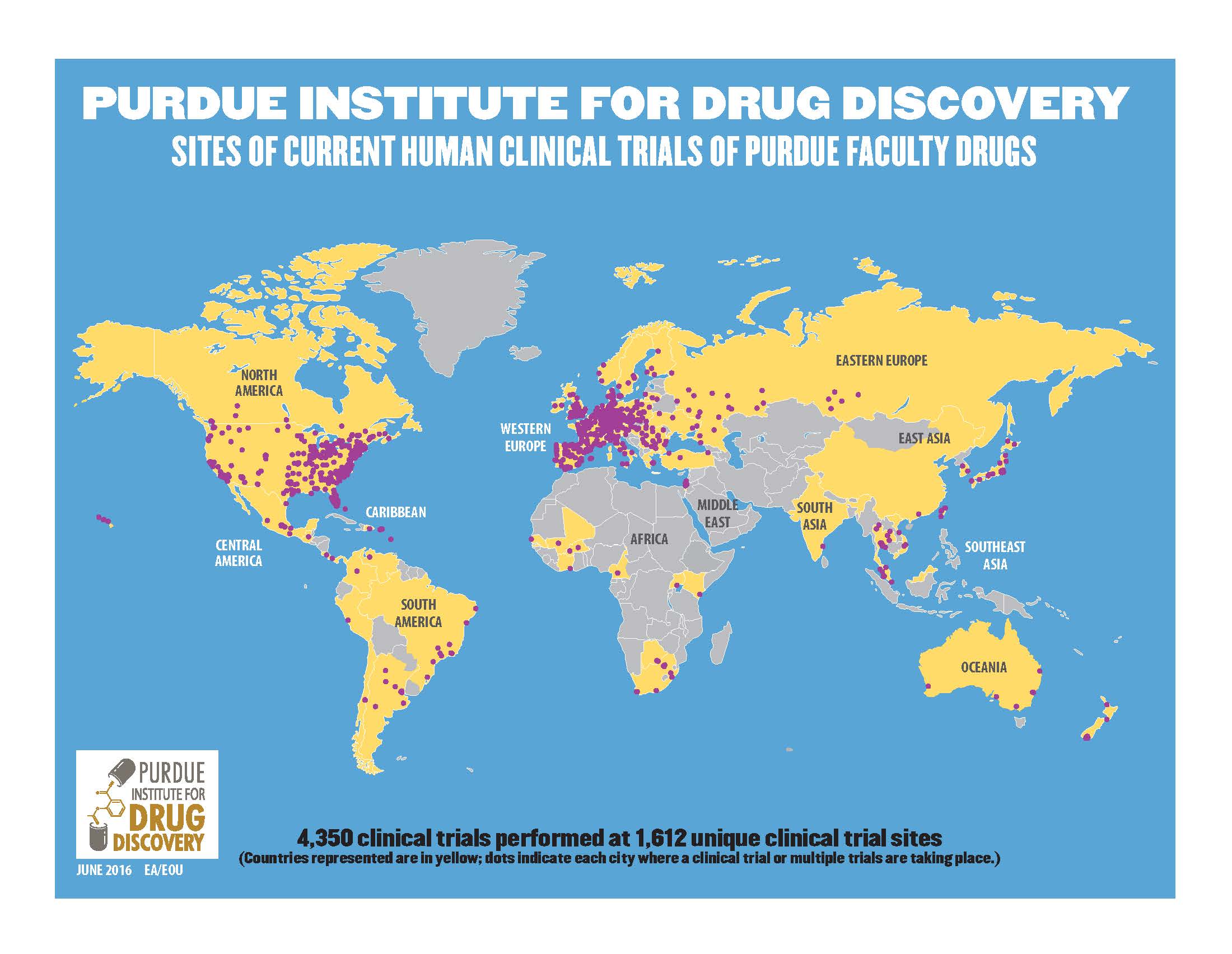
The Purdue Institute of Drug Discovery has broad reaching actions with 4,350 human clinical trials performed with Purdue faculty drugs at 1,612 unique clinical trial sites around the world.
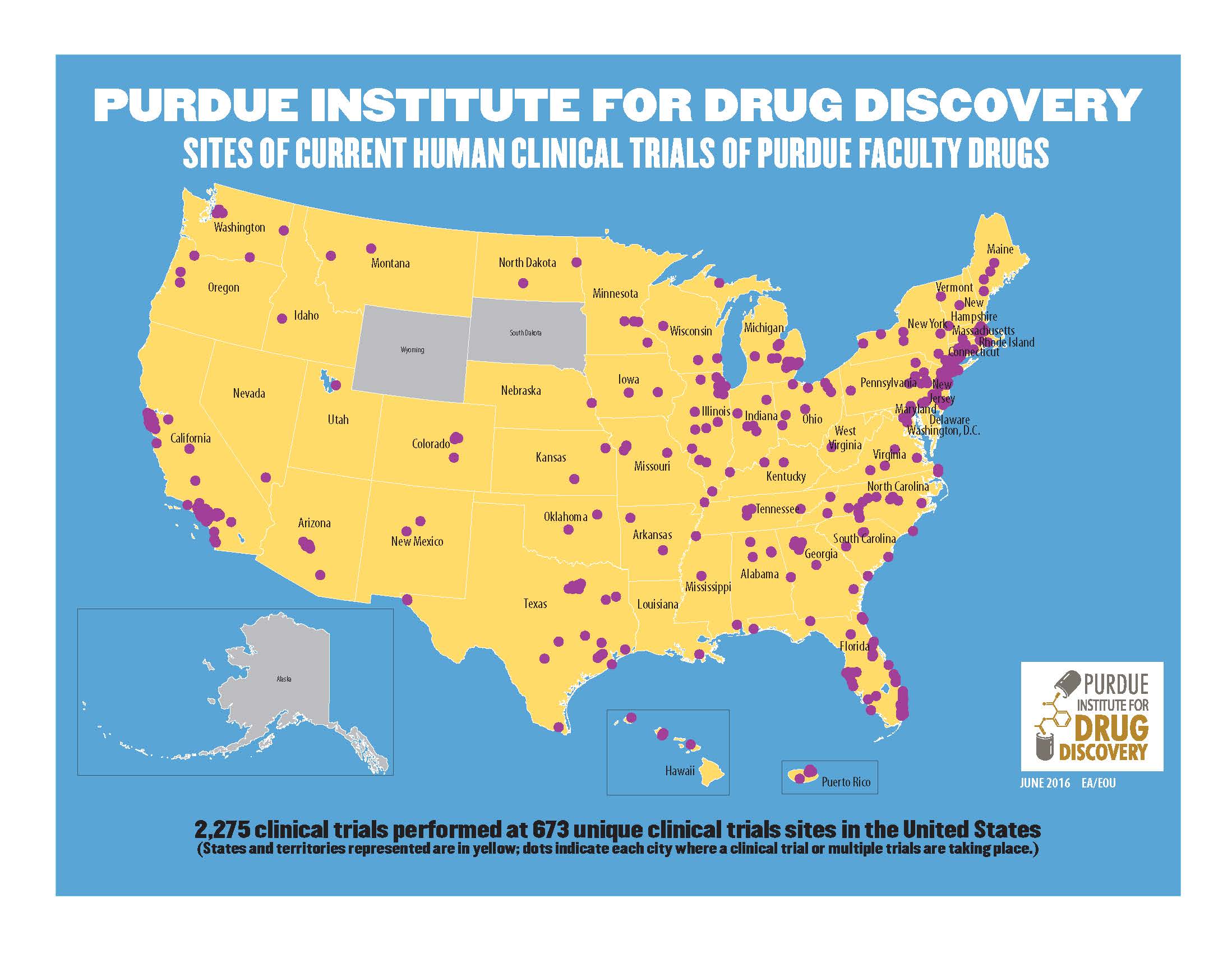
Forty-seven states and Puerto Rico are sites of 2,275 human clinical trials performed with Purdue faculty drugs around the United States at 673 unique sites.
Compounds in Clinical Development
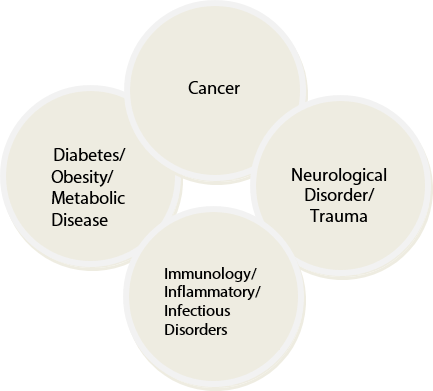
Currently, our researchers are working on several classes of compounds and novel approaches to drug design. The figure below summarizes the active stages of drug discovery.
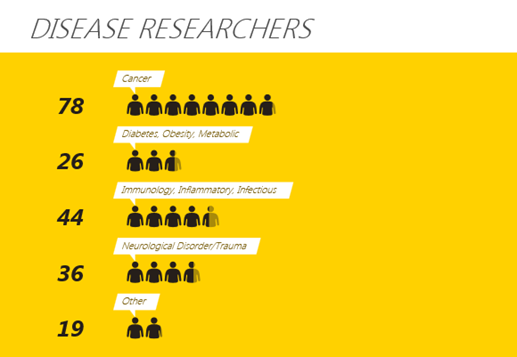
We have 78 faculty researching cancer, 26 faculty researching Diabetes, obesity and metabolic disease, 44 researching immunology, inflammatory and infectious disease, 36 researching neurological disorder/trauma and 19 researching other diseases.
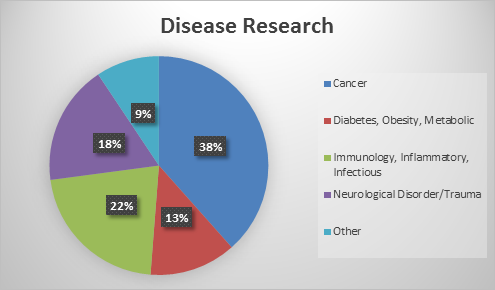
Thirty-eight percent of our faculty associated with the Institute for Drug Discovery are researching cancer, 22% are researching immunology, inflammatory and infectious disease, 18% are researching neurological disorder/trauma, 13% are researching diabetes, obesity and metabolic disease and 9% are researching other diseases.
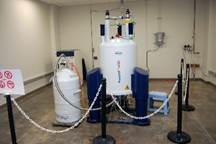
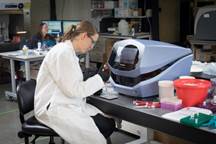
The Drug Discovery facility houses four pieces of equipment for shared usage with researchers across campus.
NMR Spectrometer
HTS
Mass Spectrometer
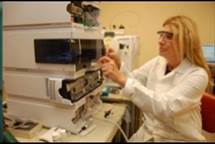
Flow Cytometer
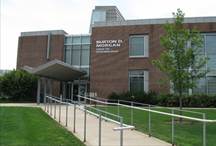
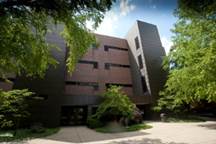
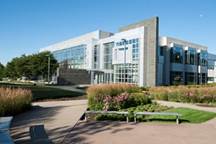
Four research buildings on the Purdue West Lafayette campus
directly support our drug discovery mission.
Drug Discovery Facility
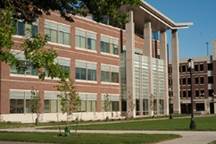
Burton D. Morgan Center for Entrepreneurship
Arthur G. Hansen Life Sciences Research Building
Bindley Bioscience Center
Alphabetical List of Drug Discovery Researchers
|
Diagnostics
Target Discovery & Characterization
Drug Synthesis/Optimization
Delivery/Formulations
In Vivo
ADME/DMPK/Tox
Other
Cancer
Diabetes/Obesity/Metabolic Disease
Immunology/Inflammatory/Infectious Disease
Neurological Disorder/Trauma
Other
|
|||||||||||||
|---|---|---|---|---|---|---|---|---|---|---|---|---|---|
| CATEGORY | DISEASE(S) | ||||||||||||
| Name | Department | Diagnostics | Target Discovery & Characterization | Drug Synthesis / Optimization | Delivery / Formulations | In Vivo | ADME DMPK Tox | Other | Cancer | Diabetes / Obesity / Metabolic Disease | Immunology / Inflammatory / Infectious Disease | Neurological Disorder / Trauma | Other |
Diagnostics
Diagnostics
Target Discovery & Characterization
Target Discovery & Characterization
Synthesis/Optimization
Synthesis/Optimization
Delivery/Formulations
Delivery/Formulations
In Vivo, ADME, DMPK, TOX
In Vivo, ADME, DMPK, TOX
Other Areas
of Research
Other Areas
of Research
- OFFICE OF THE EXECUTIVE VICE PRESIDENT
FOR RESEARCH AND PARTNERSHIPS - Hovde Hall
- 610 Purdue Mall
- West Lafayette, IN 47907-2040
- EVPRP@purdue.edu
- Phone: 765-494-9806
- Fax: 765-496-7474
- Updated April 2017